






Building a remote team opens doors to global talent, but it also introduces challenges most companies aren't prepared for. Companies suddenly find themselves managing contractors across different countries, each with unique labor laws, tax requirements, and payment expectations. Misclassifying employees or fumbling compliance requirements can trigger costly penalties that derail expansion plans.
The right approach starts with understanding how to structure payments and stay compliant across borders. Removing administrative headaches around tax obligations and local employment regulations allows companies to focus on finding talented people and building thriving remote cultures. The best international payroll software streamlines these complex backend processes for distributed teams.
Table of Contents
- Why Hiring a Remote Team Is Harder Than Most Companies Expect
- The Biggest Mistakes Companies Make When Building Remote Teams
- How to Hire a Remote Team Step by Step
- The Compliance Challenges Many Companies Discover Too Late
- What Successful Remote Teams Do Differently
- How Ontop Helps Companies Hire and Manage Global Teams
- Book a Demo Today - See why 950+ Companies Trust OnTop to Power their Global Teams
Summary
- Remote hiring expands access to global talent, but 48% of large businesses with over 500 employees now operate across three or more countries, making simultaneous navigation of multiple regulatory frameworks standard practice rather than an edge case. The complexity of international employment law remains invisible during interviews and surfaces only when companies need to issue contracts, process payments, or understand local tax withholding requirements.
- Misclassification represents one of the highest compliance risks in remote hiring. Between 10% and 20% of employers misclassify at least one worker, and authorities evaluate the actual working relationship rather than just the paperwork. Financial exposure includes unpaid taxes, social contributions, benefits, penalties, and legal costs that can exceed $100,000 per worker in some jurisdictions.
- Remote roles attract 4 to 5 times their share of applications compared to traditional positions, creating a deep talent pool if companies structure roles appropriately. However, the lowest-cost candidate is not always the best value. Remote employees operate with greater autonomy than office-based counterparts, making communication skills, self-management, and reliability more important than hourly rates alone.
- Payment reliability directly affects trust with remote workers. While 98% of workers want to work at least some of the time, that preference collapses when basic reliability fails. Late or inconsistent payments create friction that no amount of flexibility or career growth can compensate for, particularly when managing contractors across different currencies and payment systems.
- Traditional remote hiring processes focus almost exclusively on technical qualifications while giving relatively little attention to communication skills. Remote teams depend on written clarity, asynchronous collaboration, and self-directed problem-solving in ways office teams never do, yet most evaluation frameworks fail to assess the competencies that determine whether someone thrives in a distributed environment.
- Successful remote organizations define success through clear objectives and measurable outcomes rather than visibility or activity. This shift from measuring effort to measuring impact benefits both employees, who gain autonomy through transparent expectations, and managers, who can evaluate performance objectively rather than subjectively based on perceived busyness.
- Payroll software addresses cross-border payment complexity by centralizing contractor payments with automated compliance tracking and instant global transfers, compressing payment cycles from days to hours while reducing administrative overhead.
Why Hiring a Remote Team Is Harder Than Most Companies Expect
Remote hiring isn't traditional hiring done over video calls. It requires evaluating different skills, building new processes, and addressing legal complexities that don't arise in office environments. Companies treating remote positions as office roles performed from anywhere struggle with integration, performance, and retention because they're solving the wrong problem.

🎯 Key Point: Remote hiring demands a completely different approach than traditional recruitment - from skill assessment to onboarding processes.
"Companies that don't adapt their hiring processes for remote work see higher turnover rates and integration challenges because they're applying outdated frameworks to a fundamentally different work model." — Remote Work Research, 2024

⚠️ Warning: Treating remote positions as simply office jobs done remotely is the #1 mistake that leads to poor hires and team dysfunction.
The skills gap nobody screens for
Technical qualifications don't show whether someone can thrive without hallway conversations, spontaneous check-ins, or shared workspace accountability. Remote employees need exceptional written communication skills since most collaboration happens asynchronously. They must manage time without external structure, troubleshoot problems independently before escalating, and build relationships through digital channels. A candidate who excels in a traditional office may struggle remotely if these competencies are missing, yet most hiring processes never assess them.
Why does compliance only become visible after making an offer?
International employment law is complex and often overlooked during job interviews. Different countries classify workers differently, require varying notice periods before termination, mandate specific benefits, and enforce distinct termination procedures. According to workforce trend data from Jobspikr, more than 48% of large businesses with over 500 employees employ workers in three or more countries, making compliance with multiple regulatory frameworks standard practice.
What compliance issues emerge during operational execution?
Many companies discover too late that their standard employment agreements violate local labor laws or that paying someone in another country requires entity registration. Compliance issues don't surface during the talent search; they emerge when operational execution begins, often forcing companies to choose between expensive legal fixes or losing candidates they've already spent weeks recruiting.
Why does remote work eliminate natural workplace structure?
Office environments provide built-in structure through ambient learning: new employees observe how meetings run, decisions get made, and information flows by being present. Remote work removes this.
Without intentional process design, remote employees work alone and are unclear about expectations, communication norms, or how their work connects to broader goals. Onboarding requires careful planning, documentation becomes critical infrastructure, and performance metrics need clear definition as informal feedback systems disappear. Companies that force remote workers into office-designed workflows create confusion on both sides: remote employees feel left out, and office-based colleagues grow frustrated by communication gaps.
How does payroll software reduce operational complexity?
Platforms like payroll software handle operational complexity: paying distributed teams across borders, managing compliance, and processing payments in local currencies. This removes significant administrative friction. When payment infrastructure works smoothly, companies can focus on harder challenges: building communication systems, establishing clear performance expectations, and creating genuine inclusion for people who never share physical space.
The real difficulty isn't finding talented people willing to work remotely. It's recognizing that remote hiring is a distinct discipline requiring different evaluation criteria, legal knowledge, and operational systems than traditional hiring demands. Even companies that understand this complexity make predictable, avoidable mistakes when building their remote teams.
Related Reading
- Best International Payroll Software
- Pay International Employees
- How Much Does It Cost To Outsource Payroll
- Global Payroll Implementation
- Benefits Of Hiring Remote Workers
- Multi-Country Payroll Outsourcing
The Biggest Mistakes Companies Make When Building Remote Teams
When a remote hire fails, companies often blame the employee's productivity, skills, or cultural fit. Sometimes that's correct, but the problem usually starts earlier: in how the company prepared for remote work.
🎯 Key Point: Most remote hiring failures aren't about finding the wrong person—they're about creating the wrong environment for that person to succeed.

Most remote hiring failures are process failures, not talent failures. Companies hire into environments never designed to support remote work: unclear expectations, weak communication systems, inconsistent onboarding, and operational challenges discovered only after the employee starts. This creates frustration for both the employer and the worker.
"Process failures, not talent failures, account for the majority of remote hiring disappointments when companies lack proper remote work infrastructure." — Remote Work Research, 2024

⚠️ Warning: Hiring remote talent without first establishing remote-ready processes sets both your company and new hires up for inevitable failure.
Rushing the Hiring Process
One of the most common mistakes is hiring too quickly. Remote hiring provides access to a larger pool of talented workers, creating pressure to move fast since strong candidates have multiple options. In the rush to hire, critical questions go unanswered: Has the role been clearly defined? What results indicate success? What are the communication expectations? How will performance be measured? Without clear answers, employers risk hiring someone into a position that lacks structure from the outset.
Prioritizing Cost Over Capability
Another common mistake is choosing cost over ability. While global hiring provides access to talent in lower-cost regions, problems arise when compensation becomes the primary hiring criterion. The lowest-cost candidate is not always the best value. Remote employees work with more freedom than office-based coworkers, making strong communication skills, self-management, problem-solving ability, and reliability more important than hourly rates alone. Companies that hire mainly on cost savings initially but lose far more through lower productivity, increased management burden, and higher turnover.
How can payroll software streamline global payments?
Most companies handle global payments through traditional banks or manual wire transfers. As team size grows and payment schedules vary across countries, this approach creates friction: transfers take days to clear, currency conversion fees accumulate with each payment, and contractors face unpredictable delays. Platforms like Ontop centralize contractor payments with automated compliance tracking and instant global transfers, compressing payment cycles from days to hours while reducing administrative overhead by 60%.
Underestimating Communication Requirements
Communication is critical in remote hiring, yet often overlooked. In traditional offices, misunderstandings are resolved through quick conversations and spontaneous interactions. Remote teams lack this luxury: communication becomes the infrastructure supporting the entire organization. Many companies evaluate candidates almost exclusively on technical qualifications while neglecting communication skills. According to Zoom's Remote Work Statistics, 98% of people want to work remotely at least some of the time, but companies often fail to assess whether candidates possess the written clarity and asynchronous collaboration skills needed to make distributed work sustainable.
Treating Remote Work as Office Work From Home
The most common mistake is treating remote employees as office workers who happen to work from home. Remote work requires different systems: documentation, structured onboarding, written communication, clearly defined processes, and intentional collaboration practices. Companies that replicate office management styles in distributed environments struggle because the assumptions supporting office work no longer apply. The quality of the hiring process matters as much as the quality of the candidate.
How to Hire a Remote Team Step by Step
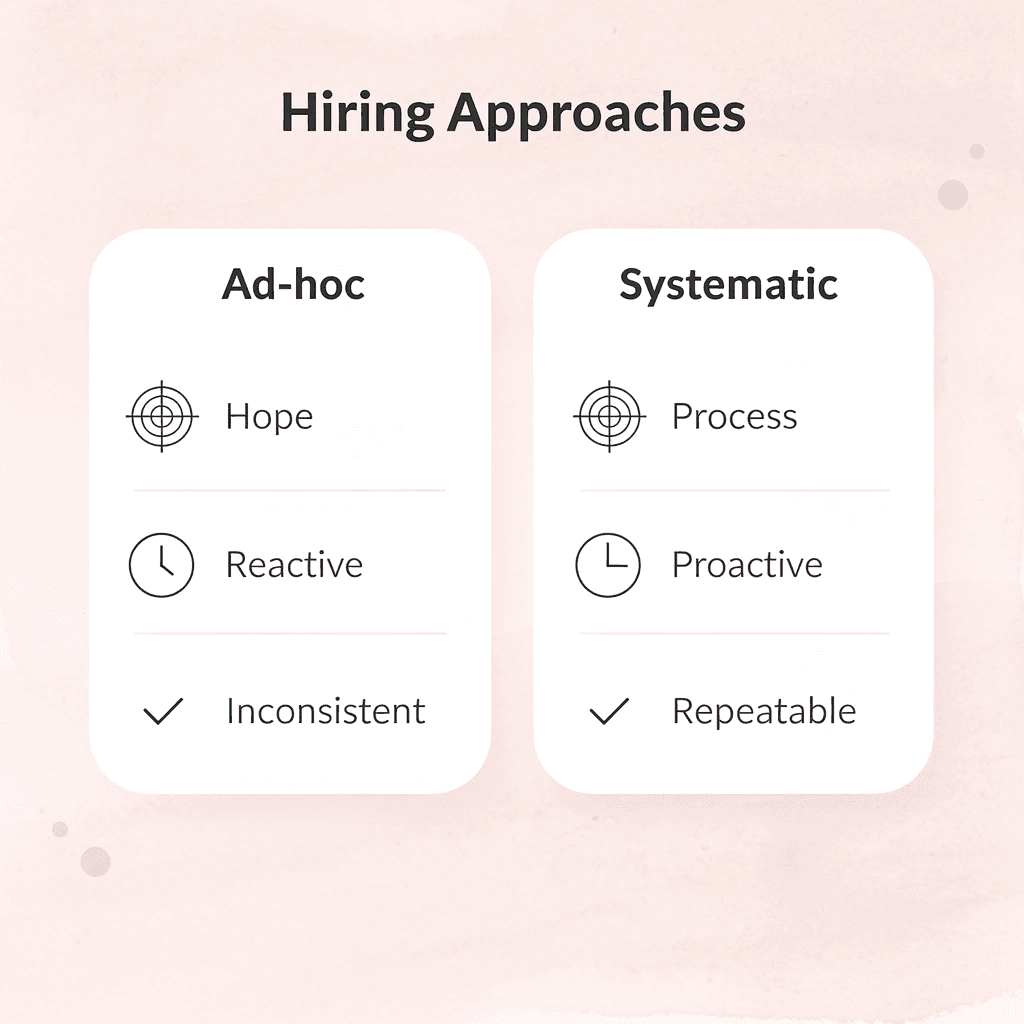
Good remote hires come from having a system, not from luck. Companies with repeatable processes for finding, evaluating, and training remote workers consistently make better hiring decisions. The framework below provides a practical roadmap for hiring remote workers who can succeed from day one.

🎯 Key Point: Remote hiring success depends on systematic processes rather than hoping for the right candidate to appear. Companies with structured approaches consistently outperform those relying on ad-hoc recruitment methods.
"Organizations with standardized remote hiring processes are 73% more likely to retain remote employees beyond their first year compared to companies without formal systems." — Remote Work Research Institute, 2024
⚡ Pro Tip: Start building your remote hiring system before you need it. The best time to establish evaluation criteria and onboarding processes is when you're not under pressure to fill an urgent position.
Define the role with precision
Unclear job descriptions attract unclear candidates. Before posting a role, answer these questions: What specific results must this person deliver? What does success look like in the first 30, 60, and 90 days? Which skills are necessary versus nice to have? Many companies skip this step and later discover they never clarified whether they needed a project manager or a strategist, a generalist or a specialist. Clear role definition improves candidate quality, simplifies evaluation, and reduces post-hire confusion.
Choose the right engagement model early
Not every job needs a full-time employee. Project-based work, specialized skills, and changing workloads benefit contractors. According to Truffle's 2026 hiring research, remote jobs receive 4 to 5 times as many applications as other positions, giving companies access to a large pool of contractor talent. Deciding between hiring an employee and hiring a contractor before recruiting reduces legal risk, clarifies compensation structures, and ensures the work arrangement fits business needs. Platforms like Ontop simplify contractor onboarding and cross-border payments, removing compliance burdens that make global hiring feel risky or slow.
Build a targeted sourcing strategy
Successful companies strategically target regions with concentrated talent pools rather than posting everywhere and hoping for the best. Before reaching out to candidates, identify areas with strong talent for your role, consider time zone overlap requirements, and research local salary expectations. A developer role might draw on strong talent from Eastern Europe or Latin America, while a customer success position may require alignment with North American business hours. Smart geographic targeting helps you find better candidates while reducing time spent reviewing mismatched applications.
Evaluate communication and remote work capability
Technical skills get candidates in the door. Communication skills determine whether they succeed once hired. Remote teams depend on written clarity, asynchronous collaboration, and independent problem-solving. A brilliant engineer who struggles to document decisions or communicate blockers creates friction across the entire team. During interviews, assess how candidates structure written responses, explain complex ideas verbally, and describe past remote work experiences. Ask them to walk through how they've handled miscommunication or managed projects independently. These signals matter as much as their resume.
Structure interviews to reduce bias and improve consistency
Informal interviews produce inconsistent evaluations. Structured interviews assess every candidate against the same criteria, reducing unconscious bias and enabling objective comparison. Define evaluation dimensions in advance (technical competency, communication ability, problem-solving approach, cultural alignment) and score candidates systematically. This improves reliability and helps identify candidates who interview well but lack the remote-specific skills needed to succeed once hired. Hiring the right person is only half the equation. What happens after they accept the offer determines whether they stay, thrive, or quietly start looking for their next role within months.
The Compliance Challenges Many Companies Discover Too Late
Most companies discover tax obligations, payroll requirements, and worker classification rules only after hiring someone. By then, fixing the problem would cost far more than preventing it would have.

⚠️ Warning: The reactive approach to compliance can result in penalties, back taxes, and legal complications that could have been easily avoided with proper planning.
"Companies that discover compliance issues post-hire typically spend 3-5 times more on remediation than those who address requirements upfront." — Global Employment Compliance Report, 2024

🔑 Takeaway: Proactive compliance planning isn't just about avoiding penalties—it's about protecting your budget, timeline, and business reputation from unnecessary risks.
Why does worker classification create the most risk?
Misclassification happens because the rules are complicated and vary by country. A contractor relationship that works in one place can be considered employment in another, regardless of what the contract states.
How do authorities evaluate worker classification?
Authorities examine the actual working relationship, not paperwork alone. If someone works exclusively for your company, follows your schedule, receives direct supervision, and uses your tools, many governments will classify them as an employee regardless of any signed contractor agreement. According to Secureframe's compliance research, between 10% and 20% of employers misclassify at least one worker. Financial exposure includes unpaid taxes, social contributions, benefits, penalties, and legal costs that can exceed $100,000 per worker in some jurisdictions.
When contracts become liabilities
A standard employment contract that works in your home country may violate labor laws elsewhere. Different countries have specific rules regarding job termination, notice periods, intellectual property ownership, confidentiality, and worker protections. Using the same contract across multiple countries creates legal risks that surface only during disputes or regulatory audits. The mistake is thinking one contract works everywhere. What keeps you safe legally in one country might leave you unprotected in another, and most companies don't discover the problem until someone files a formal complaint or a government agency investigates.
What makes international payroll so complex?
International payroll involves more than currency conversion and wire transfers. Every country has different rules for tax withholding, social contributions, mandatory deductions, payment timing, and reporting requirements. A company handling domestic payroll efficiently may discover that paying workers in three countries requires three entirely different processes, each with its own deadlines and compliance obligations. Platforms like payroll software centralize contractor payments across borders with built-in compliance tracking, reducing administrative overhead while maintaining audit trails that meet local regulatory requirements.
Why do compliance challenges grow exponentially?
The PwC Global Compliance Survey 2025 identifies fragmented regulations as a major challenge for international employers. As companies expand into more regions, staying current with changing requirements becomes exponentially harder. Penalties for non-compliance often exceed the cost of compliance. But knowing what compliance requires is only half the equation. The other half is understanding how successful remote teams operate once compliance is handled correctly.
What Successful Remote Teams Do Differently
Successful remote teams build the systems and tools that allow people to do their best work without constant oversight or confusion. The difference between companies that thrive remotely and those that struggle rarely comes down to talent quality: it comes down to what happens after someone accepts the offer.
🎯 Key Point: The foundation of remote success isn't hiring better people—it's creating better systems that enable your existing talent to perform at their peak without micromanagement.

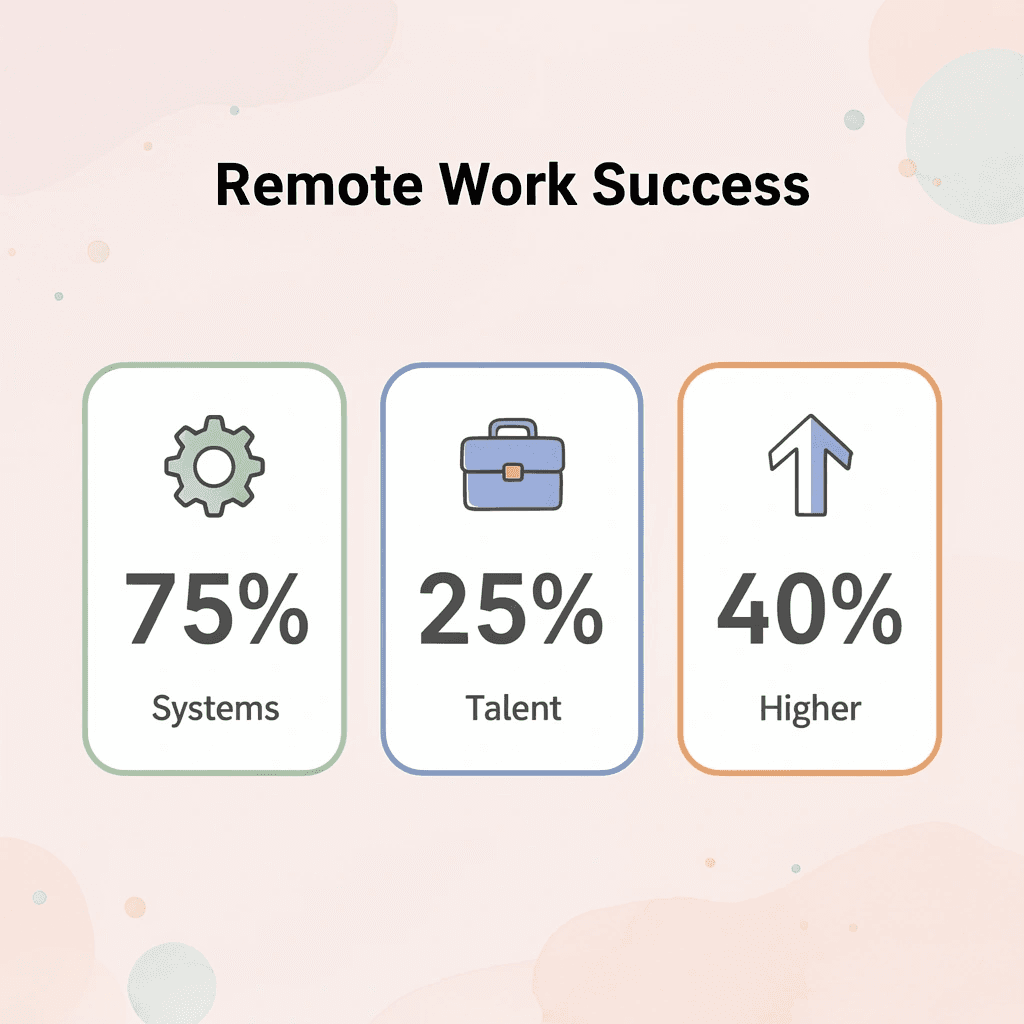
"Remote work success is 75% systems and 25% talent—companies that get this ratio right see 40% higher productivity than those still relying on traditional oversight models." — Remote Work Research Institute, 2024
💡 Best Practice: Focus your energy on building robust processes, clear communication channels, and autonomous workflows rather than spending countless hours on recruitment. The right infrastructure transforms average performers into high achievers.
Systems That Support Autonomy
Strong remote organizations document their processes, set clear expectations, and explain how decisions get made. New employees receive structured training covering their role, organizational structure, communication channels, response times, and information resources. Weak remote teams rely on knowledge locked in longtime employees' heads. New employees spend weeks learning workflows through trial and error, which slows productivity and causes frustration. Systems either scale or break.
Why does payroll reliability matter for remote teams?
Remote workers face many challenges, though late or inconsistent payments need not be one of them. According to Zoom's 2025 remote work research, 98% of workers want to work at least some of the time remotely, but that preference collapses when basic reliability fails. Employees may value flexibility and career growth, but payroll problems override these benefits.
How does payment reliability affect global team trust?
For global teams, payment reliability directly affects trust. Workers need confidence they'll be paid accurately and on time regardless of location or currency. Organizations that establish reliable payroll processes demonstrate professionalism from the start. Those who don't often lose talented workers before understanding what went wrong.
What problems do fragmented payment systems create?
Most companies manage global contractor payments through fragmented systems involving multiple banks, currency conversions, and manual tracking. As teams expand across regions, this approach creates delays, errors, and frustration. Payroll software consolidates payments on a single platform, allowing contractors to receive funds in their local currency through a global account and eliminating friction in the traditional banking infrastructure for distributed teams.
How does focusing on outcomes improve remote performance?
Remote work means focusing on what people accomplish rather than whether you can see them working. Managers cannot use desk presence as proof of productivity. Successful organizations define success through clear objectives, priorities, and measurable outcomes. Employees understand what they need to accomplish and when they need to finish it. Managers evaluate results rather than how busy people appear.
What are the benefits of outcome-based management?
This helps everyone. Employees gain freedom when they understand expectations. Managers feel more confident because performance is based on facts rather than opinions. Companies struggling with remote work often measure effort rather than output, creating pressure to appear busy rather than to focus on meaningful work. But the best systems work only when supported by the right tools and setup.
Related Reading
- Best Way To Pay International Contractors
- Best International Payroll Providers
- How To Hire International Employees
- How to Pay Foreign Contractor
- International Payroll Management
- Benefits Of Hiring International Employees
- Benefits Of Hiring Remote Workers
- B2b Cross-border Payments
How Ontop Helps Companies Hire and Manage Global Teams
Infrastructure determines what becomes possible. A company can master role definition, candidate evaluation, and compliance planning, yet still struggle with managing workers across borders. The difference between intention and execution often comes down to whether systems can keep pace with the complexity of international hiring.

🎯 Key Point: Even companies with strong hiring strategies can fail without the right infrastructure to support global workforce management.
"The difference between intention and execution often comes down to whether systems can keep pace with the complexity international hiring creates."

💡 Tip: Focus on building scalable systems before expanding your global hiring efforts to avoid operational bottlenecks that can derail even the best-planned international recruitment strategies.
What challenges arise when scaling international hiring?
Hiring one contractor in another country feels manageable. Hiring ten across eight jurisdictions introduces friction that spreadsheets and email chains cannot resolve: payment schedules differ, contract templates require localization, onboarding documents multiply, and tax considerations vary by region.
How does Ontop eliminate operational friction?
Ontop was built to remove that friction. Rather than forcing companies to use separate tools for contracts, payments, compliance documentation, and worker support, our platform consolidates global team management into one system. Businessmodelcanvastemplate.com reports that 74% of organizations are planning to maintain or expand remote work models in 2025, making operational infrastructure essential.
Access Without Geographic Limits
The platform supports hiring and payments in over 150 countries, so location is no barrier to building your team. Strong candidates evaluate opportunities partly on the simplicity of the hiring process. Delays in paperwork and administration risk losing candidates with competing offers.
Payments That Work Globally
Cross-border payments require different paperwork, payment methods, and reporting rules across countries. Managing these manually increases errors and damages trust. Payroll software like Ontop streamlines global payment operations, ensuring workers receive timely payments while reducing administrative burden for internal teams. Workers gain access to USD accounts and a global Visa card, simplifying money management for international earners. The real change happens when companies stop seeing global hiring as a problem to fix and start seeing it as a system that either works or doesn't.
Book a Demo Today - See why 950+ Companies Trust OnTop to Power their Global Teams
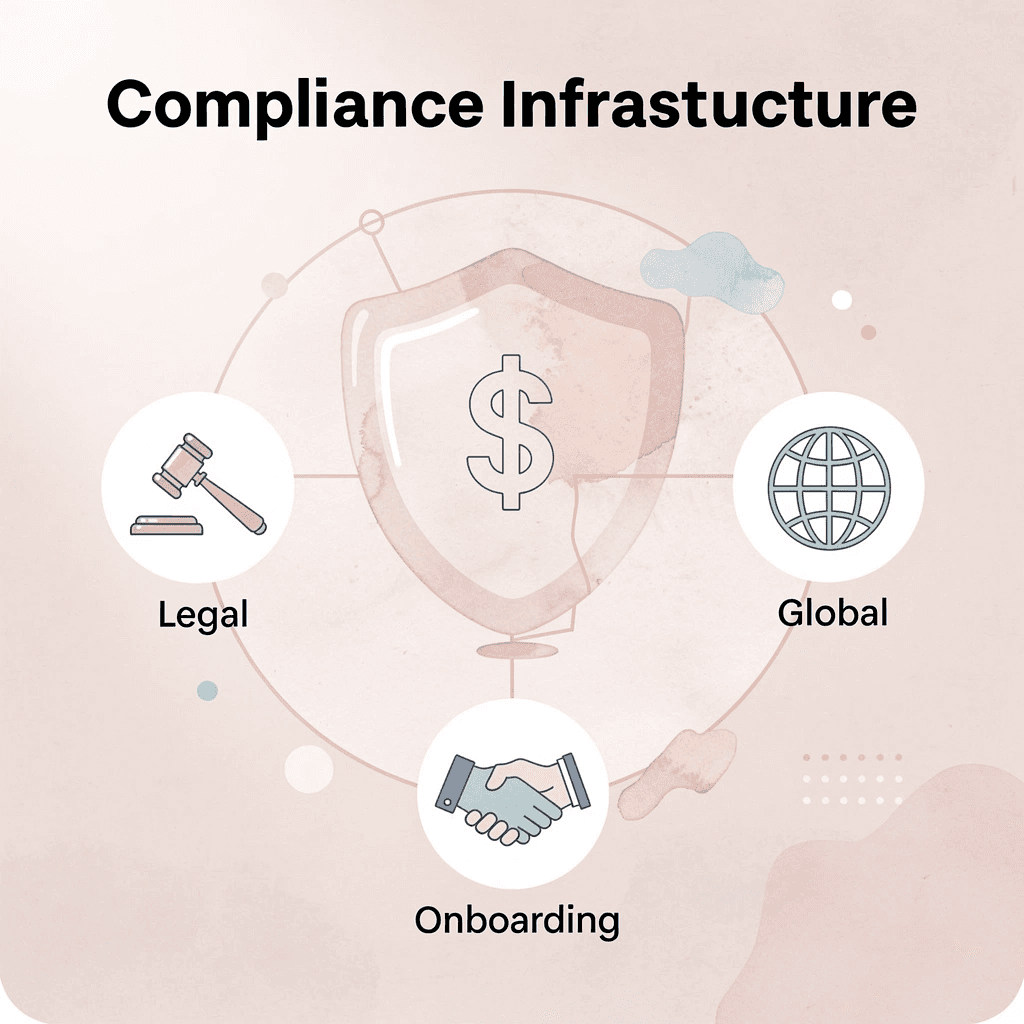
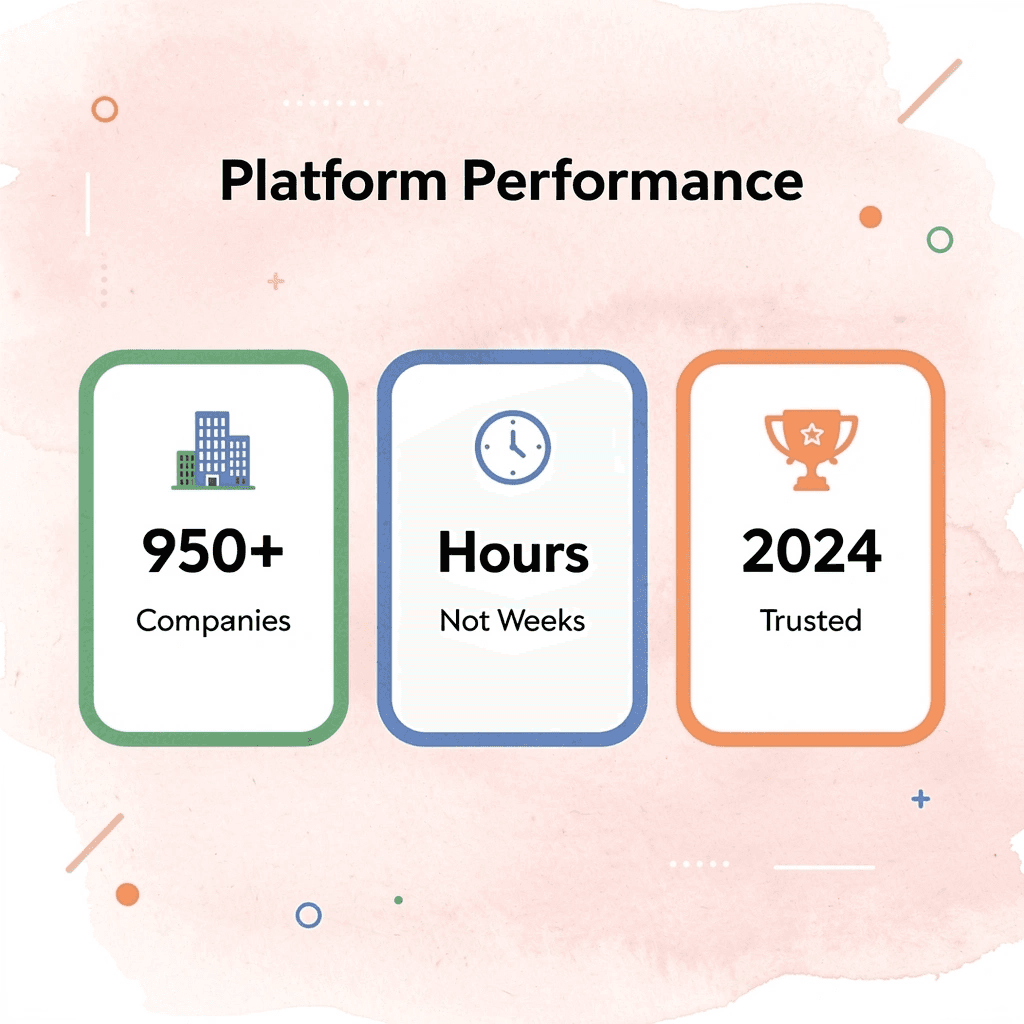
If you're building a remote team and want to avoid compliance, payroll, and onboarding challenges that slow down global hiring, explore Ontop. Start with Quick Start to see how quickly you can onboard international talent, manage global payments, and support workers in more than 150 countries. Over 950 companies use Ontop to power their global teams because our platform treats infrastructure as something that works quietly in the background.

🎯 Key Point: Ontop eliminates the traditional barriers to global hiring by handling all the compliance complexity behind the scenes, so you can focus on building your team instead of managing paperwork.
"Over 950 companies use Ontop to power their global teams because our platform treats infrastructure as something that works quietly in the background." — Ontop Platform Data, 2024
Book a demo today and see how our contractor-first infrastructure compresses what used to take weeks into hours, without sacrificing compliance or worker experience.
💡 Tip: Don't let administrative overhead slow down your global expansion — see firsthand how Ontop's platform can transform your international hiring process from a complex challenge into a streamlined advantage.
Related Reading
- Velocity Global Competitors
- How To Calculate Time For Payroll
- Best International Payroll Software
- How To Hire Overseas Contractors
- Best Payroll Outsourcing Companies
- How To Pay Foreign Contractors
- Best Hiring Tools
- Best Payroll Software For Staffing Companies
- Adp Alternative
- Best Global Payroll Companies
- Deel Vs Oyster
- Best Payroll For Contractors
- Remote Competitors