






Managing a global team presents complex payment challenges that can drain budgets and frustrate international contractors. Currency conversion fees, delayed transfers, and tax compliance issues cost businesses thousands annually while creating uncertainty for remote workers who depend on consistent payments. The best international payroll software can transform these operations by streamlining cross-border payments and ensuring contractors receive earnings quickly and affordably.
Businesses need tools designed specifically for international workforce management to eliminate payment complexities. The right platform offers transparent pricing, fast transfers, and automated compliance features that protect both companies and their global talent. Centralized payment systems reduce currency exchange losses, minimize administrative burden, and provide peace of mind through reliable payroll software.
Summary
- International contractors regularly lose 3-5% of their earnings to hidden payment costs, according to recent industry data, with much of this coming from exchange rate markups rather than disclosed service fees. On a $50,000 annual contract, a 2.5% hidden spread equals $1,250 that never appears on any invoice or receipt. Payment platforms often promote low service fees while quietly applying larger markups to the exchange rate itself, and contractors typically compare platforms based only on the visible commission, overlooking where the actual money disappears.
- Payment delays create financial hardship that extends beyond inconvenience. A 2025 freelancer survey in the Netherlands found that 48% of freelancers experienced late payments, with delays averaging 18 days beyond agreed terms. Nearly one in five reported financial hardship as a result, forcing some to use savings, postpone bills, or borrow money while waiting for funds to arrive. Cross-border transfers that take 5-7 business days to clear compound these problems, leaving contractors to manage rent deadlines and vendor invoices through overdraft fees, late payment penalties, or emergency credit.
- The World Bank's latest remittance pricing data shows that the global average cost of sending money internationally remains 6.36% of the amount transferred. That percentage represents the cumulative effect of intermediary banks, currency conversion margins, compliance charges, and platform markups stacked into a single transfer. For contractors receiving multiple payments per month across different currencies, these costs erode earnings faster than most realize, particularly when individual deductions feel minor in isolation, but their cumulative impact reshapes the financial reality of international work.
- Geographic coverage fragmentation limits contractor flexibility despite the growth of fast payment systems. The BIS Quarterly Review published in March 2024 notes that over 100 jurisdictions now have access to fast payment systems, yet coverage remains fragmented across providers. A contractor working from Buenos Aires this quarter may relocate to Lisbon next quarter, only to discover that their payment platform doesn't serve Portugal, requires a different account type, or imposes withdrawal restrictions they haven't encountered before.
- Automatic currency conversion removes financial control regardless of transaction speed. Platforms that convert all incoming funds to local currency immediately upon receipt apply their own exchange rates without giving contractors the option to hold earnings in the original payment currency. A contractor earning in U.S. dollars but living in a country with currency volatility may prefer to keep funds in dollars until they need to spend locally, converting only what's necessary when rates are favorable, but many payment systems eliminate this choice entirely.
- Payroll software addresses this by centralizing payment receipt, currency management, and fund access on a single platform, eliminating intermediary deductions and providing transparent exchange rates so contractors can see exactly what they'll receive before accepting a payment.
Why Getting Paid Internationally Often Costs Contractors More Than They Realize
Contractors get invoiced for one amount but receive a different amount. The difference disappears into currency conversion spreads, intermediary bank charges, platform markups, and transfer delays. What appears as a simple payment becomes a process with multiple deductions where contractors absorb costs that don't appear on any invoice line item.

🎯 Key Point: The true cost of international payments includes hidden fees that can reduce your actual earnings by 3-8% compared to your invoiced amount.
"International wire transfers can involve multiple intermediary banks, each potentially charging fees that reduce the final amount received by the beneficiary." — Papaya Global, 2024

⚠️ Warning: These hidden deductions compound quickly - a $5,000 payment could lose $150-400 in various fees and unfavorable exchange rates before reaching your account.
What is the exchange rate illusion?
Most contractors check Google or XE.com for the current exchange rate and assume that's what they'll receive. Payment platforms don't use the mid-market rate you see online—they apply their own internal rate with a built-in margin. According to Toku, contractors lose 3-5% in fees on international payments, much of which comes from hidden exchange-rate markups rather than disclosed service charges.
On a $50,000 annual contract, a 2.5% hidden spread equals $1,250 that never appears on any invoice or payment confirmation.
How do platforms hide their real costs?
The advertised fee is misleading because the real cost is hidden in the conversion rate. A platform might advertise a 1% service fee while adding a 3% markup to the exchange rate itself. Contractors compare platforms based on visible commissions but miss where the actual money goes.
The difference between the true rate after your funds arrive in your account and the mid-market rate at the time of transfer reveals the hidden margin you paid.
Why do payment delays create financial stress for contractors?
Speed matters beyond convenience. Late invoice payments are a widespread reality for freelancers, and many report being paid late or not paid at all more often than they are paid on time.
A 2025 freelancer survey in the Netherlands found that 48% of freelancers experienced late payments, with delays averaging 18 days beyond agreed terms. Nearly one in five reported financial hardship, forcing some to deplete savings, postpone bills, or borrow money while awaiting funds.
What hidden costs do contractors face during payment delays?
Cross-border transfers take 5-7 business days to clear through traditional banking networks. A contractor expecting payment on the 1st who doesn't see funds until the 8th faces immediate rent deadlines, vendor invoices, and personal expenses that won't wait.
The hidden cost isn't the delay itself but the financial decisions contractors must make to bridge the gap: overdraft fees, late payment penalties, or emergency credit that carries its own interest burden.
What are the hidden costs of international payments?
The World Bank's latest remittance pricing data shows that the global average cost of sending money internationally remains 6.36% of the amount transferred, exceeding international targets for affordable cross-border payments. This percentage includes fees from intermediary banks, currency conversion margins, compliance charges, and platform markups.
For contractors who receive multiple monthly payments in different currencies, these costs significantly reduce their earnings.
How can contractors regain control over payment costs?
Platforms like payroll software offer clear pricing, transparent exchange rates, and faster transfer speeds. Our solution separates service fees from conversion costs, displays exact FX margins, and uses mid-market rates rather than platform-determined rates.
When contractors see the real cost structure before payment, they gain control over their take-home earnings. However, knowing fees exist doesn't solve the problem if they remain hidden until after the transaction.
Related Reading
- Best International Payroll Software
- Pay International Employees
- How Much Does It Cost To Outsource Payroll
- Global Payroll Implementation
- Benefits Of Hiring Remote Workers
- Multi-Country Payroll Outsourcing
The Hidden Costs That Reduce Your International Earnings
The money arrives. But for most international contractors, the invoice amount and the amount that lands in their account are two different numbers. The gap between them is where earnings quietly disappear through fees, markups, and processing costs that rarely appear on a single statement.

🎯 Key Point: The difference between your invoiced amount and your received payment can represent a significant portion of your earnings - often 3-8% of your total income disappearing through various hidden charges.
"International payment processing can reduce contractor earnings by 5-15% through combined fees, currency conversion markups, and intermediary bank charges." — Payment Processing Industry Report, 2024
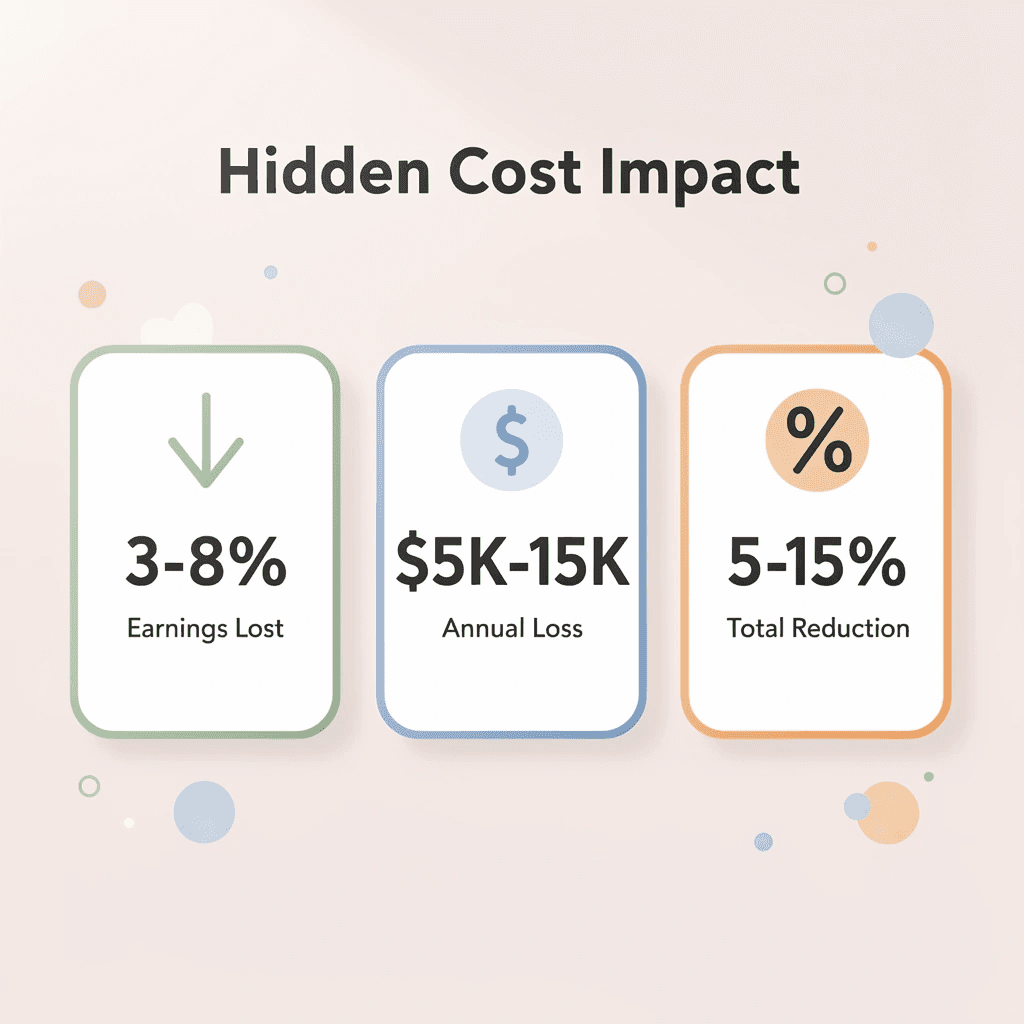
⚠️ Warning: These hidden costs compound over time, meaning a contractor earning $100,000 annually could lose $5,000-$15,000 to processing fees alone - money that never appears as a line item on most payment statements.

Currency Conversion Spreads
Banks and payment platforms obscure fees by adjusting exchange rates rather than disclosing them directly. A contractor receives money in their local currency without realizing the conversion occurred at a rate several percentage points worse than the mid-market benchmark. Tax Foundation's US International Tax Reform research shows these spreads typically range from 1.5% to 7.5%, depending on the provider and currency pair. A contractor receiving $4,000 per month could lose between $60 and $300 per payment due to exchange rate differences alone. The cost is embedded in the applied rate and is visible only when compared against the actual market rate.
Intermediary Bank Deductions
International payments often pass through multiple correspondent banks before reaching their destination. Each bank deducts $15 to $30 per transaction step, yet you cannot see how many banks will handle your money or what the final deduction will be. A $3,000 payment might arrive as $2,940 without explanation. The core problem is opacity: you cannot budget for unknown costs or contact banks you did not select.
Transfer Fees and Withdrawal Costs
Wire transfer fees accumulate quickly despite appearing modest. A $40 fee on a $10,000 payment represents 0.4% of the total, but on a $1,000 payment, it consumes 4%. Contractors receiving multiple smaller payments face repeated fees that erode their net income. Withdrawal fees compound these costs: transferring money from a payment platform to a local bank account, converting currencies, or obtaining cash via debit card each incurs separate charges. These expenses multiply depending on how contractors manage cross-border and multi-currency transactions.
How do small fees compound into major losses?
Think about someone making $5,000 each month from clients in other countries. A 2% exchange rate spread costs $100. A $25 wire fee adds another cost. Small withdrawal fees and forced conversions add $15 to $20. The monthly loss reaches $140, or $1,680 per year. For a contractor working 1,500 hours per year, that amounts to more than $1 per hour in lower effective earnings, despite maintaining the same client rates and workload.
How does transparent pricing help contractors regain control?
Modern payment infrastructure separates these costs instead of bundling them. Platforms like Ontop publish exact FX margins and use mid-market rates rather than applying hidden spreads, giving contractors visibility into the true cost structure before starting a transfer. When the exchange rate, transfer fee, and processing cost appear as distinct line items, contractors regain control over their take-home income.
Why Fast Payments Alone Are Not the Best Solution
Speed only matters if money becomes usable when it arrives. A payment that clears in minutes but gets stuck in bad currency rates, expensive conversion cycles, or accounts that only work in certain places solves one problem while creating others. The measure of an effective international payment system isn't speed, but how much control contractors keep over their earnings from receipt through spending.

💡 Tip: Before choosing a payment provider, calculate the total cost, including conversion fees, withdrawal charges, and account maintenance - not just the transfer speed.
"The real measure of an effective international payment system isn't speed, but how much control contractors keep over their earnings."

⚠️ Warning: Fast payments that arrive with limited spending options or high conversion costs can actually delay your ability to use your money effectively.

Limited Geographic Coverage Creates Access Barriers
Many platforms advertise instant transfers but support only a narrow band of countries or banking networks. A contractor working from Buenos Aires may relocate to Lisbon, only to discover that their payment platform doesn't serve Portugal, requires a different account type, or imposes withdrawal restrictions they haven't encountered before. According to the BIS Quarterly Review published in March 2024, over 100 jurisdictions now have access to fast payment systems, yet coverage remains fragmented across providers. Geographic limitations turn seamless payments into a logistical puzzle whenever a contractor crosses a border.
Multiple Accounts Multiply Administrative Friction
Fast payment arrival means little if contractors must move funds across three separate platforms before the money becomes spendable. One account receives the payment, another holds foreign currency, and a third converts to local currency for daily expenses. Each transfer introduces new fees, login credentials, and reconciliation tasks, eliminating the original speed advantage. Freelancers working across borders describe managing international earnings as messy—not because receiving payments is slow, but because accessing and using those payments requires constant platform hopping and manual coordination.
Automatic Conversion Removes Financial Control
Currency conversion stays expensive when automatic. Some payment systems convert all incoming funds to the local currency immediately upon arrival, using their own exchange rates and preventing contractors from keeping earnings in the original payment currency. A contractor earning in U.S. dollars but living in a country with currency fluctuations may prefer to hold funds in dollars until needed locally, converting only what's necessary when rates are favorable. Platforms like Ontop give contractors global accounts that hold multiple currencies without forced conversion, letting workers decide when and how much to exchange based on their financial strategy. Removing that choice costs contractors both money and flexibility.
How does travel expose weaknesses in payment systems?
Digital nomads encounter payment system problems most acutely when moving between countries. A contractor might receive funds promptly but then struggle to withdraw cash abroad, pay people in different currencies, or access banking services while traveling.
If every payment must be converted to a supported currency or moved to a local bank account, the payment system creates friction when flexibility matters most. The best international payment systems adapt to the contractor's location and needs rather than forcing the contractor to conform to the platform's requirements.
Why does transaction speed alone miss the bigger picture?
The idea that faster payments automatically make contractors happier focuses on speed alone, ignoring how they manage their money day to day.
What the Best International Contractor Payment Setup Actually Looks Like
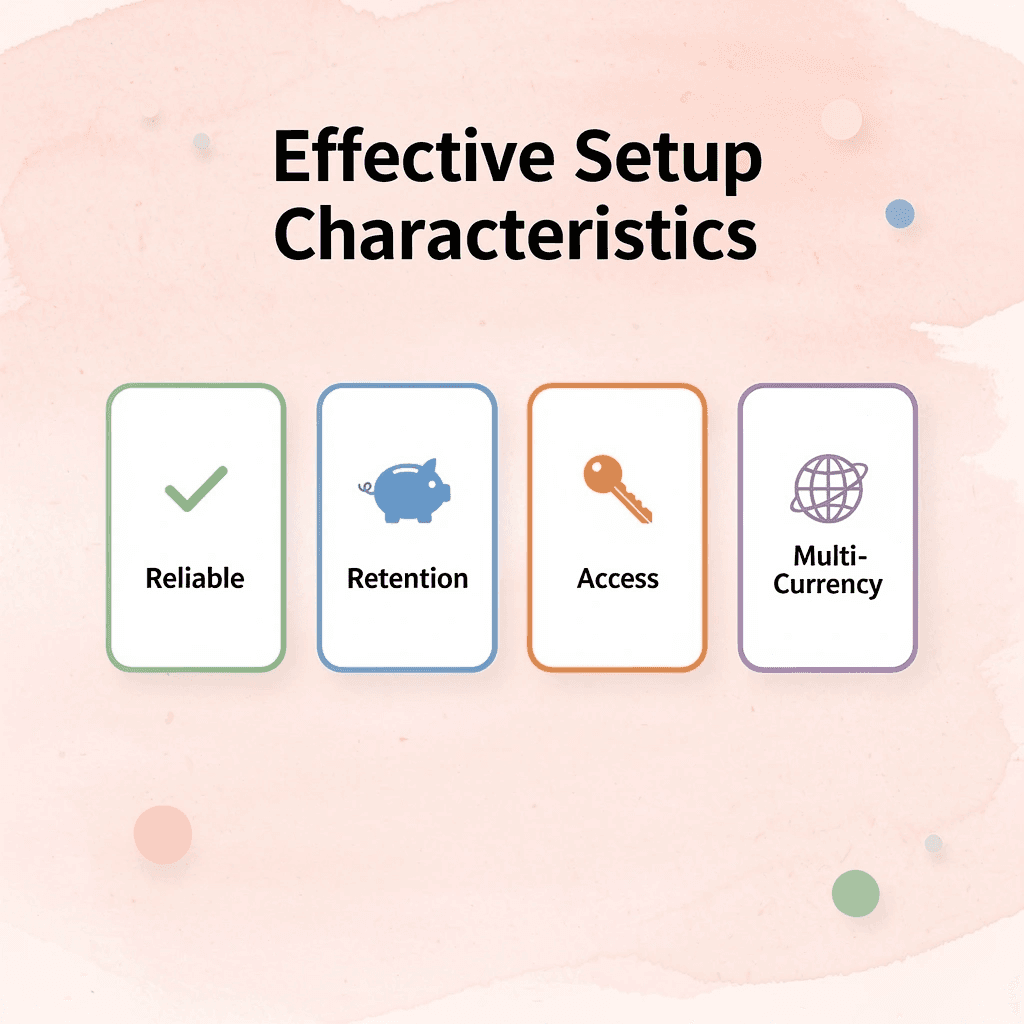
The best international contractor payment setup prioritizes reliability, maximizing your earnings, and easy access over speed, cost, or popularity. Five characteristics consistently distinguish effective setups from frustrating ones.
🎯 Key Point: The most successful international contractors prioritize payment reliability and access to funds over flashy features or the lowest fees.

"Reliability and fund retention are the foundation of sustainable international contractor operations, not transaction speed or marketing appeal." — Payment Systems Analysis, 2024
Effective Payment Setup Characteristics
- Reliable processing
- Why it matters:
- Ensures consistent and predictable income flow
- Reduces failed transactions and payment disruptions
- Why it matters:
- Higher fund retention
- Why it matters:
- You keep more of what you earn after fees and conversions
- Improves overall profitability and cash flow
- Why it matters:
- Easy access
- Why it matters:
- Enables quick withdrawals when funds are needed
- Reduces operational and liquidity delays
- Why it matters:
- Multi-currency support
- Why it matters:
- Simplifies global client payments and international transfers
- Minimizes conversion friction for worldwide business
- Why it matters:
- Compliance features
- Why it matters:
- Helps manage tax reporting and regulatory obligations
- Reduces administrative and legal headaches
- Why it matters:
⚠️ Warning: Many contractors choose payment platforms based on popularity or lowest advertised fees, only to discover hidden costs and reliability issues that cost them significantly more in the long run.
Predictability
The first requirement is knowing when money will arrive. Uncertainty creates financial stress, particularly for freelancers and independent contractors who depend on project-based income. When payment timing varies significantly between invoices, budgeting, bill payment, savings goals, and business investment planning all become difficult. A predictable payment setup provides consistent payout schedules and clear visibility into payment status. A freelance designer who invoices clients monthly can reliably schedule rent payments, recurring subscriptions, and tax allocations without maintaining excessive cash reserves as a safety buffer.
Transparency
Many contractors discover payment costs only after the money arrives. Transfer fees, exchange-rate markups, intermediary banking charges, and withdrawal costs reduce earnings without being immediately apparent. A strong payment setup displays applicable transfer fees, currency conversion rates, estimated payout amounts, and expected delivery timelines upfront. This transparency enables workers to accurately forecast actual earnings rather than estimate around unknown deductions.
Global Accessibility
Remote work is increasingly location-independent. A contractor may work in one country today and another six months from now. Digital nomads may move several times each year. An effective payment setup keeps earnings accessible regardless of location: workers can receive payments from other countries, access funds while traveling, use local banking systems when needed, and avoid unnecessary geographical restrictions. A software developer who spends part of the year in Southeast Asia and part in Europe should not need to rebuild their payment setup each time they cross a border.
What makes currency flexibility important for international payments?
Managing money for international contractors who earn in one currency and spend in another requires a robust payment setup. This provides flexibility to avoid repeated conversion fees, choose when to exchange currencies, hold earnings in preferred currencies, and manage exchange rate fluctuations. A contractor paid in U.S. dollars, for example, can keep funds in USD until exchange rates improve or expenses require local currency conversion.
How do contractors currently manage multiple payment platforms?
Most contractors manage multiple platforms because no single service does everything well. They receive funds from one provider, convert currency with another, and withdraw to local accounts with a third. As Plane notes, evaluating payment infrastructure requires balancing five key factors simultaneously. Platforms like Ontop consolidate these functions into a single global account, where contractors can receive payments in 150+ countries, hold multiple currencies, and access their earnings without moving funds across disconnected systems.
Administrative Simplicity
Managing international income requires tracking invoices, payment records, transaction histories, account information, and tax documentation. When these records are spread across multiple platforms, management becomes cumbersome. An effective payment setup keeps records organized and centralized. A freelance marketer working with clients in three countries benefits from a centralized system rather than maintaining separate records across multiple payment providers and banking platforms, which makes it easier to monitor earnings and locate documentation when needed.
The most effective setup balances reliable payment timing, transparent pricing, global accessibility, currency flexibility, and administrative simplicity, allowing contractors to focus on client work rather than managing payment logistics across borders.
Questions Every Contractor Should Ask Before Choosing a Payment Method
Choosing a payment method based on one advertised feature often creates serious problems. The cheapest-looking option frequently leaves less money in your account after all deductions. The fastest transfer may lock funds behind withdrawal restrictions for days. What matters is evaluating the complete payment journey, from when a client sends money to when you can spend, save, or invest those earnings.

🎯 Key Point: The advertised benefits rarely tell the full story - always examine the total cost and real timeline before committing to any payment platform.
"The right questions reveal whether a payment solution will support your financial needs or quietly erode them."

Key Questions to Evaluate a Payment Platform
- What are all the fees involved?
- Why it matters:
- Hidden charges can significantly reduce profit margins
- Includes transaction fees, FX markups, withdrawal fees, and platform costs
- Why it matters:
- How long until funds are actually available?
- Why it matters:
- Cash flow depends on real fund access, not just transfer initiation
- Delays can impact payroll, operations, and reinvestment timing
- Why it matters:
- What withdrawal restrictions exist?
- Why it matters:
- Some providers limit how or when you can access your own funds
- Restrictions may include minimum balances, holding periods, or payout schedules
- Why it matters:
- Are there volume limits or caps?
- Why it matters:
- Growing businesses need scalable payment infrastructure
- Transaction or withdrawal caps can become operational bottlenecks
- Why it matters:
⚠️ Warning: Many contractors discover costly limitations only after they've committed to a payment method and processed their first few transactions.

How Much Money Will I Actually Receive After All Fees Are Deducted?
This question should come first, yet most contractors skip it entirely. Payment providers advertise low transfer fees while applying currency conversion markups, withdrawal charges, intermediary banking deductions, and monthly account maintenance costs that never appear in initial pricing. The relevant amount is what remains in your account after all deductions, not what your client sends. A $5 transfer charge means nothing if the exchange rate markup costs you $150 and the withdrawal fee takes another $25.
How Are Exchange Rates Determined?
Exchange rates can reduce your earnings more than transfer fees ever will. Some providers use rates close to the interbank market rate, while others build large margins into every conversion, sometimes adding 3-5% without clearly disclosing it. Recurly's analysis of payment gateway selection emphasizes that understanding currency conversion methodologies helps prevent contractors from losing money due to unclear pricing models. If a platform doesn't explain how it calculates exchange rates, that lack of transparency should raise immediate concerns.
How Long Does It Take to Access Funds?
Payment speed and fund accessibility are not the same thing. A payment may arrive within hours but remain unavailable for withdrawal, transfer, or spending due to processing requirements or platform restrictions. Ask how long before funds become fully usable, not when they appear in your account balance. Contractors managing monthly expenses, tax obligations, or business investments need reliable access to earnings. The inability to use money in your account creates the same financial stress as delayed payments.
Can I Receive Payments From Clients Worldwide?
Not every payment platform works in every country, currency, or banking network. Contractors working with international clients should verify that their payment methods function in their target markets. Citcon's framework for evaluating global payment providers demonstrates that geographic coverage, currency support, and local payment method compatibility determine whether a solution enables or hinders growth.
What are the benefits of holding earnings in multiple currencies?
Many contractors earn money in one currency and spend it in another. Automatically converting funds creates unnecessary exchange costs and reduces flexibility. The ability to hold earnings in U.S. dollars or multiple currencies lets you control when and how conversions happen, which is particularly valuable for digital nomads, frequent travelers, and contractors operating across several markets. You decide when to exchange based on spending needs and market conditions rather than losing money on forced conversions at unfavorable rates.
Which platforms offer multi-currency account features?
Platforms like Ontop let contractors get paid in multiple currencies, hold funds in their accounts without currency conversion, and access funds through a global account that operates in more than 150 countries. Contractors keep more of their earnings because the platform eliminates middleman fees and displays transparent exchange rates instead of hiding charges in each transaction.
Related Reading
- How To Pay a Foreign Contractor
- How to Hire Overseas Contractors
- Benefits Of Hiring Remote Workers
- International Payroll Management
- Best Way To Pay International Contractors
- Benefits Of Hiring International Employees
- Best International Payroll Providers
- B2b Cross-border Payments
How Ontop Helps International Contractors Keep More of What They Earn
Ontop brings all payments together in one place where contractors get paid in over 150 countries, keep money in US dollars without conversion, and use a global Visa card to access their funds. The platform eliminates extra bank fees, displays clear exchange rates, and lets contractors see exactly how much they'll receive before accepting payment, eliminating the need for different tools to receive, convert, hold, and spend money.

🎯 Key Point: With Ontop's unified platform, international contractors can eliminate the hassle of juggling multiple financial tools and avoid hidden conversion fees that eat into their earnings.
"Over 150 countries supported with transparent exchange rates and zero hidden fees - giving contractors full visibility into their earnings before payment acceptance." — Ontop Platform Features
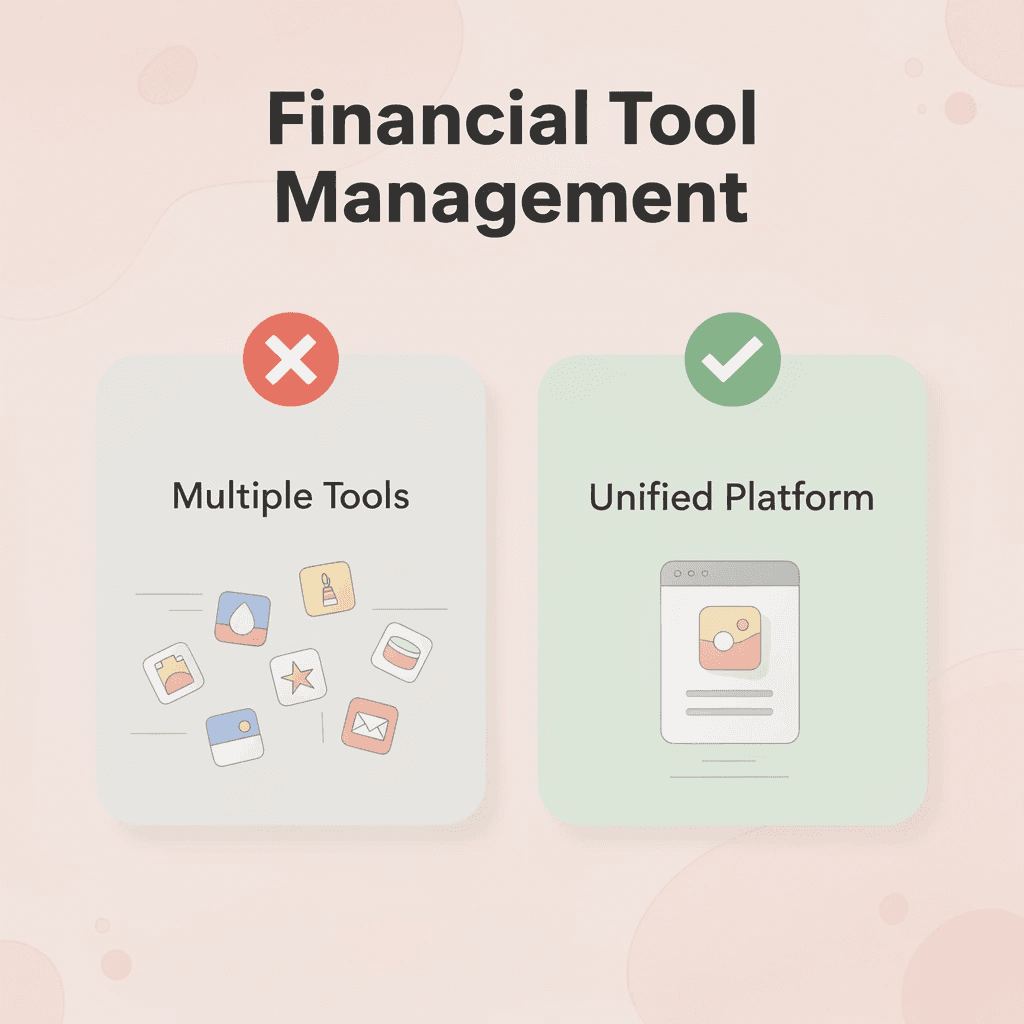
💡 Tip: By keeping funds in US dollars and using Ontop's global Visa card, contractors can avoid the currency conversion losses that typically occur with traditional banking solutions.
Receive Payments Without Intermediary Deductions
Traditional international transfers go through correspondent banks, which each charge $15 to $30 in handling fees before the funds reach a contractor's account. Ontop's infrastructure sends payments directly to contractors, eliminating these intermediaries. A contractor receiving $3,000 monthly keeps the full invoice amount rather than losing $45 to $90 during transfer. According to Bitwage's research, companies can cut costs up to 60% by optimizing international payment infrastructure.
Hold Earnings in USD When It Makes Sense
Many contractors earn money from U.S. clients, but their payment platforms immediately convert funds into local currency, locking in the day's exchange rate. Ontop provides a USD account where contractors can hold earnings until they choose to convert or spend them. A freelance designer in Mexico City working with three American agencies can accumulate USD payments throughout the month, then convert strategically when rates favor their local currency or use the funds directly for international purchases.
Access Funds Through Integrated Spending Tools
Getting money solves only half the problem. Contractors need practical ways to use earnings for rent, groceries, software subscriptions, and business expenses without having to move funds across multiple platforms. The global Visa card connects directly to the Ontop account, converting received payments into spendable funds. A contractor traveling between Buenos Aires, Lisbon, and Bangkok can pay for coworking spaces, accommodation, and meals with the same card without opening a new account in each country.
Simplify Financial Administration
Paysend's partnership announcement demonstrates how consolidating fragmented payment processes benefits millions of workers. Most contractors maintain separate accounts for receiving payments, holding foreign currency, converting to local currency, and withdrawing funds—each requiring its own login, transaction history, and reconciliation. Ontop unifies these functions, allowing contractors to view all earnings in one dashboard, download a single transaction record for taxes, and eliminate transfers between services. Managing four or five financial relationships reduces to one.
How does streamlined onboarding help contractors start earning faster?
Administrative friction delays income before work even begins. Traditional payment setups require contractors to submit documentation, wait for account verification, provide banking details, and complete compliance checks that span multiple weeks.
Ontop's onboarding process enables contractors to begin receiving payments within days of signing their first international contract. A software developer accepting a three-month project with a Canadian startup can invoice for the first milestone without waiting for lengthy payment infrastructure setup: cash flow starts when work starts rather than weeks later.
Why does working with understanding companies matter?
But keeping more of what you earn only matters if you're working with companies that understand how global teams work today.
Book a Demo Today - See why 950+ Companies Trust OnTop to Power their Global Teams
Ontop's USD account and global payment tools make it easier to manage money you earn around the world. In your first session, see how you can manage earnings from one place, reducing payment problems, currency management challenges, and access issues that come with working across borders.

🎯 Key Point: With Ontop's centralized platform, you can eliminate the complexity of managing multiple payment systems and currency conversions across different countries.
"Over 950 companies trust Ontop to power their global teams, demonstrating proven reliability in international payment management." — Ontop, 2024

Over 950 companies trust Ontop to power their global teams. Book a demo to explore how contractors receive payments in 150+ countries while maintaining full control over when and how funds are converted, spent, or saved.
💡 Tip: Take advantage of the demo to see firsthand how Ontop's platform can streamline your entire international payment workflow and reduce administrative overhead.

Related Reading
- Best Payroll Software For Staffing Companies
- Best Payroll Outsourcing Companies
- Deel Vs Oyster
- Best International Payroll Software
- Best Payroll For Contractors
- Remote Competitors
- Velocity Global Competitor
- ADP Alternative