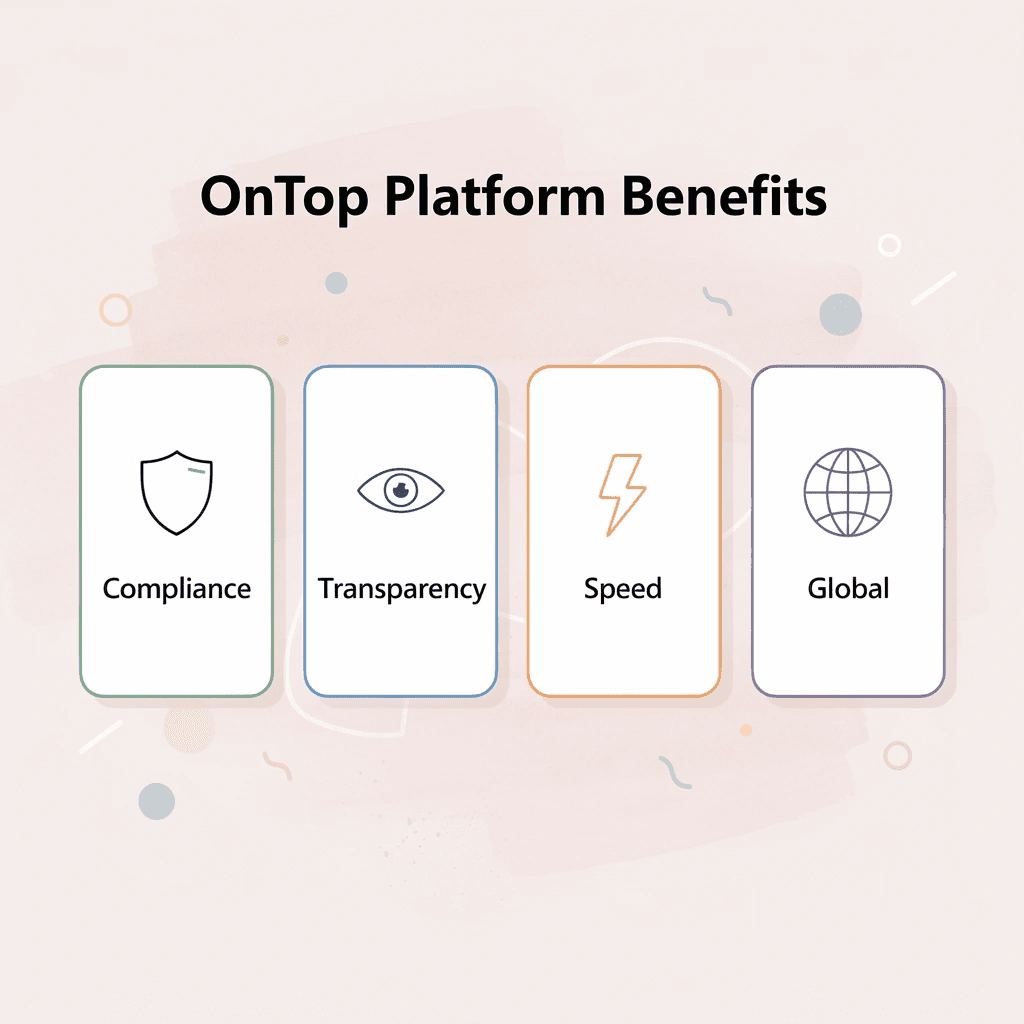






Managing payroll across borders creates significant administrative challenges for companies with global teams. Each country brings distinct tax codes, compliance requirements, and labor laws that multiply the complexity exponentially. Multi-country payroll outsourcing has emerged as a strategic solution to eliminate these compliance headaches while reducing costs and administrative burden.
Companies no longer need to juggle different vendors, currencies, and payment systems across regions when they have the right tools in place. A centralized platform can handle local compliance, tax calculations, and payment delivery for contractors and employees worldwide, allowing businesses to focus on growth rather than wrestling with international employment law through reliable payroll software.
Summary
- Payment delays affect 40% of remote workers earning internationally, creating cash flow instability that has nothing to do with work quality or client reliability. Hidden currency conversion fees consume between 3% and 7% of each cross-border payment, according to fintech industry analysis, meaning workers can lose the equivalent of two to four weeks of annual income simply to banking infrastructure that wasn't designed for how they earn. These losses compound monthly, turning structural inefficiency into a material financial impact that reduces savings capacity and undermines the viability of long-term remote work.
- Traditional banking infrastructure treats international payments as exceptions that require manual review rather than as routine transactions. This explains why transfers get flagged for compliance checks and held for verification even when both parties have established payment histories. Workers experience this friction in the form of unpredictable payment timing, which makes basic financial planning difficult, particularly when moving between countries or managing expenses across multiple currencies.
- Organizations managing payroll across multiple countries face 70% higher compliance complexity according to 2025 global payroll research, with local tax and labor law variations creating an ongoing administrative burden. Companies with unified payroll platforms process payments 30% faster than those with fragmented vendor relationships, directly improving cash-flow predictability for distributed workers. Cloud-based systems reduce compliance errors by 25% through automated updates to tax rules and employment regulations across jurisdictions.
- Multi-currency accounts protect remote workers from income erosion during currency volatility. Contractors who can hold earnings in USD or other stable currencies avoid losing 15% to 20% of their income during local-currency devaluation, compared to those forced into immediate conversion at unfavorable intermediary-bank rates. This flexibility matters most for workers in countries experiencing significant currency fluctuations who need financial stability despite macroeconomic instability.
- The shift toward remote work persists, with 98% of remote workers wanting to continue working remotely at least part-time, according to industry surveys. That preference remains sustainable only when payment infrastructure supports, rather than undermines, financial stability across borders. Platforms achieving 40% month-over-month client growth reflect market demand for systems that compress onboarding from weeks to minutes while maintaining compliance across 150+ countries.
- Payroll software addresses this by treating cross-border payments as the operational default rather than administrative exceptions, consolidating compliance tracking, contract management, and multi-currency payment processing into a unified infrastructure that works for both companies and distributed workers.
Why Getting Paid Internationally Still Feels Hard for Remote Workers
Payment infrastructure was built for a different time. Banks designed systems when employees worked in one country, earned one currency, and stayed in the same place. Remote workers today move between countries, earn money from multiple clients across different time zones, and need money to move as fast as the work itself. The gap between how global work happens now and how money moves creates problems.

🎯 Key Point: Traditional banking systems weren't designed for the modern remote workforce that operates across multiple currencies and time zones simultaneously.
"The gap between how global work happens now and how money moves creates real problems for remote workers who need instant access to their earnings." — Global Payment Infrastructure Report, 2024

⚠️ Warning: This infrastructure mismatch means remote workers often face delayed payments, high transfer fees, and currency conversion issues that traditional employees never encounter.
The hidden cost of moving money across borders
According to Career Launch Campus Blog, 40% of remote workers report payment delays when working with international clients, meaning nearly half cannot count on steady cash flow even when their work is finished and approved.
Fintech Weekly found that hidden fees amount to 3-7% of the payment value. For someone earning $5,000 monthly across borders, that's $150 to $350 lost before the money reaches their account. Over a year, this loss significantly impacts savings, travel plans, and the viability of remote work.
When payment systems don't match work patterns
Traditional banking assumes stability: you live somewhere, bank there, get paid there. Remote workers rarely fit that pattern. A contractor based in Mexico working for a German client while traveling in Southeast Asia needs income to arrive reliably, convert cleanly, and remain accessible across different financial systems.
Most banks treat cross-border payments as exceptions rather than routine transactions. Transfers get flagged for review, held for compliance checks, or delayed while intermediaries verify details. The contractor did nothing wrong, and the client paid on time; the infrastructure between them simply wasn't designed for how they work.
How does payment uncertainty affect remote workers emotionally?
When payment timing becomes unreliable, remote workers make defensive decisions: holding larger cash reserves, delaying purchases, and avoiding certain clients or countries due to transfer failures. The opportunity remote work promises narrows because the financial foundation feels unstable.
What solutions address cross-border payment challenges?
Platforms like payroll software treat international payments as the default by building infrastructure for cross-border work rather than routing them through domestic banking networks. With Ontop, contractors get paid in seconds rather than days, with clear fees and currency conversion built directly into the platform, eliminating the uncertainty that makes global income feel risky.
What matters most is what happens to workers when the infrastructure catches up to how they earn.
What Multi-Country Payroll Outsourcing Means for Workers
Multi-country payroll outsourcing removes workers' complete dependence on their employer's ability to navigate foreign tax codes, banking systems, and compliance requirements. Specialized platforms like Ontop handle the complex legal, financial, and administrative burden of cross-border employment, creating a predictable payment infrastructure. For workers, this enables faster onboarding, clearer contracts, and more reliable access to earnings across borders.

🎯 Key Point: Workers gain payment security and predictable compensation timelines when employers use specialized payroll platforms instead of managing international payments in-house.
"Multi country payroll outsourcing creates predictable payment infrastructure that eliminates workers' dependence on their employer's international compliance capabilities."

💡 Tip: Workers should actively seek employers who use established payroll platforms for international hiring, as this typically results in smoother payment processes and better overall employment experience.
How does outsourcing speed up the hiring process?
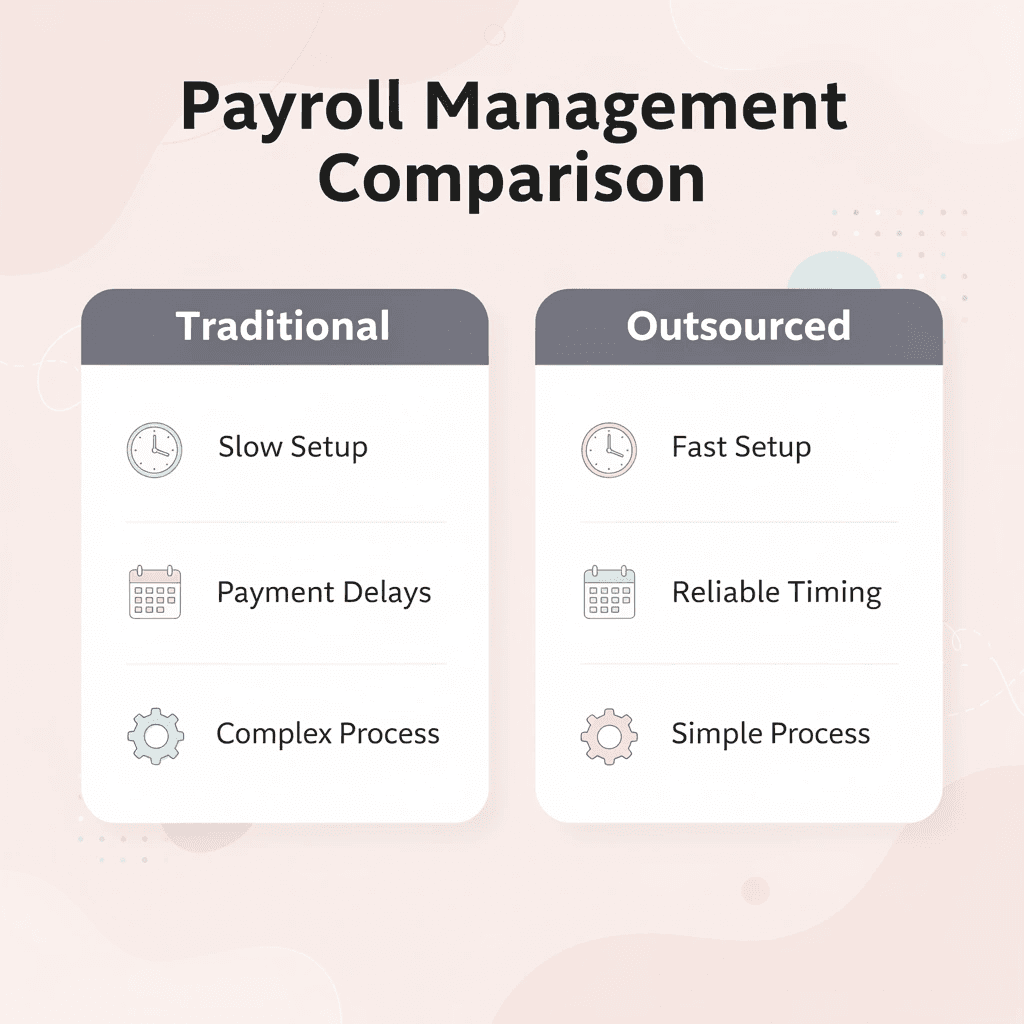
The operational difference shows up right away. A contractor in Argentina hired by a Canadian startup no longer has to wait weeks for legal paperwork to be processed across multiple departments. Our payroll platform creates compliant contracts, collects tax documentation, and sets up payment rails in days or hours. This speed matters because slow onboarding signals operational dysfunction: when companies struggle to set up payments, workers correctly interpret it as a warning about how smoothly everything else will function.
How does the employment model affect worker autonomy?
The employment model determines what workers manage themselves versus what gets handled automatically. Independent contractors invoice clients directly, offering scheduling flexibility but creating ongoing administrative overhead: tracking invoices, managing quarterly tax estimates, handling currency conversions, and absorbing banking fees without employer support. That autonomy feels liberating until tax season exposes how much financial administration you've deferred.
Why do most companies struggle with direct employment?
Hiring someone directly through a local company provides structure, but only works if the company is already legally operating in your country. Most startups and mid-sized companies lack legal offices in 45+ countries, making this option unavailable for most international workers. Employer of Record arrangements solve this by legally hiring workers for foreign companies and managing payroll, benefits, and local compliance. Success depends entirely on the EOR provider's systems and resources, which vary significantly across providers.
How do modern platforms improve traditional EOR models?
Traditional EOR models feel slow and expensive because they were built for corporate relocations, not distributed teams. Companies pay premium fees for legal entities they don't control, while workers experience slower onboarding, rigid payment schedules, and limited flexibility. Ontop enables direct contractor relationships with automated compliance, compressing onboarding from weeks to minutes and payments from days to seconds. Workers get paid faster with transparent fees, and companies retain control over hiring rather than outsourcing employment relationships entirely.
How do payment systems shape worker perceptions?
Payroll systems shape how workers think about company reliability long before performance reviews or project feedback. Consistent, clear payments build confidence that the working relationship functions as promised. Irregular payment timing, unexpected fees, or confusing tax documentation creates doubt that extends to how workers evaluate project communication, deadline expectations, and long-term commitment.
Why do cross-border payment costs vary so dramatically?
According to the World Bank's Remittance Prices Worldwide database, cross-border payment costs vary by location. A contractor in the Philippines loses 6% of each payment to banking fees and currency conversion, while someone in Germany loses 2%. Payroll platforms can either perpetuate this disparity or address it by offering transparent pricing and improved payment options.
How does payroll complexity affect remote work relationships?
Remote workers already navigate time zones, cultural differences in communication, and geographic distance. When payroll issues compound these challenges, even strong work relationships suffer. Workers evaluate job opportunities not only by project quality and compensation, but also by payment accessibility and the ease of managing finances across borders without excessive paperwork and stress.
Related Reading
- Best International Payroll Software
- Pay International Employees
- How Much Does It Cost To Outsource Payroll
- Global Payroll Implementation
- Benefits Of Hiring Remote Workers
- International Payroll Management
- Multi-Country Payroll Outsourcing
The Biggest Global Payroll Problems Remote Workers Face
The work gets done perfectly, but the money arrives late, incomplete, or with unexpected deductions. Remote workers have already delivered value, yet they're left dealing with money problems unrelated to their performance. The biggest payroll problems they face aren't about earning potential—they're about receiving money they've already earned without losing money, time, or stability.

🎯 Key Point: The most frustrating aspect of global payroll isn't earning potential—it's the reliability gap between completed work and actual payment receipt.
"Remote workers consistently report that payment delays and unexpected fees are their top concerns, even when they're satisfied with their compensation rates." — Global Remote Work Survey, 2024

⚠️ Warning: These payroll disruptions can create cash flow problems that force remote workers to take on additional financial stress despite having steady work income.
How do currency conversion fees impact international payments?
Every time money crosses borders, someone takes a cut. A contractor in Colombia receives £2,000 from a UK client, but intermediary banks apply their own exchange rate markups and transfer fees. The funds arrive as the equivalent of £1,850 after conversions, processing fees, and spread charges compound across the transaction chain.
According to research from the Financial Stability Board's cross-border payments program, international payments face persistent challenges involving transparency, speed, cost, and accessibility despite major modernization efforts. These losses accumulate with each payment cycle, steadily reducing real income.
Why do digital nomads face compounding currency losses?
Digital nomads face this problem repeatedly. A designer moving between Portugal, Thailand, and Argentina over six months gets paid in euros while converting to local currencies for daily expenses. Each conversion incurs a loss.
Over a year, the combined effect equals weeks of unpaid work, since financial infrastructure was never designed for people who earn in one currency, save in another, and spend in a third.
Why do remote workers struggle with tax documentation clarity?
Remote workers operating across countries often lack clarity about tax obligations. A freelancer based in Mexico working for companies in the US, Germany, and Australia may receive conflicting guidance on withholding requirements, tax treaties, and reporting deadlines.
Some clients withhold taxes automatically; others don't. Workers are left to navigate mismatched systems without professional accounting support, uncertain whether they're following regulations or accumulating future liability.
How do compliance challenges affect organizations and contractors?
According to iiPay's 2025 global payroll research, 70% of organizations cite the following local tax and labor laws as their biggest payroll challenge. Individual contractors face this obstacle without dedicated legal and finance teams.
Many people discover tax problems only when filing taxes, too late to adjust withholdings or retrieve missing paperwork from clients who have moved on.
Why do international payments create timing uncertainty?
A contractor finishes work on the first of the month but doesn't know when payment will arrive. International wire transfers take three to seven business days, depending on banking relationships, intermediary processing, and compliance reviews. Currency conversion and transfers across multiple countries further extend delays.
Workers cannot reliably plan for rent, bill payments, or savings because income timing changes unpredictably from cycle to cycle.
How does worker mobility complicate payment delays?
This problem worsens when workers travel. A remote employee working from Bali sends an invoice to a Canadian company. The payment goes through US banking systems before converting to Indonesian rupiah.
Manual checking and weekend delays extend timelines, turning regular income into a logistical puzzle that disrupts daily financial stability.
What solutions eliminate traditional payment delays?
Platforms like payroll software solve this problem by consolidating cross-border payments into a single system that processes transfers in seconds rather than days. Our Ontop platform gives contractors quick access to their earnings through global accounts that eliminate the delays and extra steps of traditional banking.
What happens when support responsibility is fragmented across vendors?
When something goes wrong with a payment, remote workers often cannot determine who can fix it. The hiring company points to their payroll vendor, the vendor blames banking intermediaries, and the bank claims the issue stems from incorrect sender information. A contractor waiting for a missing payment may spend days navigating this fragmentation without resolution, while bills remain unpaid and financial stress mounts.
Why do problems fall through the cracks in multi-country payroll?
This happens because traditional payroll systems were built for domestic employment, where a single entity controls the entire payment chain. In multi-country arrangements, responsibility is split among vendors, banks, and compliance providers. No single party owns the full worker experience, so problems fall into gaps between systems.
A simple question about why a payment is delayed becomes an investigation across disconnected platforms, often without clear answers or realistic resolution timelines. But fixing these operational problems only matters if the underlying infrastructure can support how modern work functions.
What Better Global Payroll Infrastructure Looks Like
Better payroll infrastructure starts with visibility. Workers should see payment status in real time, exact amounts after fees, and clear payout timelines, eliminating the need to contact support or guess about their finances. Our payroll software provides this transparency by default, helping remote teams stay informed about their earnings.

Speed matters equally. According to BIPO, unified payroll platforms process payments 30% faster than fragmented systems. Faster processing reduces delays, cash flow uncertainty, and income unpredictability for remote workers.
Centralized onboarding reduces early friction
When contracts, tax forms, compliance documents, and banking setup are scattered across email threads, Slack channels, and separate vendor portals, workers waste days searching for information. Centralized onboarding consolidates these into a single, organized workflow, reducing back-and-forth and establishing relationships with clear communication.
Platforms like payroll software accelerate onboarding by automating compliance checks, contract generation, and payout setup across 150+ countries. Our solution enables workers to establish global accounts immediately while companies retain full control over hiring decisions without paying for expensive intermediaries.
How does multi-currency flexibility protect remote workers from income loss?
Remote workers living in Argentina while earning USD, or based in Portugal while invoicing clients in GBP, face constant currency exposure. Poor payroll systems force repeated manual conversions, eroding income unpredictably. Our payroll infrastructure provides multi-currency accounts, transparent exchange rates, and payout options that let workers hold funds in their preferred currency until they choose to convert.
Why does currency volatility timing matter for contractors?
This flexibility matters most when currency values change quickly. A contractor in Turkey who holds USD earnings through a global account avoids losing 15-20% of their income when the lira loses value, compared to someone forced to convert to local currency immediately at unfavorable rates set by intermediary banks.
Financial tools beyond basic payouts
Strong payroll infrastructure extends beyond transferring money. USD accounts, global payment cards, expense management features, and cross-border banking access enable workers to operate smoothly across countries without relying on local banking systems that may restrict international transactions or charge excessive fees.
Organizations using cloud-based payroll systems experience 25% fewer compliance errors because automated systems continuously update tax rules, employment regulations, and reporting requirements across jurisdictions. Workers benefit through fewer payment corrections, reduced tax documentation mistakes, and less administrative cleanup.
But infrastructure quality only matters if it changes how work feels day-to-day.
Why Payroll Infrastructure Impacts Remote Work Quality of Life
Payroll infrastructure determines whether remote work feels sustainable or uncertain. Smooth payment systems give workers predictability, mobility, and confidence that international employment can succeed long-term without administrative chaos.

🎯 Key Point: The difference between thriving and surviving as a remote worker often comes down to how reliably and efficiently you get paid across borders.
"Reliable payroll infrastructure is the foundation that transforms remote work from a temporary experiment into a sustainable career path." — Remote Work Quality of Life Study, 2024

💡 Best Practice: When evaluating remote opportunities, always assess the payment reliability and currency flexibility before considering salary figures alone.
Financial predictability creates breathing room
Consistent payout timing lets remote workers plan their lives with certainty. Knowing exactly when income arrives makes budgeting across currencies manageable: paying rent in euros while earning dollars, or planning travel without worrying if funds will clear in time. According to Buffer's State of Remote Work report, 98% of remote workers want to continue working remotely at least some of the time, but that preference depends on payment systems that support financial stability. Unpredictable transfers force constant recalculation, adjusting plans around unclear processing windows and unexpected banking delays that make international work feel unstable.
Centralized systems reduce invisible labor
The administrative burden of fragmented payroll manifests in hours spent tracking invoices across platforms, chasing unclear payment statuses, and manually reconciling tax documentation that should flow automatically. Workers operating across multiple clients or contracts often manage this complexity on their own, piecing together payment histories from scattered emails and banking notifications. Integrated infrastructure eliminates this invisible work by consolidating contract details, payout tracking, and compliance documentation in one place. This recovered time and reduced stress accumulate significantly across months and years of international employment.
Mobility depends on financial infrastructure
Digital nomads moving between countries face logistical challenges that reliable payroll systems either solve or exacerbate. Delayed transfers create problems when workers need funds accessible in a new country, particularly when banking systems don't communicate smoothly across borders. Our payroll software at Ontop addresses these challenges with faster processing and multi-currency support.
Faster payment processing and multi-currency flexibility enable workers to move without financial friction, constantly operating in the background.
What challenges do fragmented payment systems create?
Most teams handle global contractor payments through fragmented systems, creating compliance gaps, inconsistent payout timing, and administrative overhead that scales poorly as contractor networks expand across dozens of countries.
Platforms like payroll software centralize multi-country payments, automate compliance tracking, and provide unified contractor management, compressing onboarding from weeks to minutes while giving workers transparent access to earnings across 150+ countries.
How does payroll infrastructure affect career sustainability?
The payroll system a company uses affects whether working remotely feels like a stable career or a constant struggle with money worries. Better systems create stability that lets workers focus on their work rather than on operational problems.
When payments arrive on time, onboarding is clear, and financial tools work across borders, international employment becomes a realistic long-term choice. But infrastructure alone doesn't solve the coordination challenges companies face when managing distributed teams across multiple jurisdictions.
Related Reading
- How To Pay a Foreign Contractor
- How to Hire Overseas Contractors
- Benefits Of Hiring Remote Workers
- International Payroll Management
- Best Way To Pay International Contractors
- Benefits Of Hiring International Employees
- Best International Payroll Providers
- B2b Cross-border Payments
How Ontop Helps Global Teams Simplify Multi-Country Payroll Outsourcing
The coordination problem extends beyond moving money across borders to syncing onboarding workflows, contract management, compliance documentation, and payment schedules across jurisdictions with different legal frameworks, banking systems, and administrative timelines. When a company hires talent in Argentina, Portugal, and Thailand simultaneously, each jurisdiction introduces unique requirements that don't align naturally. Ontop consolidates these fragmented processes into a single operational layer, handling cross-border payroll across over 150 countries without requiring companies to establish legal entities in each location or manage disconnected vendor relationships for every new market.
🎯 Key Point: Managing global payroll isn't just about currency conversion—it's about synchronizing complex workflows across multiple jurisdictions with different legal requirements and operational timelines.

"Companies expanding globally face the challenge of coordinating fragmented processes across 150+ countries with varying legal frameworks and banking systems." — Global Payroll Complexity Analysis, 2024
💡 Best Practice: Instead of managing separate vendor relationships for each country, Ontop's unified platform eliminates the need for multiple legal entities while ensuring compliance across all jurisdictions where you hire talent.

How does centralized infrastructure replace fragmented vendor relationships?
Traditional multi-country payroll requires separate relationships with local payroll providers, banking partners, compliance consultants, and tax advisors in each country. A company hiring in five countries manages five different contracts, five sets of documentation requirements, five payment schedules, and five points of failure. Each new country adds another vendor relationship, another integration challenge, and another compliance risk.
What advantages does unified payroll software infrastructure provide?
Payroll software replaces that fragmented model with a unified infrastructure. Our platform helps companies manage global contractor payments through a single system, rather than coordinating with multiple regional providers. Onboarding happens in minutes instead of weeks. Payments are processed through integrated systems designed for cross-border work, shifting the administrative burden from vendor coordination to execution within a single workflow.
Speed that changes hiring dynamics
According to the Business Model Canvas Template's analysis of Ontop's growth metrics, the platform achieved 40% month-over-month growth in its client base. This reflects demand for faster, more flexible global hiring. Companies are abandoning traditional EOR models with lengthy setup times in favor of systems that accelerate onboarding without compromising compliance. When a contractor in Buenos Aires can go live the same day a contract is finalized, administrative delays no longer constrain hiring decisions. Our payroll software enables teams to respond to project needs, seasonal demand, and unexpected opportunities without waiting for payroll infrastructure to catch up.
Financial tools that improve worker retention
Workers need financial infrastructure that works across the countries where they live, work, and travel. A contractor based in Mexico City, invoicing a client in Berlin while planning a three-month stay in Lisbon, faces currency exposure, banking access challenges, and financial planning complexity that traditional payroll systems weren't designed to handle. Ontop provides USD accounts, global Visa card access, and financial perks that give workers more control over how they receive, hold, and spend earnings across borders. Financial friction drives talented people toward opportunities offering greater stability and flexibility, even when the work itself is comparable.
What tension do companies face when scaling globally?
The "Managed by you, powered by Ontop" positioning reflects a genuine tension that companies face as they grow globally. Traditional EOR services handle administrative work but remove direct control over hiring decisions, contract terms, and worker relationships.
Building in-house global payroll infrastructure gives control but requires legal entities, compliance expertise, and operational capacity that most companies cannot justify until reaching significant scale. Automation offers a middle path: companies define contractor relationships, set payment terms, and manage workflows directly while the platform handles compliance documentation, tax calculations, and cross-border payment execution.
Why does infrastructure adoption depend on user experience?
But infrastructure adoption only matters if users find it easier than the systems they're replacing.
Related Reading
- Best Payroll Software For Staffing Companies
- Best Payroll Outsourcing Companies
- Deel Vs Oyster
- Best International Payroll Software
- Best Payroll For Contractors
- Remote Competitors
- Velocity Global Competitor
- ADP Alternative
Book a Demo Today - See why 950+ Companies Trust OnTop to Power their Global Teams
The platform you choose should make work easier for users, not just managers. Most multi-country payroll systems are optimized for compliance officers and finance departments, while contractors face confusing interfaces, delayed support, and unclear payment timelines. When your infrastructure creates friction for the people you're paying, you lose efficiency and signal that their experience doesn't matter—top talent notices.

🎯 Key Point: The best global employment platforms prioritize user experience for both employers and contractors, not just backend compliance.
"When your infrastructure creates friction for the people you're paying, you lose efficiency and signal that their experience doesn't matter—and top talent notices."

Over 950 companies use Ontop because it eliminates that trade-off. You get compliance automation, transparent pricing, and onboarding in minutes instead of weeks, while contractors receive global accounts to manage payments, convert currency at competitive rates, and access earnings without waiting on intermediary banks. Book a demo today to see how infrastructure designed for both sides of the employment relationship transforms what's possible when building across borders.
💡 Tip: Look for platforms that offer real-time payment tracking and direct contractor support—these features indicate the system was built with the entire user experience in mind.