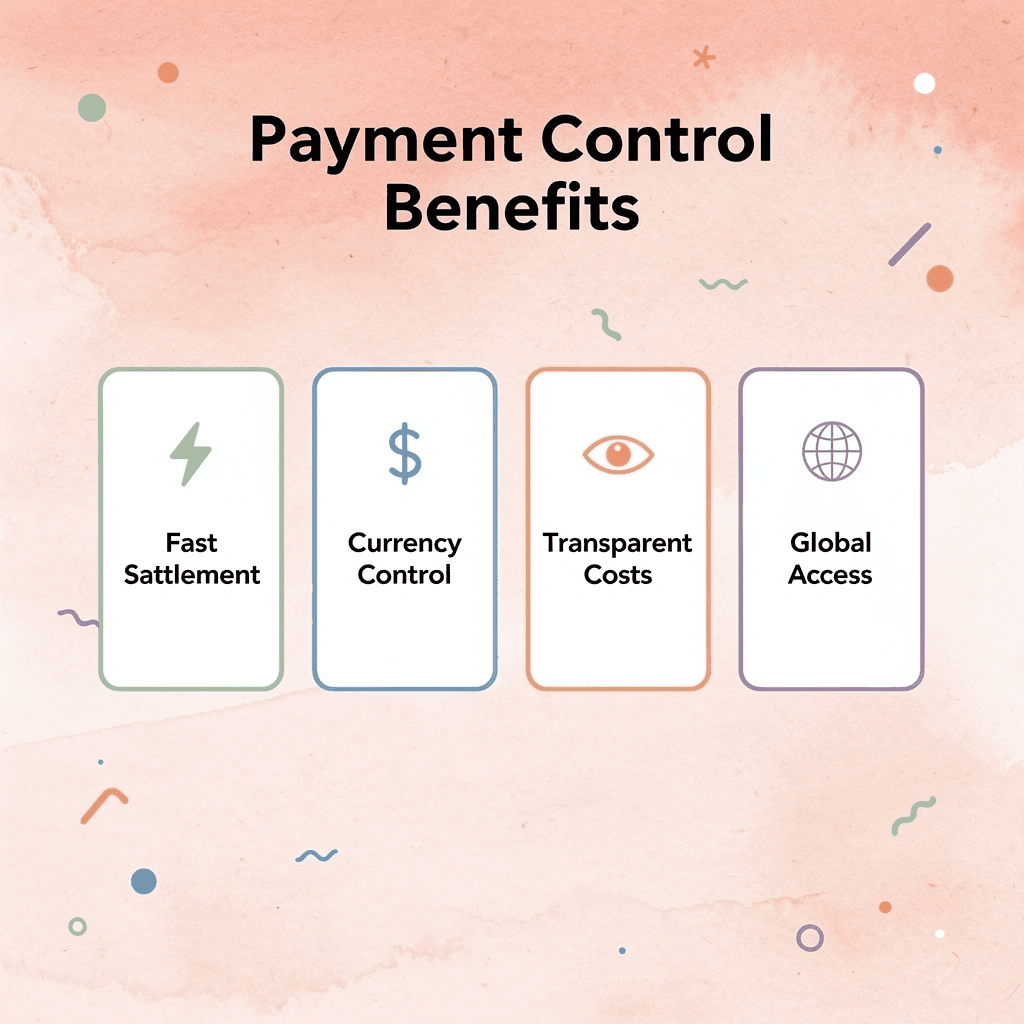






Managing a global workforce becomes complex when companies need to pay employees across different countries, each with unique tax laws, currency requirements, and compliance regulations. Startups hiring their first remote developer and established companies expanding into new markets both face the challenge of handling international payroll, cross-border payments, and contractor compensation. Understanding payment methods, tax withholding, and legal requirements keeps businesses compliant while supporting their global teams.
The right solution transforms monthly payroll from a potential headache into a streamlined process. Companies can avoid juggling multiple vendors, spreadsheets, and banking relationships by choosing comprehensive platforms that handle currency conversions, local tax calculations, and timely payments, meeting each country's labor laws. These systems manage contractor payments, full-time employee salaries, and compliance documentation required for international employment through effective payroll software.
Summary
- Cross-border payments still rely on correspondent banking networks designed for occasional international transactions rather than for regular salary payments to distributed workers. These systems route each payment through multiple intermediary banks, adding compliance checks, processing time, and fees at every step. According to BILL's 2025 State of B2B Payments report, 73% of SMBs experienced at least one payment issue in the past year. The infrastructure punishes global work by design, not by accident.
- The global average cost of sending remittances hovers around 6% to 6.5% as of late 2024 and early 2025, with Q3 2024 reaching 6.62 percent according to the World Bank's Remittance Prices Worldwide database. These costs hide in transfer fees and exchange rate margins that most workers never calculate. Currency conversion spreads typically range from 1% to 4%, depending on the provider and currency pair, meaning the gap between the contract amount and the actual take-home can exceed 10% before funds become usable.
- Payment speed determines financial stability more than most systems acknowledge. Cross-border payments can take up to 5 business days to settle, depending on banking route and regulatory requirements, creating gaps between when workers expect money and when they can actually use it. A three-day delay between payment initiation and fund availability creates cash-flow problems that force costly short-term decisions, such as overdraft fees or delayed savings contributions.
- Currency conversion is the highest hidden cost in international payments, often exceeding visible transfer fees by multiples, according to research from the Bank for International Settlements. Payment platforms advertise low headline fees while marking up exchange rates by 3% to 4% above mid-market rates without clearly stating it. This difference doesn't appear as a line item; it just reduces the amount that arrives in your account, and the timing of conversion introduces volatility that workers can't predict or manage.
- Contractor classification shifts all responsibility for tax withholding, benefits administration, and compliance to individual workers. Missing a filing deadline or misunderstanding the local tax treatment of foreign income can result in penalties that accumulate quickly, often discovered only when tax authorities send notices months or years later demanding back payments with interest. The risk grows every payment cycle until something forces it into the open.
- Multi-currency accounts give workers control over when to convert and the exchange rate, rather than forcing an immediate conversion at unfavorable rates. The ability to wait for better rates can preserve 2% to 3% of earnings on a single transaction, which compounds into significant savings when processing $3,000 to $5,000 monthly across multiple payments.
- Payroll software addresses this by routing payments through optimized rails with transparent FX rates, compressing settlement times from days to hours, and providing upfront visibility into exact net amounts, all while automating compliance documentation across jurisdictions.
Why Getting Paid Internationally Still Feels Broken
Remote work has expanded globally, yet the payment systems moving money remain built on older infrastructure. The reality hasn't caught up to the promise of seamless international compensation.
🚨 Warning: Most cross-border payments rely on intermediary banks, currency conversions, and compliance layers that add friction at every step.

"What should feel instant still feels slow." — The reality of modern international payments
International transfers can take several business days, depending on the route and checks involved. What should feel instant remains slow.

🔑 Takeaway: The payment infrastructure powering global remote work is fundamentally mismatched to the speed and simplicity that modern businesses actually need.
The hidden cost of moving money across borders
According to the World Bank's Remittance Prices Worldwide database, the global average cost of sending money internationally is around 6% to 6.5% as of late 2024 and early 2025 (6.62% in Q3 2024). These costs are hidden in transfer fees or exchange rate margins. Many workers are paid in one currency but receive funds in another, often automatically converted at unfavorable rates. Without access to stable currencies like USD, the value of your income fluctuates before you use it, creating a gap between what you earn and what you receive.
Why legacy systems can't keep up
The familiar approach involves managing multiple banking relationships, doing currency conversions by hand, and using spreadsheets to track payments. As your contractor base grows across countries with different tax rules and payment preferences, this method breaks down: important compliance details get lost, payment timelines lengthen, and mistakes increase. Platforms like payroll software such as Ontop bring together contractor payments with automated compliance checks and multi-currency support, reducing payment cycles from days to hours while maintaining full audit trails and local tax documentation.
How do traditional payment systems impact global workers?
You might agree to a global salary or contract, but by the time the money reaches you, some of it has been lost to time, fees, and conversion. Payment systems have not fully adapted to global work.
What “Paying International Employees” Actually Means for You
Getting paid by a company in another country involves cross-border transactions with rules you need to follow, currency mechanics, and financial systems that determine how your income works. This system affects whether you can pay rent on time, save money consistently, or receive your earnings without losing value.
🎯 Key Point: International payments aren't just about receiving money—they're about understanding the entire financial ecosystem that determines when, how much, and what costs are involved in getting your hard-earned income.

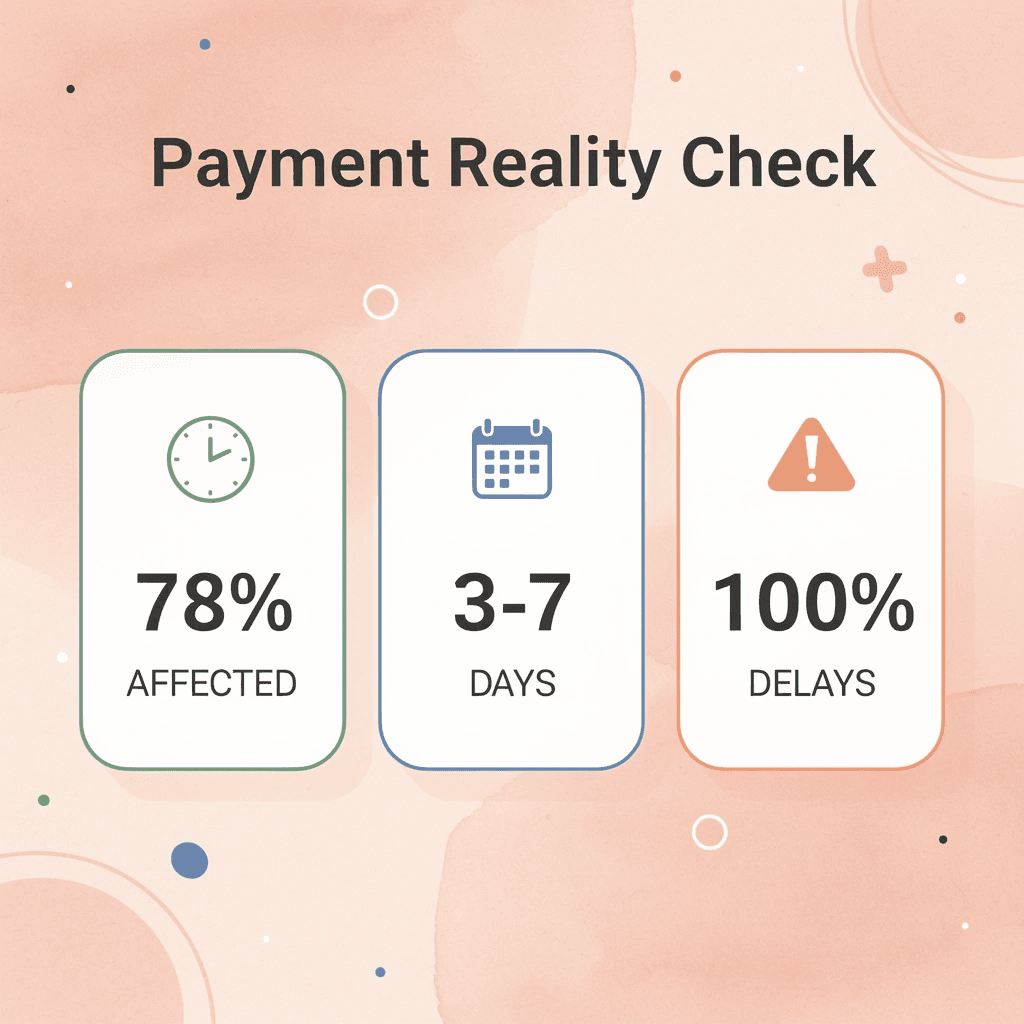
"Cross-border payment delays affect 78% of remote workers globally, with average processing times ranging from 3-7 business days depending on the payment method." — Global Remote Work Report, 2024
⚠️ Warning: Many international employees discover too late that currency fluctuations, transfer fees, and processing delays can significantly impact their monthly budget and financial planning.
Why does payment timing affect your financial planning?
Speed matters more than most people realize. When your employer initiates a payment, it passes through correspondent banks, compliance checks, and currency conversion systems before reaching your account. According to WorkMotion's analysis of international payment infrastructure, cross-border payments can take up to 5 business days to complete, depending on the banking route and regulatory requirements. If your rent is due on the first and your payment clears on the third, the system has failed you, even if technically everything worked.
How do modern platforms solve payment delays?
Traditional bank transfers require waiting for clearance, manually tracking exchange rates, and hoping fees remain predictable. As payment volumes increase or currency volatility rises, this method falters: you lose visibility into arrival timing, conversion costs shift unpredictably, and routing errors can delay payments by days without warning. Platforms like payroll software accelerate payment timelines by routing funds through optimized rails with real-time compliance verification and transparent FX rates, reducing settlement times from days to hours while giving workers full visibility into what they will receive.
What you actually receive versus what you were promised
The number on your contract and the amount that hits your account are rarely the same. Transfer fees are deducted first, followed by currency conversion at rates worse than the mid-market rate. Some banks add undisclosed charges on top of that. By the time the money arrives, a percentage has already disappeared in the transfer process. This makes things harder to predict. When the amount you take home changes based on hidden fees or exchange rate timing, budgeting becomes a guessing game. You cannot plan savings or major purchases with confidence because your actual income shifts month to month, even when your contract remains unchanged.
How your employment structure determines your protection
Whether you're classified as an employee or contractor changes everything about your money and legal standing. Employees receive benefits, tax withholdings, and legal protections tied to local labor law. Contractors manage their own taxes, benefits, and compliance, which offers flexibility but shifts risk entirely onto you. A poorly structured contractor agreement can leave you exposed if disputes arise or if local tax authorities question your status. But how you get paid is only part of the equation. What happens after the money arrives reveals hidden costs most people never anticipate.
Related Reading
- Best International Payroll Software
- Pay International Employees
- How Much Does It Cost To Outsource Payroll
- Global Payroll Implementation
- Benefits Of Hiring Remote Workers
- International Payroll Management
- Multi-Country Payroll Outsourcing
The Hidden Costs of Getting Paid Globally
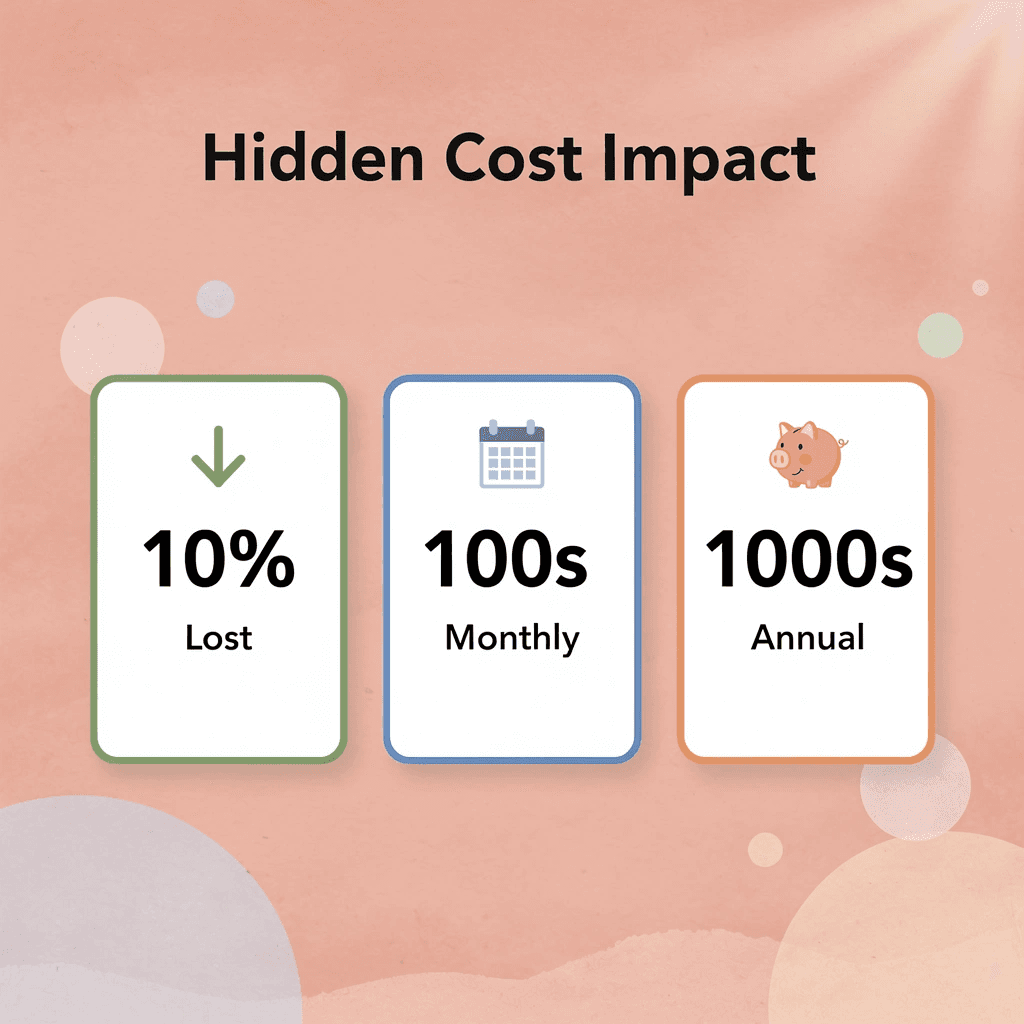
When money crosses borders, it goes through systems designed to take value at every step. Transfer fees, currency conversion spreads, payment processor charges, and compliance delays each extract a cut. Banks add markups to exchange rates. By the time funds reach your account, the difference between the amount sent and the amount received can exceed 10% of the original amount. These costs recur with every payment cycle.
🔑 Key Insight: The true cost of global payments isn't just the advertised fee — it's the cumulative impact of multiple hidden charges that can reduce your actual earnings by more than 10% per transaction.

"The difference between what was sent and what arrived can exceed 10% of the original amount." — World Bank Remittance Prices Report
⚠️ Warning: These hidden costs compound with every payment, meaning freelancers and remote workers receiving monthly payments could lose hundreds or thousands of dollars annually to cross-border payment inefficiencies.
How do intermediary fees compound faster than you expect?
According to Bastion's analysis of global cash management, multinational companies lose millions annually to layered transaction fees. A freelancer lost $85 on a $500 payment after PayPal fees, currency conversion, and international wire charges accumulated—17% gone before the money became usable. The problem stems from multiple small percentages compounding into something significant.
Why do conventional payment approaches fail at scale?
The old way of handling money—accepting bank fees, converting at posted rates, and waiting days for settlement—breaks down when you get paid more often. You lose the ability to predict your income, conversion costs fluctuate based on timing beyond your control, and delays create cash-flow gaps that affect rent, bills, and savings. Ontop sends payments through better routes with clear mid-market FX rates, speeds up settlement to hours, and shows you the exact amount you'll receive upfront, eliminating surprise charges and timing uncertainty.
How currency conversion silently erodes your income
Exchange rates fluctuate constantly, but most payment systems lock you into their conversion rate rather than the mid-market rate displayed online. That difference, called the spread, typically ranges from 1% to 4% depending on the provider and currency pair. If you're paid monthly in USD but receive funds in a volatile local currency, your actual take-home fluctuates based on factors outside your control.
What payment delays actually cost you
Speed isn't convenience. When your employer starts a transfer on the 28th and funds clear on the 3rd of the next month, you've lost access to that money when bills are due. Research from the Norxio Blog shows that payment delays in global trade cost more than most businesses realize, creating funding gaps that force costly short-term choices, such as overdraft fees or delayed savings contributions. A three-day delay might mean paying rent late or missing a chance to lock in a favorable exchange rate. Your financial obligations don't pause while payments clear.
What happens when compliance gaps leave you exposed?
If you're classified as a contractor, tax withholding and reporting fall entirely on you. Miss a filing deadline or misunderstand how local taxes treat foreign income, and penalties accumulate fast. Many contractors discover compliance gaps only when tax authorities send notices months or years later, demanding back payments with interest. You agreed to a rate, but the net amount you keep depends on whether you've correctly navigated tax rules across two or more jurisdictions, often without guidance or automated support.
How do platform dependencies create hidden problems?
But even if you solve for fees and delays, the platforms you rely on bring their own set of problems that most people don't see until it's too late.
Why Most Payment Methods Still Don’t Work Well
More payment options exist than ever: bank transfers, digital wallets, payment apps, and crypto platforms. Yet most still route through outdated infrastructure that creates delays, hides costs, and fragments income across incompatible accounts.

🎯 Key Point: Despite the explosion of payment methods, the underlying systems haven't evolved to match modern business needs.
"The average business now manages payments across 6-8 different platforms, creating operational complexity that costs time and money." — Payment Infrastructure Report, 2024

- Bank transfers
- Common issues: 2–5 day delays
- Hidden costs: Wire fees, currency conversion
- Digital wallets
- Common issues: Platform lock-in
- Hidden costs: Transaction fees, withdrawal limits
- Payment apps
- Common issues: Account fragmentation
- Hidden costs: Processing fees, cash-out delays
- Crypto platforms
- Common issues: Volatility risk
- Hidden costs: Gas fees, exchange spreads
⚠️ Warning: This fragmentation forces businesses to constantly reconcile accounts, track multiple fee structures, and manage cash flow across disconnected systems—turning payment management into a daily operational burden rather than a seamless business function.

How do outdated banking systems affect global payroll?
Cross-border payments still depend on correspondent banking networks built decades ago, designed for occasional international transactions rather than weekly or monthly salary payments to distributed workers. Each payment passes through multiple intermediary banks, each adding compliance checks, processing time, and fees. According to BILL's 2025 State of B2B Payments report, 73% of small and medium-sized businesses experienced at least one payment issue in the past year.
What happens when payment methods become unmanageable?
As income sources diversify or payment volumes increase, accepting whichever payment method your employer offers becomes unmanageable. You end up managing multiple accounts with different fee structures, conversion rates, and withdrawal timelines. Ontop consolidates contractor payments into a single global account with transparent FX rates and same-day settlement.
How do currency conversion costs stay hidden from view?
Currency conversion is the highest hidden cost in most international payments. A headline fee of 2% or 3% masks the real cost embedded in the exchange rate spread. Foreign exchange margins often exceed visible transfer fees by multiples, according to research from the Bank for International Settlements. Your payment app might advertise "low fees" while marking up the exchange rate by 3% to 4% above the mid-market rate. That difference doesn't appear as a separate line item; it reduces the amount credited to your account.
Why does timing create unpredictable payment amounts?
Exchange rates fluctuate constantly, yet you rarely control when conversion occurs. Your employer sends payment on Monday at one rate; it clears on Thursday at a different rate. If the currency moves against you during those three days, you lose buying power through no action of your own. Teams often report frustration when the same contract amount produces different take-home totals month to month, not because anything in the agreement has changed, but because conversion timing introduces unpredictable changes they cannot manage.
Why does control end once money leaves the sender?
Most payment systems complete the transfer but don't help you manage your income once it arrives. Once funds hit your account, you're locked into whatever features that platform offers. Want to hold multiple currencies? Switch accounts. Need to convert only part of your balance? Most traditional banks won't allow it. Prefer to time your conversion based on favorable rates? The system decides for you. You've received the money, but you lack control over global work demands. Understanding these limitations matters only if you know how to choose something better.
Related Reading
- How To Pay a Foreign Contractor
- How to Hire Overseas Contractors
- Benefits Of Hiring Remote Workers
- International Payroll Management
- Best Way To Pay International Contractors
- Benefits Of Hiring International Employees
- Best International Payroll Providers
- B2b Cross-border Payments
How to Choose the Best Way to Get Paid Internationally
Choosing how you get paid around the world means selecting the system that keeps your income safe, saves you time, and gives you flexibility. Consider how fast you get paid and how reliable the system is. Newer systems using local payment methods or digital platforms settle faster than traditional methods, which directly affects how quickly you receive your money.

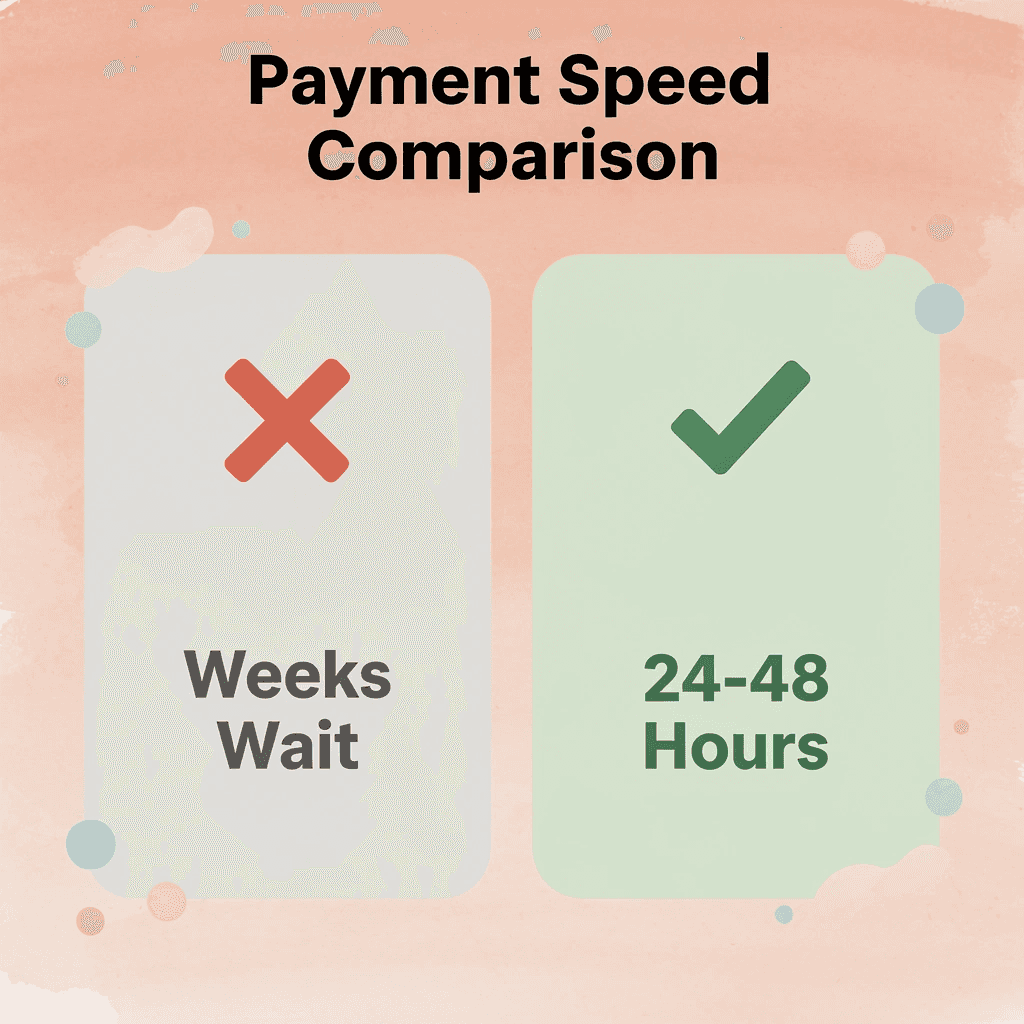
🎯 Key Point: The right international payment method can be the difference between waiting weeks for your money versus receiving it in 24-48 hours.
"Digital payment platforms can reduce international transfer times by up to 75% compared to traditional banking methods." — Global Payments Report, 2024
⚠️ Warning: Never choose a payment method based on low fees alone – consider the total cost, including exchange rates, processing time, and hidden charges that can eat into your earnings.
Why total cost matters more than advertised fees
Many platforms advertise low fees but include hidden FX markups. According to MTFX Group, businesses involved in international trade often face Net 30 or Net 60 payment terms, which strain cash flow amid unpredictable exchange rate fluctuations. What matters is the final amount you receive. Calculate the true percentage lost by comparing what was sent to what arrives in your account after all deductions.
How currency control affects your purchasing power
Multi-currency accounts let you receive, hold, and convert funds on your schedule. Waiting three days for a better exchange rate can save 2-3% of earnings, which is significant when processing $3,000 to $5,000 monthly. Without centralized tools, income fragments across platforms as you work with multiple clients and currencies. You lose visibility into true costs, conversion happens unpredictably, and compliance documentation scatters. Payroll software like Ontop centralizes contractor payments with transparent FX rates, same-day settlement, and automated compliance tracking, displaying exact net amounts before transfer.
Why should compliance be integrated into payroll systems?
Compliance should be built into the system. Many platforms shift responsibility to you, creating downstream issues. Proper documentation and organized payments reduce the risk of delays, withheld funds, or tax complications. If classified as a contractor, the platform should generate invoices, track payments, and provide records formatted for tax filing in your jurisdiction. Without this, you'll have to compile compliance manually, increasing the risk of errors that will cost you months later when authorities ask questions.
What features reduce platform fragmentation costs?
Think about what happens after you get paid. Better systems offer invoicing, tracking, and multi-currency management, so you don't need multiple platforms and extra fees. The fewer tools required to receive, convert, hold, and spend your income, the less money you lose to fragmentation and the more control you retain over your finances.
How Ontop Helps You Get Paid Faster and Keep More
Most payment systems move money from point A to point B without improving what happens before, during, or after. The gap between initiating a payment and accessing the funds remains wide, fees stay high, and you have limited control over timing, currency, and access.

Ontop closes that gap. According to Ontop, payments arrive in 1-2 business days instead of the typical 5-7 days for cross-border transfers. This difference determines whether you can pay rent on time or must cover the gap with credit.
How does currency control protect your purchasing power?
USD accounts give you back control. Instead of your bank forcing you to convert money at their rate, you can hold your income in a stable currency and choose when to convert it. If the exchange rate is unfavorable on Tuesday, you can wait until Thursday. That choice can save 2% to 4% of your income on a single transaction, which adds up significantly over a year.
How do global cards reduce transaction costs?
A global Visa card makes funds immediately usable without transferring money from your USD account to a local bank, waiting for settlement, then withdrawing it. You spend directly from the card, avoiding extra steps and fees. The fewer times your money moves between systems, the less you lose to fragmentation.
How is compliance built into the structure?
Compliance is built into the structure, not added later. You work under agreements that ensure tax documentation and classification are handled correctly from the start, reducing the risk of penalties or withheld payments due to filing errors.
What happens when traditional approaches fragment?
The traditional approach of waiting for wire transfers, accepting whatever exchange rate your bank offers, and managing compliance through spreadsheets falls apart as your income grows or you add clients across multiple countries. Conversion costs change unpredictably, compliance documentation scatters across email threads, and you lose track of when funds become accessible. Payroll software combines contractor payments with transparent rates that save up to 80% on international transfer fees, according to Ontop, same-day settlement, and automated compliance tracking. Onboarding is fast, with setup completed quickly and payments received without approval cycles that stretch across weeks. But knowing what's possible matters only if you make the shift.
Book a Demo Today - See why 950+ Companies Trust OnTop to Power their Global Teams
If getting paid internationally feels slower and more expensive than it should, start with Ontop Quick Start. In your first session, you'll see exactly how your payments flow, how much you keep, and how quickly you can access your income. Over 950 companies trust Ontop to power their global teams because our platform solves payment friction through compressed settlement times, transparent costs, and compliance across multiple jurisdictions.

🎯 Key Point: Ontop eliminates the traditional pain points of international payments by providing full visibility and control over your payment process from day one.
"Over 950 companies trust Ontop to power their global teams because our platform solves manual payment problems with compressed settlement times and transparent costs."

The difference shows up immediately. You stop losing days waiting for funds to clear and hidden conversion spreads. You gain control over when and how your income converts, which currencies you hold, and how quickly you can use what you've earned. The system works for you instead of taking value at every step.
💡 Tip: Take control of your international payments today - see exactly how Ontop can streamline your global income and eliminate the frustrations of traditional payment systems.