






Managing a global team gets complicated fast when payroll spans multiple currencies, time zones, and compliance requirements. Remote is often the first platform businesses consider, but it is not the right fit for every company. Stronger alternatives exist, and knowing what they offer makes it easier to find a solution that actually matches how a distributed team operates.
Many businesses searching for the best international payroll software eventually land on Ontop, a platform built specifically for companies hiring across borders. Ontop handles contractor and employee payments internationally, reduces compliance friction, and removes the need for a legal entity in every country where a team member works. For companies that have found Remote close but not quite right, a better starting point is to explore dedicated payroll software.
Table of Contents
- Why Workers Are Looking Beyond Remote
- What Workers Should Look for in a Remote Alternative
- 10 Top Remote Competitors for Freelancers, Contractors, and Digital Nomads
- The Hidden Problems Workers Face on Global Employment Platforms
- How to Choose the Right Platform Based on Your Work Style
- How Ontop Helps Global Workers Get Paid Faster and Work More Freely
- Book a Demo Today - See why 950+ Companies Trust OnTop to Power their Global Teams
Summary
- Global employment platforms are evaluated very differently depending on who is evaluating them. Employers tend to focus on compliance coverage, legal entity reach, and payroll accuracy. Workers focus on payment speed, currency flexibility, and whether the platform makes their financial life easier or harder. According to Gallup's Global Indicator on Hybrid Work, 34% of fully remote workers already report feeling less connected to their organization's culture, and a clunky payroll experience deepens that disconnection further.
- The growth of digital nomadism has raised the bar considerably for what workers expect from global payment infrastructure. MBO Partners' State of Independence research found that approximately 18.1 million Americans identified as digital nomads in 2024, more than double the count from just a few years prior. These workers need platforms that move with them across countries and currencies, and they are increasingly willing to research alternatives when their current platform falls short.
- Payment delays and compliance issues are not isolated edge cases. According to Globalization Partners' Future of Work Trends 2025, 1 in 3 workers on global employment platforms report experiencing payment delays or compliance problems. The workers most affected are typically contractors in secondary cities and digital nomads moving between countries, where banking infrastructure assumptions built into legacy payroll systems tend to break down first.
- The financial friction compounds quietly for workers earning across borders. Globalization Partners also reports that 45% of global employees say they lack access to consistent benefits when working internationally, including predictable access to earnings, currency stability, and financial tools that align with how global professionals actually live. A contractor losing 4 to 6 percent per month to conversion fees and transfer costs is absorbing costs that the platform never advertised.
- Work style is the most reliable filter when choosing between global employment platforms. Freelancers need fast onboarding and payment certainty above everything else. Contractors need compliance handled structurally so regulatory complexity does not accumulate into liability. Digital nomads need geographic coverage with no banking blind spots. Remote employees, who represent a growing share of the workforce according to Owl Labs' State of Hybrid Work 2025 (62% of workers report higher productivity when working from home at least part of the time), need payroll reliability more than advanced feature sets.
- The choice of platform matters far more than most workers realize before they sign their first contract. The gap between what a platform promises and what a contractor in a specific country actually experiences on payday is where the real comparison begins, and that gap is rarely visible during onboarding.
- Ontop's payroll software addresses this by building payment visibility, multi-currency access, and contractor-facing financial tools into the core product rather than treating worker experience as secondary to employer compliance features.
Why Workers Are Looking Beyond Remote
Workers do not choose the platforms that pay them. The person signing the contract is not the person checking their bank account on payday, wondering why a transfer is delayed or why getting started took three weeks instead of three days.
"The person signing the contract is not the person checking their bank account on payday: wondering why a transfer is delayed or why getting started took three weeks instead of three days." — Key Insight
🎯 Key Point: Employers select the platform, but workers bear the consequences of that choice every payday.

The gap between employer and worker experience on global employment platforms is widening. Employers evaluate platforms on compliance coverage, legal entity reach, and payroll accuracy. Workers evaluate them on something far more personal: does this platform make my life easier or harder?
Evaluation Lens
Compliance
Employers Prioritize
Legal entity coverage
Workers Prioritize
Clear contract terms
Evaluation Lens
Payments
Employers Prioritize
Payroll accuracy
Workers Prioritize
On-time, fast transfers
Evaluation Lens
Onboarding
Employers Prioritize
Speed of hire
Workers Prioritize
Ease of getting started
Evaluation Lens
Experience
Employers Prioritize
Platform integrations
Workers Prioritize
Day-to-day simplicity
💡 Tip: Platforms that only optimize for employer satisfaction risk losing worker trust — and worker trust is what keeps global teams running smoothly.
⚠️ Warning: A platform that looks compliant and efficient to an employer can simultaneously feel slow, confusing, and frustrating to the worker living inside it.
Where does friction show up for workers on global platforms?
Friction surfaces across freelancing, contracting, and full-time remote employment once workers are locked into a platform. Slow onboarding delays first paychecks. Limited currency options force unnecessary conversion fees. Sparse financial tools leave globally mobile professionals managing income across borders with instruments built for a single-country world. According to Gallup's Global Indicator on Hybrid Work, 34% of fully remote workers report feeling less connected to their organization's culture than on-site peers, and a clunky payroll experience deepens that disconnect.
Most teams prioritize selecting platforms that meet legal and compliance requirements first, assuming worker experience will follow. As contractor rosters grow across time zones and currencies, friction compounds: payment delays, rigid withdrawal options, and limited financial visibility become recurring frustrations. Payroll software like Ontop builds the worker payment experience into the product's core rather than treating it as secondary to compliance.
How has digital nomadism raised the bar for payment infrastructure?
Digital nomadism has intensified these expectations. According to MBO Partners' State of Independence research, about 18.1 million Americans identified as digital nomads in 2024, more than double the number from a few years prior. These workers need payment tools that function wherever they are, and when platforms cannot keep pace, they seek alternatives.
Workers are not leaving platforms because they are broken. They are leaving because they have realized something better is possible.
What Workers Should Look for in a Remote Alternative
Most comparison pages are built for hiring managers, not workers. Contractors in Nairobi or freelancers in Lisbon need entirely different things to evaluate: payment speed, banking flexibility, invoicing simplicity, and geographic coverage. These are the real filters that matter — and they're rarely front and center.
"The criteria that matter most to independent workers — payment speed, banking flexibility, and geographic coverage — are often buried or ignored by platforms designed with employers in mind."
💡 Tip: Before committing to any platform, verify it explicitly supports your country, your preferred payment method, and offers fast, low-friction payouts — not just the employer's workflow.
What to Evaluate:
- Payment Speed
Faster access to earnings reduces financial stress and cash flow gaps - Banking Flexibility
Support for local banks, digital wallets, or multi-currency accounts - Invoicing Simplicity
Less admin time means more time on billable work - Geographic Coverage
Ensures you're actually supported in your country, not just listed
🎯 Key Point: The best remote work platform for a contractor isn't the most popular one — it's the one that treats your location, your banking needs, and your payment timeline as first-class priorities.

Payment reliability is the baseline, not a bonus
The failure point is not whether a platform can pay you, but whether it pays you reliably in a usable currency without delays stretching from days into weeks. A strong alternative to any global employment platform should offer clear visibility into payment status, consistent payroll schedules, and cross-border processing that doesn't penalize workers for living outside a major financial hub. According to Robert Half's 2024 workplace research, 41% of employees cite flexible scheduling as their top priority in remote roles, and payment flexibility sits in the same category of non-negotiables. Workers demand certainty.
Why does banking flexibility separate good platforms from great ones?
A consultant in São Paulo and a digital nomad splitting time between Tbilisi and Lisbon face the same problem: local banking limitations create friction that platforms rarely acknowledge. Multi-currency support, reduced dependency on a single national banking system, and accessible digital accounts are essential for anyone whose income crosses borders regularly. WorkTime's remote work research reports that 77% of remote workers say they are more productive working from home, confirming the workforce is committed to global remote arrangements. Platforms that cannot support genuinely borderless banking will lose workers with options.
What happens when payment rails are too rigid for contractors?
Most workers tolerate banking problems until they incur real costs or delays. When a contractor manages invoices across three clients in different countries, a platform with strict payment options and no financial tools beyond basic payroll becomes problematic. Payroll software like Ontop integrates payment cards, digital accounts, and multi-currency access into the worker experience rather than treating them as employer add-ons, reducing administrative work for contractors managing multiple income streams.
Contractor onboarding should take hours, not weeks
Global contractors lose significant time during onboarding due to complex approval chains, disconnected document management, and unclear contract processes. A contractor-friendly platform accelerates onboarding, centralizes contracts for easy access and updates, and reduces invoicing from hours to minutes. Streamlining the administrative layer frees workers to focus on billable work.
Geographic coverage is a career decision, not just a feature
The difference between platforms that grow with a worker's career and those that don't comes down to how they're built. Some platforms were created for traditional jobs and later adapted for global contractors, while others were designed from the start with cross-border work in mind. For digital nomads and international contractors, this distinction appears in gaps in country coverage, limited payment corridors, and support systems that function well in Western Europe but falter elsewhere. A platform working in 30 countries today should support the next country where you want to work.
The harder question is which specific alternatives meet these criteria in practice.
Related Reading
- Best International Payroll Software
- Pay International Employees
- How Much Does It Cost To Outsource Payroll
- Global Payroll Implementation
- Benefits Of Hiring Remote Workers
- International Payroll Management
- Multi-Country Payroll Outsourcing
10 Top Remote Competitors for Freelancers, Contractors, and Digital Nomads
Ten platforms stand out as genuine Remote alternatives for freelancers, contractors, and digital nomads in 2025. The right fit depends on which one matches how you actually work — not which has the longest feature list.
"The best platform isn't the one with the most features — it's the one built around your workflow, payment needs, and global flexibility." — Industry Insight, 2025
What to Evaluate:
- Payment flexibility
Ensures you get paid on time, in your preferred currency - Contract support
Protects your legal standing across borders - Platform fees
Directly impacts your take-home earnings - Compliance coverage
Critical for cross-border contractors and nomads - Ease of onboarding
Saves time and friction when starting new engagements
💡 Tip: Don't default to the most popular platform — evaluate each option against your specific working style, preferred payment methods, and the countries you operate in.
🎯 Key Point: In 2025, the freelance and contractor tools market has never been more competitive — meaning better pricing, stronger features, and more negotiating power for independent workers like you.

1. Ontop
Ontop is built for workers operating across borders daily. It provides a Global Account, USD payment options, international money movement, and a Visa card accessible in more than 150 countries. For freelancers managing clients across continents, this financial infrastructure is foundational.
Most contractors handle cross-border earnings by routing payments through multiple accounts, manually converting currencies, and absorbing fees at every step. Our payroll software consolidates those steps into a single account that moves with workers rather than anchoring them to their employer's location.
2. Deel
Deel has built one of the most recognized contractor infrastructure networks in global hiring. Its strength lies in breadth: broad country coverage, established payment corridors, and straightforward onboarding for independent contractors working with international companies. Workers prioritizing wide geographic reach find Deel a reliable starting point.
3. Oyster
Oyster differs from contractor-first platforms by focusing on long-term employment rather than project-based work. Its infrastructure supports companies hiring full-time remote employees globally, favoring workers seeking stable roles over freelancers cycling through short-term clients.
4. Papaya Global
Papaya Global operates at the employer level, handling global payroll and workforce compliance for companies with international operations. Workers benefit indirectly through reliable payroll processing and consistent payment schedules, though the platform prioritizes the employer experience. If you join a large multinational organization, you may encounter Papaya Global without selecting it yourself.
5. Multiplier
Multiplier simplifies hiring workers across different countries through streamlined onboarding and robust payment options for contractors and remote employees. It works best as your company's primary hiring system.
6. Velocity Global
Velocity Global is a well-known company recognized for its size and strong compliance practices. Its systems handle international workforce management across many countries, making it popular among large organizations expanding into new markets.
7. Rippling
Rippling solves the problem of fragmented HR tools by consolidating payroll, HR, and IT administration into a single platform. For remote workers at tech companies, this integration streamlines employee onboarding, though it primarily benefits employers rather than independent contractors.
8. WorkMotion
WorkMotion helps companies hire across borders without establishing local legal entities in every country. It provides the employment infrastructure that makes cross-border arrangements legally possible, particularly in markets where compliance would otherwise be difficult and costly.
9. Horizons
Horizons covers international payroll, hiring, and workforce expansion across multiple countries. The platform solves compliance and payroll challenges for specific locations, offering workers stable employment support at expanding companies.
10. RemotePass
RemotePass is built for remote-first workers rather than retrofitted from an employer-centric model. Its contractor payment tools, onboarding workflows, and global accessibility make it ideal for freelancers and digital nomads working across multiple clients and time zones. According to WhatJobs News, 10 remote companies are actively hiring digital nomads in 2025, signaling growing demand for platforms handling distributed, multi-client work.
Which platform fits your work style?
No single platform wins across every category. Contractor-focused workers need fast payment and flexibility; full-time remote employees need reliable payroll and employment support; digital nomads need geographic coverage that matches their itinerary.
How much does platform choice affect your actual take-home income?
If you are a software developer earning around the median annual salary of $131,450 reported by TravlSync by TravlFi, your choice of platform directly affects how much income you retain after currency conversion, withdrawal fees, and transfer delays. A two percent friction cost compounds significantly over a year.
Where do platform comparisons get genuinely interesting?
The failure point is usually not the platform's main features, but the gap between what a platform promises and what a contractor in a specific country experiences when withdrawing earnings on a Friday afternoon. That gap is where platform comparisons become interesting.
The Hidden Problems Workers Face on Global Employment Platforms
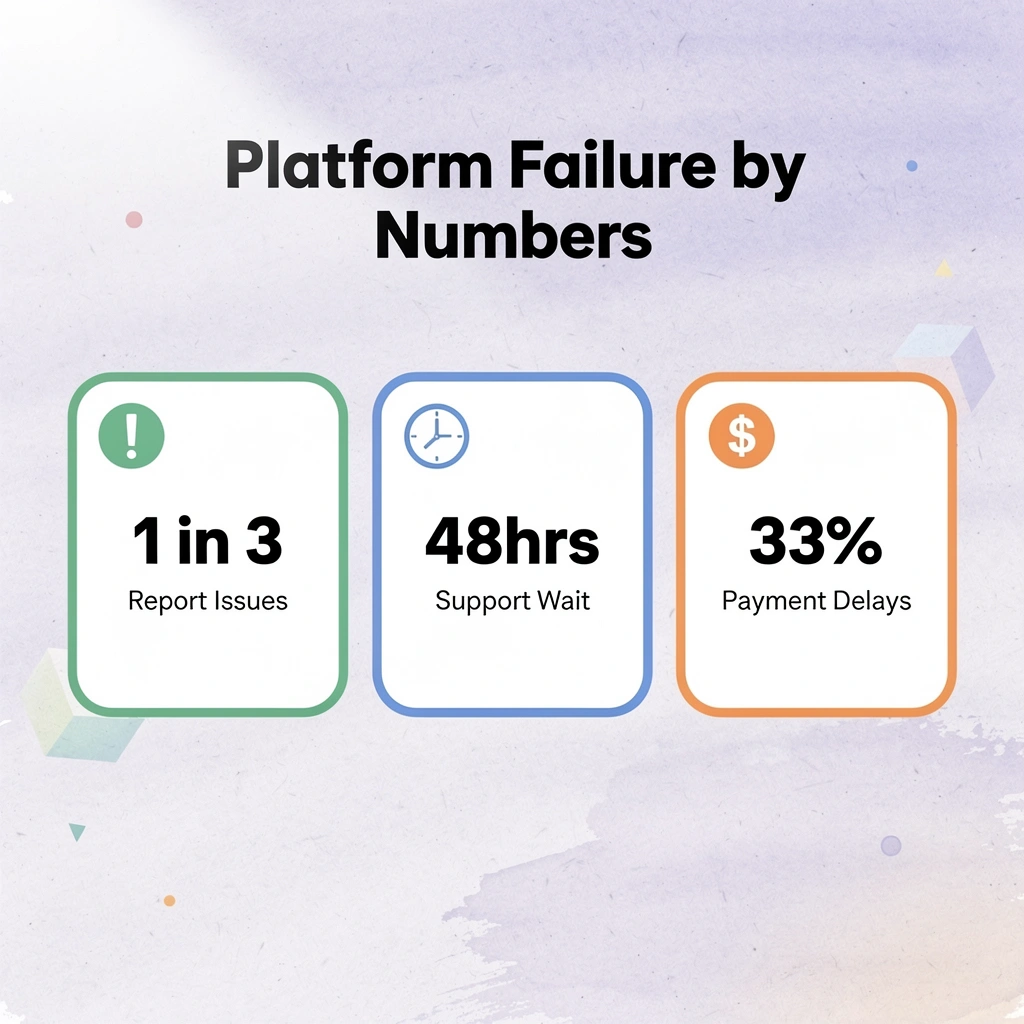
Workers find out the real cost of a platform not during the sales call, but when payment is late and support takes 48 hours to respond.
"The true measure of a global employment platform isn't its pitch deck — it's what happens when something goes wrong."
⚠️ Warning: By the time hidden costs and support failures surface, workers are already financially exposed with little recourse and no fast fix in sight.
According to Globalization Partners' Future of Work Trends 2025, 1 in 3 workers on global employment platforms report payment delays or compliance issues. This is a structural problem, not a fringe experience. It hits hardest contractors in secondary cities, digital nomads moving between countries, and remote professionals whose financial lives don't fit legacy payroll systems.
"1 in 3 workers on global employment platforms report payment delays or compliance issues." — Globalization Partners, Future of Work Trends 2025
Who Gets Hit Hardest:
- Contractors in secondary cities
Limited banking infrastructure & slower payment rails - Digital nomads between countries
Compliance gaps across multiple jurisdictions - Remote professionals
Financial profiles that don't fit legacy payroll systems
🔑 Takeaway: When 1 in 3 workers experience these issues, it signals a systemic failure — not an edge case. Platform reliability must be a primary evaluation criterion, not an afterthought.
💡 Tip: Before committing to any global employment platform, always ask vendors directly about their average payment dispute resolution time and compliance incident rate — these numbers reveal what the sales call won't.
Why does payment confirmation leave workers in the dark?
Knowing a payment has been sent is not the same as knowing where it is. When a payment clears on the employer side but takes days to appear in a contractor's account, the worker lacks useful information to plan around. Platforms that treat payment confirmation as the finish line solve the wrong problem. Workers need real-time status, not just a timestamp on a sent notification.
How do most teams work around the visibility gap?
Most teams handle this by relying on email threads with finance contacts or digging through banking apps. This works for predictable domestic payments but breaks down with currency conversion, correspondent banking, and time zone gaps. Contractors end up doing manual reconciliation that should never have been their job. Payroll software like Ontop addresses this by building payment visibility and multi-currency access directly into the worker experience, rather than treating financial transparency as a secondary feature.
What the benefits gap actually costs workers
Globalization Partners' Future of Work Trends 2025 reports that 45% of global employees lack access to consistent benefits when working across borders. Benefits extend beyond health coverage to include predictable earnings, currency stability, and financial tools suited to how global professionals live. A contractor earning well on paper but losing 4-6% monthly to conversion fees and transfer costs pays for a system not designed with them in mind.
Does the platform serve the worker or just the hiring manager?
The workers who do best use platforms that make careful choices about what workers need, not what employers see on their dashboard. That difference—between a platform built for hiring managers and one built for the people being hired—makes the difference between a smooth working year and a frustrating one.
Which platform actually fits how you work?
Knowing about hidden costs is only half the answer. The harder question is which platform fits how you work, and that answer is more personal than any feature list can convey.
Related Reading
- How To Pay a Foreign Contractor
- How to Hire Overseas Contractors
- How to Hire a Remote Team
- How to Calculate Time for Payroll
- How to Hire International Employees
- Best Way To Pay International Contractors
- Best Global Payroll Companies
- Best Hiring Tools
How to Choose the Right Platform Based on Your Work Style
Your work style is the only filter that matters when choosing a global employment platform. The right fit removes friction from the way you actually operate.
"The right platform doesn't just support your workflow — it disappears into it, leaving only seamless execution." — Platform Adoption Research
🎯 Key Point: Don't evaluate platforms on features alone — evaluate them on how well they match your natural work rhythm and eliminate the daily friction points that slow you down.
Work Style:
- Highly structured
What to Prioritize:
Automated workflows, rigid compliance tools
Red Flag to Avoid:
Platforms with too much manual flexibility - Flexible/async
What to Prioritize:
Self-serve dashboards, on-demand support
Red Flag to Avoid:
Platforms requiring scheduled check-ins - High-volume hiring
What to Prioritize:
Bulk onboarding, API integrations
Red Flag to Avoid:
Systems with slow processing times
⚡ Pro Tip: Before committing to any platform, map your top 3 daily workflows and test whether the platform accelerates or adds steps to each one — the answer will tell you everything.

💡 Tip: The best global employment platform isn't the one with the most features — it's the one that fits how you work so naturally that onboarding feels effortless from day one.
Freelancers need speed above everything else
When you work with multiple clients and projects simultaneously, a slow platform directly costs you billable time. Fast contract setup and reliable payment processing are essential to running your business, not extras. A platform that requires two weeks for setup means two weeks of lost income—a cost that compounds significantly over a year of active work.
Contractors need compliance handled for them
The failure point for most contractors working across borders is not the work itself but the invisible complexity beneath the surface. Tax classification rules, local labor regulations, and documentation requirements vary significantly between countries, and a single misstep can create liability that takes months to resolve. Most contractors track requirements manually or rely on clients to flag issues, but as engagements span multiple jurisdictions, that approach breaks down. Payroll software like Ontop manages cross-border compliance systematically, reducing the administrative burden that accumulates as contractor relationships expand across different regulatory environments.
Digital nomads face a different kind of pressure
According to the Zoom Blog's Remote Work Statistics, 83% of workers prefer a hybrid work model. For digital nomads, that flexibility is essential to how their entire professional life operates. A platform that works smoothly in Berlin but creates banking problems in Medellín or Chiang Mai reveals blind spots across different geographic areas.
Remote employees need predictability, not features
The Owl Labs State of Hybrid Work 2025 report found that 62% of workers are more productive when working from home at least some of the time. For these workers, payroll reliability and access to benefits matter more than advanced features. A platform that pays accurately and on time earns more trust than one with ten integrations and inconsistent performance.
The decision comes down to one honest question
What does your work day look like? Not the perfect version, but the real one with payment delays, currency conversions, clients in different time zones, and tax questions you keep pushing to the next quarter. The platform that fits your answer is the right one. Everything else is marketing.
The deeper question is whether your platform can still carry your weight when your work evolves into something bigger.
How Ontop Helps Global Workers Get Paid Faster and Work More Freely
Choosing a global employment platform directly impacts how easily workers can start opportunities, access earnings, manage finances, and navigate international work. Many freelancers, contractors, digital nomads, and remote employees now evaluate platforms by asking which one makes global work easier for workers—not just easier for employers to manage.
"The best global employment platforms are now being evaluated not just by what they offer employers — but by how powerfully they serve the workers doing the work." — Industry Insight
💡 Tip: When evaluating a global employment platform, always prioritize features that benefit your experience as a worker — including payment speed, financial tools, and onboarding ease.
Worker Priority:
- Getting Paid Fast
What to Look For:
Same-day or next-day payment processing - Financial Management
What to Look For:
Built-in wallets, cards, or banking tools - Starting Opportunities
What to Look For:
Streamlined onboarding and contract setup - International Flexibility
What to Look For:
Multi-currency support and cross-border access

While global workforce platforms focus on helping companies hire internationally, Ontop combines workforce infrastructure with financial tools designed to support the people doing the work.
🎯 Key Point: Ontop's approach differs fundamentally: it treats worker financial empowerment as a core feature rather than an afterthought.
⚠️ Warning: Platforms built for employer convenience often leave workers dealing with slow payments, limited financial access, and frustrating onboarding experiences. Don't settle for less.
How does Ontop speed up onboarding for international workers?
One of the most frustrating parts of starting a new international job is waiting. Workers often encounter long approval processes, multiple meetings, extensive paperwork, and delays before earning money. Our Quick Start experience streamlines onboarding so professionals move from opportunity to active engagement more quickly. For freelancers and contractors, speed matters because delays mean postponed income and lost momentum.
Global work is no longer limited to major markets. Today's remote professionals work from Latin America, Europe, Asia, Africa, and virtually everywhere in between. Ontop supports payments in more than 150 countries, enabling workers to collaborate with international companies without geographic restrictions. For professionals building global careers, this reach creates greater flexibility and opens doors to opportunities that would otherwise be difficult to pursue.
How does Ontop simplify financial management for global professionals?
Many global workers earn money in U.S. dollars while living in countries that use different currencies. Traditional banking systems complicate this through conversion fees, transfer delays, and limited account options. Ontop provides access to USD accounts, enabling workers to manage earnings more effectively and create a simpler, more predictable financial experience.
As remote work becomes increasingly mobile, workers need flexibility in accessing and using earnings. Ontop's Global Visa Card offers workers an alternative to accessing funds without relying entirely on traditional banking. For digital nomads and internationally mobile professionals, this flexibility simplifies everyday financial management.
One hidden frustration of international work is the complexity of cross-border payments. Workers juggle multiple financial services, track transfers across different systems, and navigate various banking requirements to receive income. These administrative tasks consume time that could be spent on client work or professional development. Ontop simplifies this by bringing key aspects of international payments into a unified experience.
How does Ontop go beyond payroll to support workers?
Many workforce platforms stop at payroll. Ontop goes further by offering financial tools designed for global professionals: managing earnings efficiently, accessing funds easily, navigating international work with fewer barriers, and reducing dependence on multiple disconnected services.
Modern remote workers expect platforms to support employment administration and everyday financial needs. By providing tailored perks and services for global professionals, Ontop creates a more complete experience for cross-border workers.
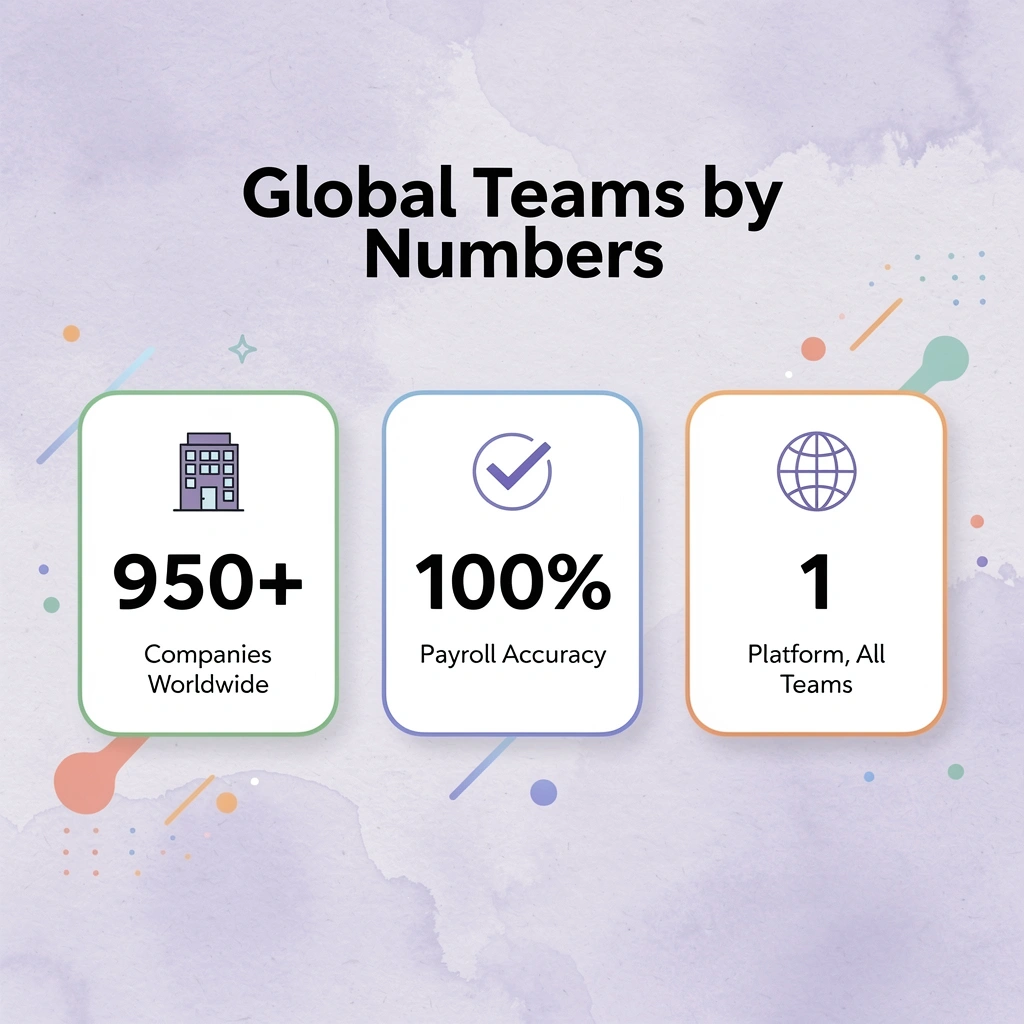
Ontop is trusted by more than 950 companies that hire and manage international talent, connecting workers with opportunities across diverse industries and locations.
This growing network reflects the increasing demand for platforms that support both businesses and the professionals they hire.
A platform designed around the worker experience
Most workforce platforms were built to solve employer problems. Ontop takes a wider view by recognizing that workers face challenges throughout their employment journey. Rather than functioning solely as an employer tool, our platform helps workers access earnings, manage money globally, and work with international companies through a solution designed to reduce friction in the employment and payment experience.
Remote professionals spend less time managing paperwork, payment logistics, banking limitations, and administrative hurdles, allowing them to focus on their work, career growth, and global opportunities.
Book a Demo Today - See why 950+ Companies Trust OnTop to Power their Global Teams
If cross-border payments, onboarding friction, and currency complexity are part of your daily reality, payroll software built around the worker experience deserves consideration. Over 950 companies trust Ontop to power their global teams. Quick Start onboarding gets you paid across borders into a USD account, eliminating the administrative drag that slows international workers.
"Over 950 companies trust Ontop to power their global teams with Quick Start onboarding that eliminates the friction slowing international workers down." — Ontop
🎯 Key Point: Ontop's payroll platform is purpose-built for the global worker experience, not compliance paperwork. If cross-border complexity is your reality, this solution is designed around you.
💡 Tip: Use Quick Start onboarding to set up your USD account quickly so you can focus on work, not paperwork.
Book a demo today and see the difference firsthand. The right platform removes friction between your work and your financial life, making global payments, currency management, and team onboarding simple and seamless.
✅ Best Practice: Don't let administrative drag cost you time and money. Schedule your demo now and join 950+ companies already powering their teams with Ontop.
Related Reading
- Best Payroll Software For Staffing Companies
- Best Payroll Outsourcing Companies
- Deel Vs Oyster
- Best International Payroll Software
- Best Payroll For Contractors
- Velocity Global Competitor
- ADP Alternative