






Managing payroll across borders is one of the most complex operational challenges for distributed teams. Tax rules, local compliance requirements, and currency differences vary widely by country, and even minor errors can result in financial penalties or damaged worker relationships. The best international payroll software and outsourcing companies share a few defining qualities: accuracy, transparency, and the ability to handle multi-country payments without creating compliance risk.
For businesses hiring international contractors or remote employees, centralizing the payroll process is far more efficient than managing multiple vendor relationships or manual spreadsheets. A reliable solution handles local legal requirements, ensures workers are paid on time, and removes the administrative burden from internal teams. Companies evaluating their options can explore payroll software from Ontop, a platform built specifically for global hiring and cross-border payments.
Table of Contents
- Most Payroll Outsourcing Reviews Ignore the People Getting Paid
- What Makes a Great Payroll Outsourcing Company for Workers?
- 13 Best Payroll Outsourcing Companies
- The Hidden Costs of International Payroll Most Workers Never See
- What Global Workers Need Beyond Payroll
- How Ontop Helps Global Workers Get Paid Faster and Keep More of What They Earn
- Book a Demo Today - See why 950+ Companies Trust OnTop to Power their Global Teams
Summary
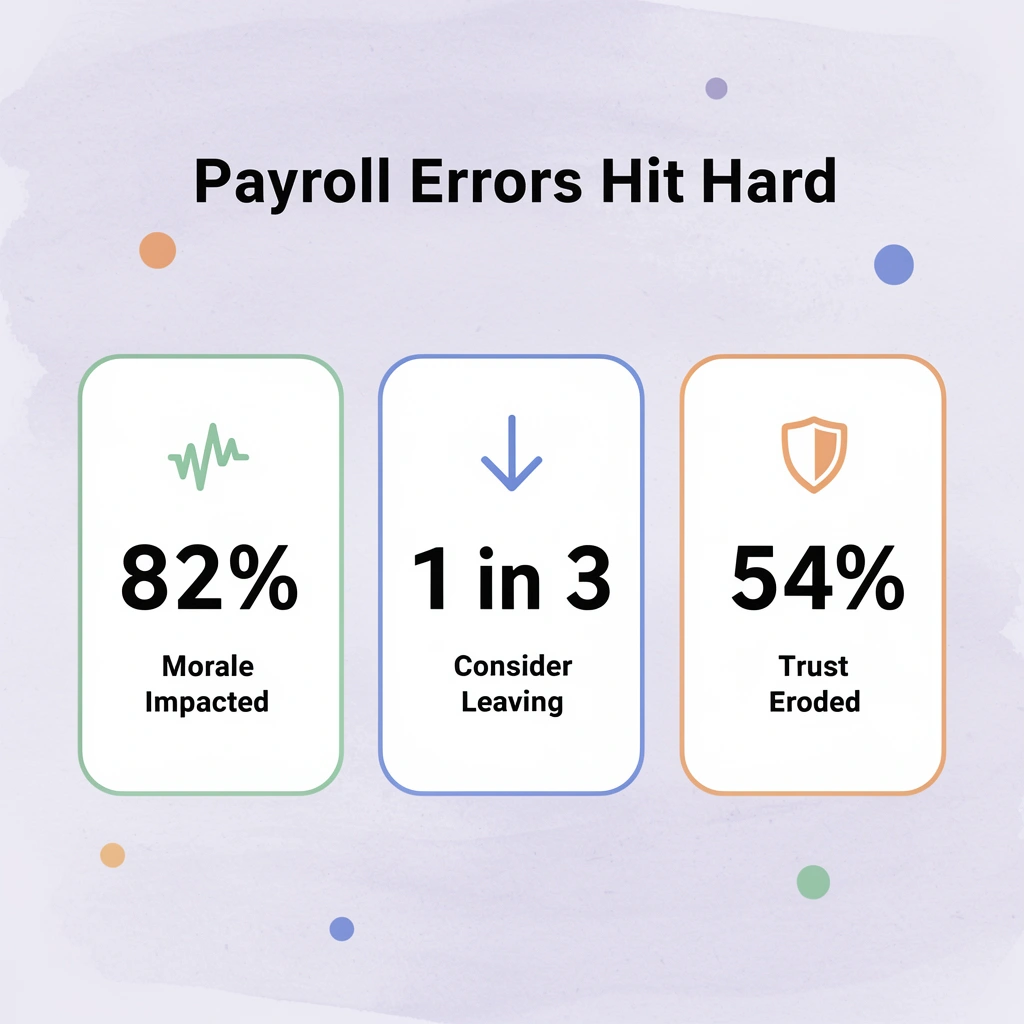
- Payroll errors carry direct financial consequences for employers, but the more overlooked cost falls on workers. Research from HiBob found that 82% of employees say payroll errors negatively affect their trust in their employer, and 49% would begin looking for a new job after just two payroll mistakes. These numbers frame payroll accuracy not as a back-office concern but as a retention variable with measurable stakes.
- International payments lose value before they arrive. Currency conversion spreads applied by intermediary banks and payroll platforms can quietly reduce what workers receive, and a 2% markup on a $2,000 monthly payment adds up to $480 in annual losses with no itemized explanation. Workers absorb these costs without visibility into where the reduction occurred or who applied it, making the loss feel arbitrary rather than explainable.
- The structural inefficiency of fragmented global payroll compounds this problem at the organizational level. According to Applic8's analysis, organizations running payroll across multiple countries through disconnected systems spend up to 20% more on payroll administration than those using a unified infrastructure, and compliance penalties from fragmented setups average $14,000 per incident. Those costs rarely stay on the employer's side; they flow downstream as slower settlements and inconsistent payment timing for workers.
- Payment speed matters as much as payment accuracy. Research from SelectSoftware Reviews found that 54% of employees would consider leaving a job over payroll errors, and slow or inconsistent payments register emotionally the same way errors do. A payment initiated on Thursday that clears the following Wednesday is not a technical delay for a worker managing rent or supplier invoices; it is a cash-flow disruption that contract language cannot resolve after the fact.
- Worker engagement is directly connected to financial stability. ADP Research found that fewer than 1 in 5 workers worldwide were fully engaged on the job in 2025, and financial unpredictability is a consistent contributor to that disengagement. When workers cannot predict payment timing, hold earnings in a stable currency, or access funds without paying conversion fees, the ongoing friction becomes a daily distraction rather than an occasional inconvenience.
- Trust in the payment experience shapes broader job satisfaction in ways most payroll platforms do not account for. PwC's Global Workforce Hopes and Fears Survey 2025 found that 52% of workers cite trust in leadership as a key factor in job satisfaction beyond pay itself. Consistent, transparent payment experiences build that trust over time, while unexplained fees, unclear timelines, and inaccessible support quietly erode it.
- Ontop's payroll software addresses this gap by combining payment processing with worker-facing financial tools, including USD accounts, a global Visa card, and real-time payment visibility, so the experience does not end when funds are sent but continues until workers can actually use what they earned.
Most Payroll Outsourcing Reviews Ignore the People Getting Paid
Payroll reviews are written for buyers, not the people who receive the payments. Every comparison chart, feature matrix, and vendor scorecard focuses on employer needs: compliance coverage, tax filing automation, contractor classification tools, and HR integrations. Workers receiving those payments rarely appear in the conversation.
⚠️ Warning: When employee experience is excluded from payroll software evaluations, businesses risk choosing tools that are technically compliant but fundamentally damaging to workforce trust.

That omission matters. According to HiBob's research on payroll accuracy and employee experience, 82% of employees say payroll errors negatively impact their trust in their employer. For workers, payroll signals whether they are valued and reveals how seriously a company takes its obligations.
"82% of employees say payroll errors negatively impact their trust in their employer." — HiBob Research, Beyond the Paystub
🔑 Takeaway: Payroll accuracy is a trust metric. Every missed payment or miscalculation sends a direct message to employees about how much the company values them.
- Compliance coverage: While companies focus on broad regulatory mapping, employees simply need to know their paycheck is correct and reflects all local taxes and benefits accurately.
- Tax filing automation: Employers prioritize seamless reporting to authorities, but employees care about how quickly resolution happens if a pay-related error occurs.
- HR integrations: Businesses evaluate system connectivity for efficiency; employees gauge value based on whether they feel supported and respected through responsive, human-centric interactions.
- Contractor classification tools: Companies use these to mitigate legal and financial risk, but workers view them through the lens of whether their professional status and obligations are taken seriously rather than as a transactional checkbox.
💡 Tip: When evaluating payroll outsourcing providers, always include employee-facing metrics — such as error rates, resolution times, and pay transparency features — alongside traditional buyer-focused criteria.
Why do workers bear the hidden costs of international payroll?
The failure point is invisible to employers. A payment shows "sent" in the payroll dashboard while a contractor in Lagos or Lisbon watches their bank account for funds moving through correspondent banking networks. Employers rarely see this gap because the friction lives entirely on the worker's side.
Most teams handle international contractor payments through existing banking relationships or payroll platforms chosen primarily for HR features. As teams expand across borders, a single payment can pass through three or four intermediary banks before arriving, with each adding delays and fees. Workers bear these costs without understanding why their payment is short or late. Platforms like Ontop are built specifically for cross-border payments, centralizing global workforce payments so the delivery experience for workers matches employer-side efficiency.
How does financial erosion from payroll gaps affect worker retention?
Money loss happens quietly over time. Currency conversion, bank fees, and withdrawals reduce the amount reaching a worker's account. For a freelancer paid 12 times a year from different countries, losing 2% on each transfer compounds into a significant yearly income reduction. Most payroll outsourcing reviews don't measure this. HiBob's research found that 49% of employees would start looking for a new job after two payroll errors, demonstrating how payment problems affect both income and employee retention.
With tens of millions of people working across borders as contractors, remote employees, and digital nomads, the payroll experience has become a competitive factor in talent retention. Choosing a payroll outsourcing partner based solely on employer-side features is like evaluating a restaurant entirely on kitchen efficiency while ignoring whether the food reaches the table.
But knowing what workers need from a payroll platform is only half the equation. The harder question is what separates a great provider from one that merely looks good on a comparison chart.
What Makes a Great Payroll Outsourcing Company for Workers?
The difference between a payroll provider that works and one that workers actually trust comes down to this: does getting paid feel reliable, or does it feel like waiting on a favor?
"The difference between a payroll provider that works and one that workers actually trust comes down to this: does getting paid feel reliable, or does it feel like waiting on a favor?"
💡 Tip: When evaluating a payroll outsourcing company, always assess it from the worker's perspective first — not just the employer's checklist.
🔑 Takeaway: A truly great payroll partner delivers more than accuracy — it delivers peace of mind, consistency, and a payment experience workers can depend on every single time.
- Processes payments on time → Makes workers feel secure and informed: Moving beyond mere on-time payment to ensuring workers have visibility into their pay cycles, reducing anxiety and administrative inquiries.
- Meets basic compliance requirements → Provides transparent pay breakdowns: Shifting from "behind-the-scenes" legal adherence to empowering employees with clear, granular details regarding taxes, deductions, and net pay.
- Handles employer-side logistics → Offers worker-facing support and accessibility: Evolving from a back-office tool for the company to an accessible resource where workers can independently resolve issues and access documents.
- Reduces HR workload → Builds long-term employee confidence: Transforming payroll from a transactional chore into a cornerstone of the employee experience that fosters loyalty and long-term trust in the firm.

How does payment speed affect worker trust in a payroll provider?
Payment speed is the first test. When funds take four or five business days to clear through correspondent banking chains, workers feel that delay in their personal cash flow. According to SelectSoftware Reviews, 54% of employees would consider leaving their job if they experienced payroll errors, and slow or inconsistent payments trigger the same emotional response.
Why does fee transparency determine whether workers stay or leave?
Fee transparency is the second test, and most providers fail it quietly. International transfers often pass through two or three intermediary institutions before reaching a worker's account, each taking a percentage of the total. Workers rarely see a clear breakdown of what was deducted, when, or why. SelectSoftware Reviews reports that 49% of workers will start a new job search after two payroll errors, meaning a provider that hides fees costs employers talent.
Ontop's payroll software is built for global workforces. It centralizes payment flows, offers multi-currency accounts, and gives workers direct visibility into their payment status, removing the guesswork that erodes confidence over time.
How does currency flexibility give workers real financial control?
Being able to use different currencies and access USD accounts matters more than most employer guides acknowledge. A contractor forced to convert earnings immediately at the platform's rate has no control over their money. The ability to keep funds in USD, choose when to convert, and use a global debit card transforms payroll from something that happens to you into a tool you can actively control.
Why do mobile access and self-service capabilities separate great providers from mediocre ones?
Mobile access and self-service features close the loop. A worker managing income across time zones should be able to check payment status, download tax documents, and update account details without submitting a support ticket. Platforms that treat workers as users with real expectations, not just people at the end of a transaction chain, separate great providers from mediocre ones.
Related Reading
- Best International Payroll Software
- Pay International Employees
- How Much Does It Cost To Outsource Payroll
- Global Payroll Implementation
- Benefits Of Hiring Remote Workers
- International Payroll Management
- Multi-Country Payroll Outsourcing
13 Best Payroll Outsourcing Companies
Choosing the right payroll outsourcing company means finding a system that works for your people. The 13 providers below represent different philosophies, strengths, and user experiences: understanding what sets each apart is essential before committing.
💡 Tip: Don't compare pricing alone. Evaluate each provider's compliance coverage, automation depth, and workforce compatibility before deciding.
🔑 Takeaway: The right payroll outsourcing partner isn't the most popular one: it's the one built for your specific workforce structure.

According to the NR CPAs & Business Advisors Blog, 40% of small businesses get IRS penalties that average $845 per year because of payroll errors. That's the real cost of mismatched compliance tools, poor automation, or a platform not built for your workforce structure.
"40% of small businesses receive IRS penalties averaging $845 per year — all due to preventable payroll errors." — NR CPAs & Business Advisors Blog
⚠️ Warning: A payroll platform that seems affordable upfront can cost you hundreds of dollars annually in IRS penalties if it lacks proper compliance automation for your business type.
- Payroll errors: Triggers financial losses from rework, back pay, and IRS penalties, which average $845 annually for many small businesses due to mismanagement.
- Mismatched compliance tools: Leads to regulatory exposure, potential loss of business licenses, and severe sanctions, as disparate systems struggle to keep pace with localized tax and labor laws.
- Poor automation: Drives reliance on manual, error-prone processes that consume hundreds of work hours annually, increase audit risk, and damage employee trust.
- Wrong platform fit: Creates dangerous structural gaps in workforce coverage, particularly in "long-tail" countries, where the cost of non-compliance can rapidly exceed the ROI of those operations.
1. Ontop
Best for
Freelancers, contractors, remote workers, and digital nomads seeking a payment platform designed for workers.
What does Ontop offer workers across 150+ countries?
Ontop supports payments in more than 150 countries and treats payroll as a financial product rather than a processing function. Our platform gives workers access to USD accounts, a global Visa card, and financial tools designed for people who earn and spend internationally.
How does Ontop flip the traditional payroll model for global workers?
Most payroll platforms are built around employer workflows, leaving workers to manage currency conversion, card access, and international transfers separately. Our payroll software flips that model by building financial access tools directly into the payment experience.
Ideal user: Global contractors, remote professionals, freelancers, and digital nomads seeking more than basic payroll processing.
2. Deel
Best for
Remote workers employed by international companies.
Deel has built one of the most recognized global hiring and payroll systems available today. The platform covers workers in more than 150 countries and supports multiple withdrawal methods, including local bank transfers across regions where international payroll is historically difficult to execute. Deel's strength lies in its consistent onboarding experience across locations, a predictability that matters for workers joining distributed teams.
Ideal user
Remote employees and contractors working for internationally distributed businesses.
3. Remote
Best for
International employees seeking straightforward employment and payroll.
Remote focuses on ensuring companies comply with employment laws. It enables workers to receive payment through local banks with taxes and benefits aligned to their location. The platform allows companies to hire across borders without establishing legal entities in each country.
Remote invests significantly in local legal experts to reduce the risk of misclassification and payment errors that occur when companies expand internationally without proper employment infrastructure.
Ideal user
Full-time remote employees at companies hiring across multiple jurisdictions.
4. Papaya Global
Best for
Employees at large multinational organizations.
Papaya Global specializes in workforce payments at enterprise scale, supporting payroll operations across multiple countries through centralized management. This ensures consistent payment timing and cleaner payroll data for workers in large organizations. The platform's strength is standardization: when a company operates in 30 countries, Papaya Global maintains a consistent payroll experience across regions.
5. Rippling
Best for
Workers employed by companies seeking payroll integration with broader workforce management tools.
Rippling connects payroll, HR, IT, and benefits into a single platform, allowing workers to access everything from pay stubs to equipment provisioning through one interface. This integration reduces administrative friction caused by disconnected systems.
The tradeoff is complexity. Rippling works best for companies with internal resources to set up and maintain a deeply integrated system, rather than teams seeking simple payroll solutions.
Ideal user
Employees at rapidly growing companies using unified HR and payroll infrastructure.
6. Multiplier
Best for
International contractors and employees working across emerging and established markets.
Multiplier enables businesses to hire and pay talent globally while managing local compliance requirements. The platform handles localized payroll, benefits administration, and contractor management, reducing documentation burden on workers in regions with complex employment regulations.
Ideal user
Global workers supporting businesses with distributed international teams.
7. Velocity Global
Best for
Workers employed by companies expanding internationally.
Velocity Global helps businesses enter new markets by providing local employment support without entity setup. For workers, this means receiving payroll through a compliant local employer even when their company has no legal presence in their country. This employer-of-record model proves particularly valuable in countries where direct international payments are subject to regulatory restrictions, ensuring consistent, compliant payments.
8. Oyster HR
Best for
Remote employees who value a strong global employment experience.
Oyster HR is built for distributed teams, integrating payroll, benefits, and compliance into a single employment experience. The platform's remote-first focus means its features address the realities of working across time zones and borders.
How does Oyster HR make global payroll outsourcing more accessible?
According to the NR CPAs & Business Advisors Blog, businesses can save up to 18% on payroll costs by outsourcing. Platforms like Oyster HR enable companies that previously found global employment too expensive or difficult to manage without a local presence to access these savings.
Ideal user
Remote professionals working for international-first companies focused on global benefits compliance.
9. Skuad
Best for
Contractors and employees working for companies that hire international staff.
Skuad provides payroll, contractor management, and employment solutions across many countries, with a focus on simplifying cross-border compliance. Its geographic coverage proves especially useful for companies operating across regions with frequently changing payroll rules and limited access to local expertise.
Ideal user
Global talent working for internationally distributed businesses with complex compliance needs.
10. Plane
Best for
Startups and modern remote companies.
Plane is built for speed and simplicity, making it a natural fit for early-stage companies that need to pay international contractors without building a full HR infrastructure. The platform prioritizes streamlined payment workflows over enterprise-grade complexity.
For workers, this simplicity means faster onboarding and cleaner payment experiences. The trade-off is a narrower feature set than that of established platforms, suitable for lean teams but potentially limiting for larger organizations.
Ideal user
Contractors and remote workers employed by startups and fast-growing distributed companies.
11. Worksome
Best for
Independent contractors and freelancers work directly with businesses.
Worksome focuses on the freelancer-to-enterprise relationship, handling contracts, compliance, and payments to remove procurement friction that large companies impose on independent workers. For experienced freelancers, complex approval chains and delayed invoices are significant sources of payment uncertainty. The platform simplifies engagement, allowing freelancers to focus on work rather than chasing approvals or managing multiple versions of contracts.
Ideal user
Experienced freelancers and independent consultants working with mid-sized and enterprise organizations.
12. Payoneer
Best for
Freelancers and digital nomads receive payments from clients, marketplaces, and companies worldwide.
Payoneer is widely used among independent workers because it operates across international marketplaces. The platform supports multi-currency receiving accounts and offers debit card access to earnings, providing spending flexibility that standard bank transfers lack.
Its strength is its breadth: Payoneer connects workers to payment sources across hundreds of platforms, making it especially useful for freelancers working with multiple international clients simultaneously.
Ideal user
Freelancers, consultants, creators, and digital nomads working with international clients across multiple platforms.
13. Wise Business
Best for
Workers who prioritize transparent exchange rates and international transfers.
Wise uses the mid-market exchange rate for currency conversion, eliminating the markup that most banks and payment platforms add to international transfers. For workers receiving payments in foreign currencies, this difference compounds into meaningful savings over time.
How does Wise give workers more control over currency exchange?
Workers can hold and manage multiple currencies within a single Wise account, reducing the need to convert earnings immediately and giving them control over when currency exchange occurs. This flexibility proves particularly valuable for workers with clients in different currency zones.
Ideal user
Remote workers, freelancers, and digital nomads who regularly receive international payments and want to minimize foreign exchange costs.
How do you choose the right international payroll provider for your situation?
The right provider depends on what you're optimizing for. If you need global employment infrastructure with compliance depth, Deel, Remote, and Oyster HR are strong choices. If you're employed by a large enterprise, Papaya Global or Rippling likely aligns with your employer's existing systems. If you're an independent worker seeking payment flexibility and financial tools built around your actual life, the calculus differs.
The costs of the wrong choice don't always show up right away.
The Hidden Costs of International Payroll Most Workers Never See
The delayed payment, the missing dollars, the exchange rate that somehow never matches what Google shows: these aren't glitches. They are features of a system never designed with the recipient in mind, and the costs compound in ways most workers only discover after months of quietly losing ground.
"The hidden costs of international payroll aren't random — they are structural, baked into systems built for senders, not recipients." — World Bank, 2023
⚠️ Warning: By the time most international workers notice the pattern, they've already absorbed weeks or months of invisible losses — in fees, in exchange rate gaps, and in delayed access to their own earnings.
💡 Tip: Track every payment you receive against the mid-market exchange rate on the day it was sent. The gap between that rate and what you actually received is your real cost — and it's almost always higher than you expect.
- Exchange Rate Margin: The spread between market and applied rates; worker pays via lower take-home.
- Transfer Delays: Time trapped in banking networks; worker pays through financial instability.
- Intermediary Fees: Silent deductions by correspondent banks; worker pays via reduced final balance.
- Platform Fees: Buried in fine print; worker pays through hidden percentage markups.
🔑 Takeaway: Every item in this table has one thing in common — the cost lands on the worker, not the sender. Understanding these layers is the first step to reclaiming what's rightfully yours.

Where does the money actually disappear
Currency conversion is a quiet thief in international payroll. A 2% markup on a $2,000 monthly payment costs $480 a year, with no line item to point to and no receipt to dispute. The loss is hard to see because it occurs within the conversion itself, not afterward.
How do banking networks compound the hidden cost?
The same pattern shows up across banking networks. Payments sent through SWIFT often go through correspondent banks, each taking handling fees before the money reaches its destination. According to Applic8's analysis of fragmented global payroll, companies managing payroll across multiple countries face compliance penalties averaging $14,000 per incident. These structural inefficiencies flow downstream to workers as delays, deductions, and unexplained shortfalls.
How does purpose-built software give workers more control?
Payroll software built for global workforces addresses this problem directly. Our platform gives workers control over how and when funds are converted, rather than leaving that decision to the last bank in the chain.
The cost nobody calculates
Withdrawal fees, local bank charges, and secondary conversion costs accumulate after payroll closes. According to Applic8, organizations with fragmented payroll systems spend up to 20% more on payroll administration than those running unified systems. Workers experience slower settlements, inconsistent delivery, and changing fee structures. A contractor receiving twelve payments a year, each reduced by 3 to 5 percent in combined costs, may lose the equivalent of half a month's income without seeing a single itemized deduction.
How do payment delays turn into a cash flow crisis?
Timing compounds the financial damage. A payment initiated on Thursday might not clear until the following Wednesday due to banking cut-off times, weekend delays, and compliance reviews. For a worker paying rent, supplier invoices, or operating costs, a five-day delay creates a cash flow problem that no contract language can resolve.
Getting paid the right amount on paper is only part of the equation.
Related Reading
- How To Pay a Foreign Contractor
- How to Hire Overseas Contractors
- How to Hire a Remote Team
- How to Calculate Time for Payroll
- How to Hire International Employees
- Best Way To Pay International Contractors
- Best Global Payroll Companies
- Best Hiring Tools
What Global Workers Need Beyond Payroll
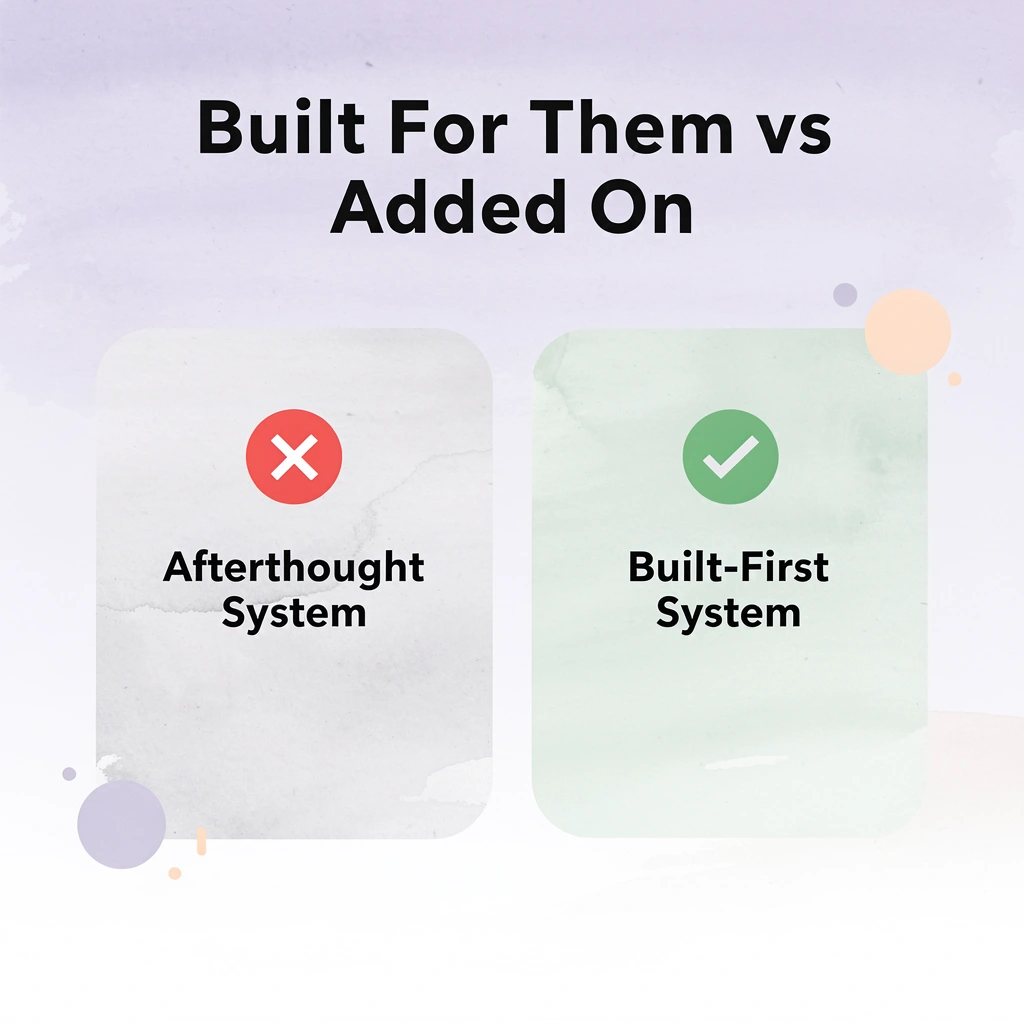
Global workers need more than faster payments: they need a financial system built for them from the start, not added later.
"A financial system designed as an afterthought will always treat global workers as an afterthought." — Core Principle of Equitable Global Payroll
🎯 Key Point: The difference between patched solutions and purpose-built systems is the difference between workers who struggle and workers who thrive financially.
💡 Tip: When evaluating global payroll platforms, ask whether the system was designed for international workers from day one or whether cross-border support was added as an afterthought.
What engagement reveals about the payroll gap
Workers who feel financially unstable disengage. According to ADP Research's "How Engaged Is the Global Workforce?" report, fewer than 1 in 5 people worldwide were fully engaged on the job in 2025. When workers cannot predict when their money will arrive, cannot keep it in a stable currency, and cannot access it without paying conversion fees, financial friction becomes a daily distraction.
What trust layer do most payroll platforms miss?
Most payroll outsourcing companies focus on employer-side compliance: tax filings, contractor classification, and local labor law. Yet PwC's Global Workforce Hopes and Fears Survey 2025 found that 52% of workers say trust in leadership is a key factor in job satisfaction beyond pay. Trust builds through consistent, transparent, and predictable financial experiences. When workers cannot see where their payment is, cannot understand why a fee appeared, or cannot reach anyone to explain a delay, that trust erodes quietly and permanently.
How does routing payments through standard banking infrastructure create friction?
Most global payroll providers send payments through standard banking systems and treat worker communication as a support ticket category. As contractor workforces grow across time zones and currencies, this creates friction. Platforms like Ontop address this by building financial visibility and worker-facing tools directly into the payment experience, so workers understand transactions they had no hand in designing.
What workers actually need to function financially
Workers who manage international income well have access to specific tools: accounts that hold USD without forcing immediate conversion, debit cards that work across borders without punishing fees, and payment records they can pull themselves. These are basic infrastructure, not premium features. Their absence forces workers to build expensive workarounds using multiple platforms, each taking a cut.
Where does a payroll platform's responsibility actually end?
The best payroll outsourcing companies understand that their product does not end when the payment is sent. It ends when the worker can use that money confidently, wherever they are. This shift from payment delivery to financial access also distinguishes platforms that serve employers from those that genuinely serve workers.
For workers who find a platform that gets this right, the lingering question is not about features or fees.
How Ontop Helps Global Workers Get Paid Faster and Keep More of What They Earn
Workers around the world need more than just payment processing—they need fast access to their earnings, flexibility in managing money, transparency, and tools for international work.
"Ontop takes a fundamentally different approach by treating payroll as a service focused on workers rather than a back-office function." — Ontop
💡 Tip: If you're a freelancer, contractor, remote worker, or digital nomad, the right payroll partner doesn't just move money—it empowers how you manage it.
- Freelancers: Require fast, reliable payouts; Ontop provides instant earnings access to meet cash-flow needs.
- Contractors: Need flexible money management; Ontop offers robust multi-currency tools to handle various financial requirements.
- Remote Workers: Value transparency and clarity; Ontop ensures real-time payment visibility so they can track earnings with confidence.
- Digital Nomads: Rely on international compatibility; Ontop simplifies life with seamless, cross-border payment support.
🎯 Key Point: Ontop's payroll solution is purpose-built to help global workers manage their earnings more effectively—not just receive them.
⚠️ Warning: Settling for a generic payment processor means missing out on worker-first features that can meaningfully impact how much you keep and how fast you get paid.
How does Ontop address payment delays and currency challenges for global workers?
For many workers worldwide, delayed international payments and cross-border transfers create cash flow problems. Ontop supports payments in more than 150 countries, giving workers flexibility regardless of location.
Many international professionals earn in U.S. dollars but lack access to USD accounts, forcing them to convert their money immediately at unfavorable rates. Ontop provides workers with USD accounts, letting them decide when and how to move their money.
What spending and transparency tools does Ontop offer international professionals?
Ontop's global Visa card lets workers spend money easily without juggling multiple financial services or transfer processes. For remote professionals and digital nomads, this simplifies everyday expenses across different countries.
International payments often leave workers unsure about when the money will arrive, which fees will be deducted, and the status of their transaction. Ontop creates clarity through a centralized platform, reducing surprises and building confidence.
How does Ontop reduce payment friction for the modern global workforce?
Payment friction takes many forms: delayed transfers, currency conversion challenges, complex withdrawals, limited options, and multiple intermediaries. Ontop reduces these pain points by consolidating payments, account access, spending tools, and financial management into one platform, letting workers focus on their work.
Ontop offers benefits beyond basic payment delivery, supporting the broader financial needs of international professionals rather than functioning solely as a payroll processor.
Global workers across different time zones need self-service account management. Ontop provides independent control over finances while reducing administrative delays.
Many payroll platforms were built for traditional employment. Ontop is designed for today's global workforce: freelancers, independent contractors, remote employees, digital nomads, and international consultants.
Why is Ontop's Quick Start onboarding a complete solution for global professionals?
Problems with implementing new systems often slow adoption. Ontop's Quick Start experience helps workers and companies move from sign-up to payments faster, eliminating long wait times.
Picking a payroll provider is no longer just about processing payments. For workers, what matters extends far beyond getting paid.
Access to your earnings, control over your money, account transparency, spending tools, and self-management capabilities determine how useful a platform is in your daily life.
Ontop brings together international payments, USD account access, a global Visa card, financial tools for workers, and Quick Start onboarding into one complete solution for modern workers worldwide.
Book a Demo Today - See why 950+ Companies Trust OnTop to Power their Global Teams
Workers care about one thing: which platform works when needed — whether getting earnings from abroad, spending without conversion friction, or understanding what they received and why.
"The gap between payment sent and money actually usable is where most global payroll platforms fail their workers." — OnTop
🎯 Key Point: Workers need funds that are immediately accessible, friction-free, and fully transparent from the moment they land.

OnTop delivers a USD account, a global Visa card, and a single unified platform for receiving and managing international payments seamlessly. More than 950 companies trust our payroll software to handle global workforce payments because it closes the gap between payments sent and money actually usable. Book a demo today to see the difference.
💡 Tip: If your current payroll platform creates any friction between sending pay and workers spending it, that's a gap OnTop eliminates by design.
✅ Best Practice: Choose a global payroll solution that bundles a USD account, Visa card, and payment dashboard into one platform — so workers never have to chase their own earnings.
Related Reading
- Best Payroll Software For Staffing Companies
- Best Payroll Outsourcing Companies
- Deel Vs Oyster
- Best International Payroll Software
- Best Payroll For Contractors
- Remote Competitors
- Velocity Global Competitor
- ADP Alternative