






The global talent pool has opened doors that seemed impossible just a decade ago. Companies now recruit developers from Eastern Europe, customer service teams from Latin America, and designers from Southeast Asia, but many stumble when it comes to paying international contractors compliantly and efficiently. Without proper systems, businesses juggle currency conversions, cross-border tax regulations, contractor agreements in different languages, and payment methods that vary by country. Successfully hiring overseas contractors requires understanding everything from sourcing talent to managing ongoing payments while staying compliant with local labor laws.
Managing international contractor payments involves complex logistics that can overwhelm growing businesses. The right systems handle currency conversions, automate compliant payments, and keep documentation organized in one centralized location. Companies that streamline these processes can focus on building their remote teams rather than wrestling with administrative burdens, which is why choosing effective payroll software is essential for scaling distributed workforces.
Table of Contents
- Why More Companies Are Hiring Overseas Contractors Than Ever
- How Companies Actually Hire Overseas Contractors
- What Businesses Look for When Hiring Overseas Contractors
- The Mistakes That Prevent Overseas Contractors From Getting Hired
- How to Position Yourself for More International Opportunities
- How Ontop Helps Overseas Contractors Work With Global Clients
- Book a Demo Today - See why 950+ Companies Trust OnTop to Power their Global Teams
Summary
- Companies are hiring overseas contractors at unprecedented rates because geography no longer limits access to specialized skills. According to Hire Overseas' State of Global Hiring report, 67% of U.S. companies plan to hire globally in 2025, driven by talent scarcity and the need for faster project execution. The contractor model delivers immediate access to expertise without the complexity of international employment, work permits, or visa sponsorships.
- Cost efficiency creates strategic flexibility that extends beyond wage differences. Research from Bitwage shows companies can cut costs by up to 60% when hiring international contractors, with savings from reduced overhead, including no benefits administration, no payroll taxes, and no office space requirements. This financial flexibility allows businesses to hire more specialized talent or extend runway during uncertain periods.
- The skills gap has become structural rather than cyclical. ManpowerGroup's 2026 Global Talent Shortage report found that more than seven in ten employers struggle to find the talent they need, a problem that hits hardest in specialized roles like software development, data analysis, and digital marketing. When local hiring fails within reasonable timeframes, expanding the search radius globally becomes the practical solution.
- Payment infrastructure shapes hiring decisions more than most contractors realize. A contractor who can receive payments seamlessly is more attractive than an equally skilled professional in a country where payment processing takes weeks and incurs heavy fees. Contractors who make themselves easy to pay often gain an advantage unrelated to talent, as businesses notice when someone removes friction from the hiring decision.
- Communication problems during hiring predict collaboration challenges after contracts start. According to Deel's research on global compliance, 73% of companies have made at least one compliance mistake when hiring internationally, with many errors stemming from miscommunication about tax status, work authorization, or contract terms. Strong communication signals reliability, while poor communication signals future problems that employers want to avoid.
- Referrals remain one of the most effective hiring channels because referred candidates are trusted from the start, according to LinkedIn's Global Talent Trends research. The best contractor opportunities rarely appear on public platforms; instead, they arise through introductions where former clients recommend you to colleagues or community members vouch for your work, building relationships with built-in confidence rather than starting from skepticism.
- Payroll software addresses the payment friction that makes international hiring feel risky by automating compliant contractor payments across 150+ countries, handling tax documentation and currency conversion in one system that compresses payment cycles from days to hours.
Why More Companies Are Hiring Overseas Contractors Than Ever
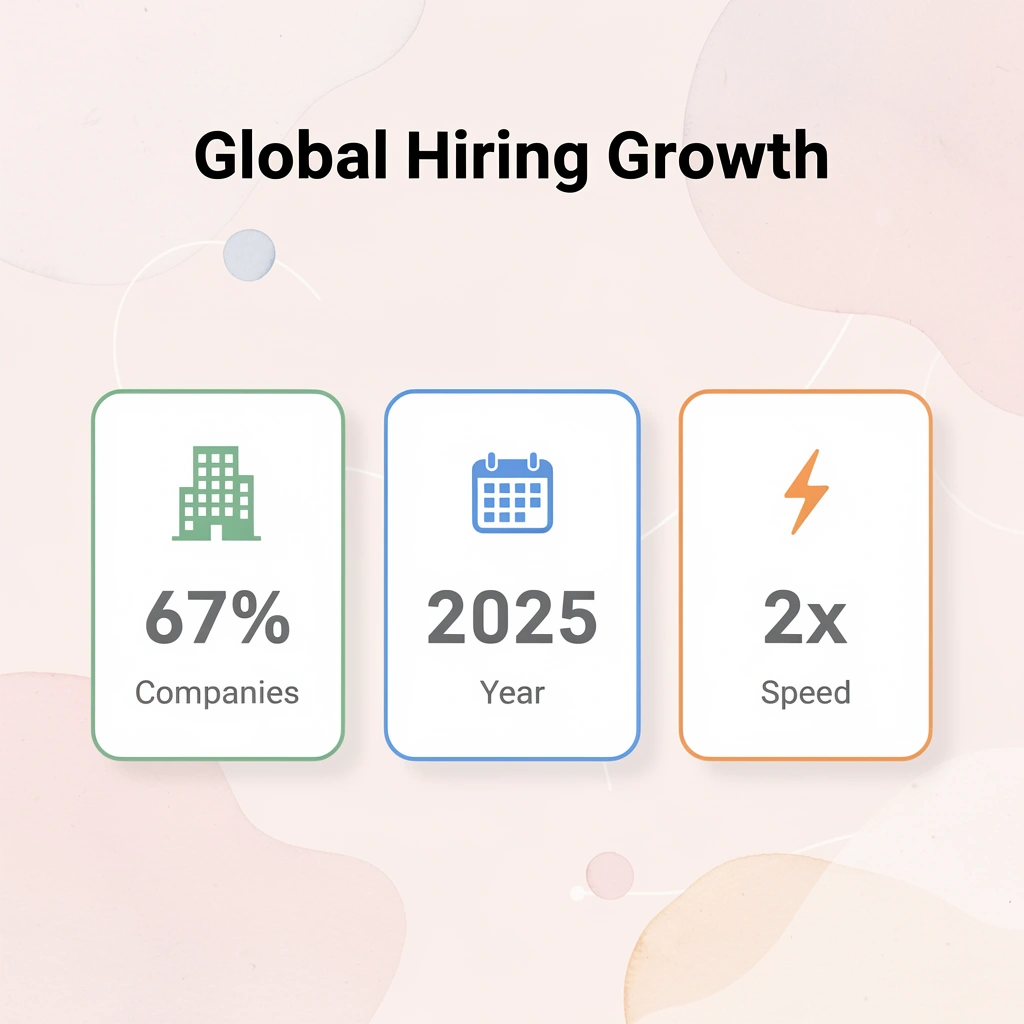
Companies are hiring overseas contractors to solve two critical problems: accessing skills unavailable locally and accelerating the hiring process. According to Hire Overseas' State of Global Hiring report, 67% of U.S. companies hired workers from around the world in 2025. This was driven by talent scarcity, the need for speed, and the recognition that location no longer determines job capability. The contractor model provides quick access to workers, reduces complexity, and allows companies to test working relationships before committing to permanent positions.
"67% of U.S. companies hired workers from around the world in 2025, driven by talent scarcity and the need for speed." — Hire Overseas' State of Global Hiring Report, 2025
🔑 Key Takeaway: The shift toward overseas contractors represents a fundamental change in how companies approach talent acquisition — prioritizing skills and speed over geographic proximity.
💡 Business Insight: The contractor model serves as a strategic testing ground, allowing companies to evaluate working relationships and performance before making long-term hiring commitments.

The Talent Shortage Isn't Going Away
The skills gap has become a permanent problem. ManpowerGroup's 2026 Global Talent Shortage report found that more than seven in ten employers struggle to find workers for specialized roles like software development, data analysis, and digital marketing. When companies cannot fill positions locally within reasonable timeframes, they must either accept less-qualified candidates or look elsewhere. Most are choosing to search elsewhere, discovering that the best candidate might live in Bogotá, Lagos, or Krakow rather than within driving distance of headquarters.
Contractors Move Faster Than Employment
When a project needs a specific skill set next week, traditional employment becomes impractical. Overseas contractors often start within days rather than months because onboarding is simpler, the compliance burden is lower, and there's no need to navigate work permits or visa sponsorships. You're engaging someone who already operates as a business, reducing friction between "we need help" and "the work is happening."
Cost Efficiency Creates Strategic Flexibility
Research from Bitwage shows companies can cut costs by up to 60% when hiring international contractors by reducing overhead: no benefits administration, no payroll taxes, no office space requirements. This financial flexibility allows companies to hire specialized talent, invest in better tools, or extend runway during uncertain periods. The advantage isn't paying people less for the same work—it's accessing global market rates instead of being locked into a single geography's cost structure.
How does the contractor model reduce hiring risk?
Bringing someone on as a contractor creates a natural trial period without the legal complexity of probationary employment. If the relationship works, you can extend it, expand the scope, or convert to full-time employment. If it doesn't, you part ways without severance negotiations or termination procedures.
This becomes especially valuable when hiring internationally, where cultural fit, communication styles, and work habits are harder to assess from a distance.
What payment challenges arise when scaling internationally?
Most companies handle international contractor payments through wire transfers, PayPal, and local bank setups. This approach works until you're scaling across multiple countries with different tax requirements and compliance rules.
As your team grows from three contractors to thirty, this approach creates friction: delayed payments, currency conversion losses, inconsistent documentation, and risk of misclassifying workers or missing local tax obligations. Payroll software like Ontop automates compliant payments across 150+ countries, handling tax documentation, currency conversion, and contractor onboarding in one system. It compresses payment cycles from days to hours while maintaining audit trails.
But understanding why companies hire overseas is only half the equation. The question that determines whether you get hired is different, and most contractors get it wrong.
Related Reading
- Best International Payroll Software
- Pay International Employees
- How Much Does It Cost To Outsource Payroll
- Global Payroll Implementation
- Benefits Of Hiring Remote Workers
- Multi-Country Payroll Outsourcing
How Companies Actually Hire Overseas Contractors
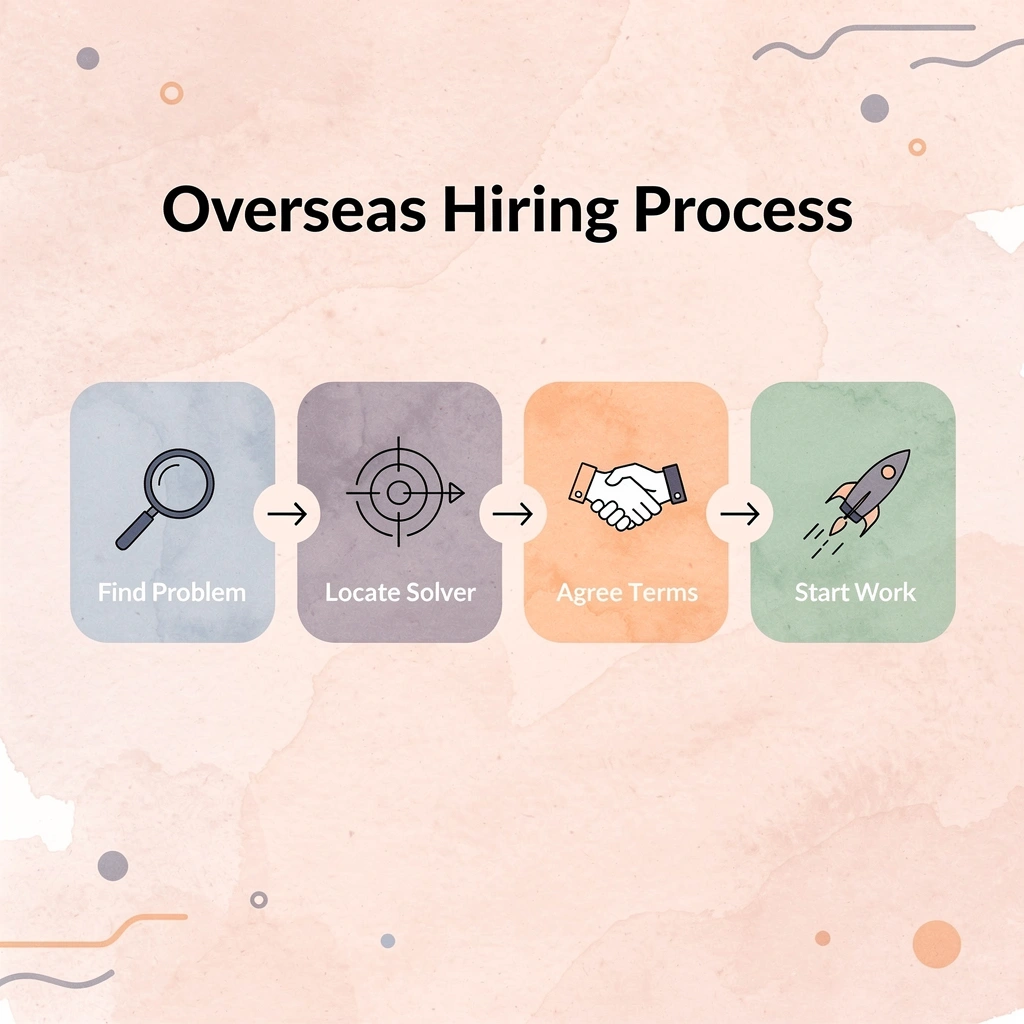
The hiring process for overseas contractors differs fundamentally from traditional recruitment. Companies identify a problem, locate someone who can solve it, agree on terms, and start working—often within days rather than months. The relationship is built on results rather than organizational fit.
🎯 Key Point: Remote hiring prioritizes problem-solving ability and immediate value delivery over cultural interviews and lengthy onboarding processes.
This speed creates both opportunity and pressure. You're competing on trust signals, proof of what you can do, and how easily you can work with a business that might never meet you in person.
"The global remote work market is expected to reach $87 billion by 2030, with companies prioritizing skill-based hiring over traditional recruitment methods." — Remote Work Association, 2024
⚠️ Warning: Without face-to-face interaction, your portfolio, communication skills, and track record become your selling points in the first 30 seconds of evaluation.
Direct Hiring Builds Stronger Relationships
Many companies skip marketplaces and hire contractors directly through professional networks, portfolio websites, or LinkedIn outreach. When a marketing director finds a content strategist through a mutual connection or a product manager discovers a designer whose portfolio matches their vision, they often move straight to negotiation.
Direct hiring gives contractors more control over how they present themselves and what they charge. You're not competing in a crowded marketplace where algorithms prioritize the lowest bid. The challenge is handling all business development yourself, making your network, online presence, and reputation your most important assets.
How do freelancer platforms reduce hiring uncertainty?
Platforms like Upwork, Toptal, and Fiverr reduce hiring risk through organized evaluation systems: portfolios, client reviews, success scores, and project histories. According to Oyster's 2025 Global Hiring Trends and Impact Report, companies prioritize verified work histories and peer feedback when evaluating international talent.
Why does social proof matter more than technical skills?
For businesses, this enables faster, more confident decisions. For contractors, profile quality matters as much as technical skills. A developer with 50 five-star reviews and a detailed portfolio typically outcompetes someone with stronger technical abilities but no social proof. Employers prioritize evidence of repeated successful delivery from people willing to vouch for you publicly.
How does payment infrastructure influence hiring decisions?
One factor rarely mentioned in hiring guides but frequently determines outcomes is payment logistics. Companies want to pay you reliably, following the law, and without extra work. A contractor in Argentina who receives payments smoothly is more attractive than an equally skilled contractor in a country where processing takes weeks and incurs substantial costs.
Platforms like Ontop automate compliant contractor payments across 150+ countries, handling tax documentation, currency conversion, and local regulations in a single system.
What makes contractors easier to pay?
Contractors who make themselves easy to pay gain an advantage unrelated to talent. Clear invoices, multiple payment options, and proper tax compliance documentation remove friction from the hiring decision.
Why do the best opportunities never appear on job boards?
The best contractor opportunities rarely appear on public platforms. They happen through introductions: a former client recommends you to a colleague, a community member vouches for your work, or someone who saw your writing online reaches out directly.
These referral-based relationships come with built-in trust that no marketplace profile can match. When someone hires you based on a trusted recommendation, they start from confidence that you'll deliver.
How do successful contractors move beyond marketplace competition?
Many successful contractors eventually stop bidding on platforms entirely. Their network generates sufficient inbound opportunities, eliminating the need to compete in open marketplaces.
You're no longer one of hundreds being evaluated—you're the person someone specifically looked for because they already believed you could help. What makes companies choose one contractor over another often has little to do with what's written on a resume.
What Businesses Look for When Hiring Overseas Contractors
Businesses evaluate overseas contractors on clear communication, reliability with minimal supervision, and their ability to integrate into workflows despite distance. The decision hinges on risk: will this person deliver consistent quality work without generating management overhead or delays?

🎯 Key Point: The most successful overseas contractors demonstrate self-management skills and proactive communication that reduce rather than increase the hiring company's operational burden.
"Communication clarity and reliability are the top factors businesses evaluate when hiring overseas contractors, as these directly impact project success rates." — Remote Work Research Institute, 2024

💡 Tip: Companies specifically look for contractors who can anticipate problems, provide regular updates, and adapt to company processes without requiring constant guidance or micromanagement.
Relevant skills matter, but context matters more
Every hiring decision starts with capability: Can this contractor solve the specific problem you're facing? Businesses prioritize relevant experience over total years—a developer with three years of experience building fintech APIs may be far more valuable than someone with a decade of unrelated web development experience.
Portfolios and case studies carry more weight than resumes because they demonstrate actual outcomes. When you show how you solved a problem similar to theirs, you reduce the uncertainty that makes international hiring feel risky.
Communication ability separates good candidates from great ones
Misunderstandings cost more when teams work across countries. A question that takes two days to clarify can derail an entire sprint. Businesses evaluate how contractors communicate during the hiring process because this communication predicts future collaboration. Are your responses clear and complete? Do you ask thoughtful questions that demonstrate understanding of the project scope? Can you explain technical concepts to non-technical stakeholders?
Many hiring managers choose a less experienced contractor who communicates exceptionally well over a highly skilled one who creates confusion. When supervision is limited and time zones don't align, clarity becomes a competitive advantage.
Reliability builds the trust that leads to repeat work
Unlike office employees, contractors work with minimal supervision. Employers need confidence that deadlines will be met and promises kept without constant check-ins. Reliability manifests in small actions: responding within reasonable timeframes, communicating proactively when issues arise, and maintaining consistent work quality over months. These patterns predict whether the relationship will work in the long term. Contractors who demonstrate reliability gain referrals and repeat projects, while equally skilled professionals who miss deadlines or go silent struggle to build sustainable client bases.
How does professionalism reduce perceived risk when hiring contractors?
Professionalism reduces uncertainty for businesses taking a chance on someone they've never met in person. Organized proposals signal predictable future interactions, realistic timelines show you understand the work involved, and prompt responses demonstrate respect for their time.
When employers compare qualified candidates, the contractor who appears easiest to work with frequently wins. That advantage comes from small details: well-structured portfolios, clear availability statements, and thoughtful questions during discovery calls. These elements answer the question every business asks when hiring internationally: will working with this person create problems or solve them?
What mistakes do contractors make that hurt their chances?
Many contractors undermine their own success through mistakes unrelated to their skill level.
The Mistakes That Prevent Overseas Contractors From Getting Hired
Most overseas contractors lose opportunities not because they lack skills, but because they fail to lower the perceived risk during the hiring process. When businesses evaluate international candidates, they search for reasons to say no. Every unclear message, generic proposal, or missing credibility signal becomes evidence that working together might create problems.

🎯 Key Point: The mistakes below aren't about competence. They're about how businesses interpret uncertainty when they cannot meet you in person, verify your work history through familiar channels, or rely on local professional networks for validation.
Generic Proposals That Signal Low Investment
When contractors send identical applications to every possible client, they save time but lose trust. Hiring managers notice template language immediately. Vague statements like "I can help your business grow" or "I have extensive experience in your industry" fail to demonstrate understanding of the company's challenges or the project requirements.
Businesses want evidence that you've invested effort before they spend money. A personalized proposal demonstrates attention to detail, genuine interest, and situational understanding. Generic applications send the opposite message.
Portfolios That Raise More Questions Than They Answer
Your portfolio carries more weight than your resume when hiring overseas contractors, as it provides clear proof of what you can deliver. Many contractors present portfolios that create doubt instead of confidence.
Common problems include outdated examples, projects lacking business context, work samples misaligned with services offered, and poor visual presentation. Hiring managers reviewing dozens of candidates need clear evidence that you can solve their specific problem. When your portfolio requires interpretation or leaves questions unanswered, you've increased the perceived risk of collaboration.
Communication Problems Visible Before Work Begins
Poor communication during hiring predicts collaboration challenges after a contract starts. Late responses, unclear answers, incomplete information, or difficulty following basic instructions raise concerns before any work begins. These patterns rarely improve under deadline pressure.
According to Deel's research on global compliance, 73% of companies have made at least one compliance mistake when hiring internationally, often due to miscommunication about tax status, work authorization, or contract terms. Employers anticipate that communication challenges during hiring will intensify as they manage deliverables, revisions, and payments across time zones.
What makes contractor positioning unclear and confusing?
Many contractors make it hard for businesses to understand what they do. Their profiles list dozens of unrelated services or describe themselves with broad labels that fail to explain how they help clients achieve specific outcomes.
A contractor who presents as "designer, marketer, content creator, strategist, consultant, social media manager, and business advisor" appears less credible than someone who clearly states they help SaaS companies reduce churn through targeted email campaigns.
Why does clarity create confidence with potential employers?
Businesses seek solutions to specific problems. The easier you make it to understand what you're good at, what results you can deliver, and who you work best with, the easier it becomes for an employer to imagine working with you.
Clarity creates confidence. When your positioning needs explanation, you've already lost attention.
Many contractors who master these fundamentals still struggle with one final challenge that determines whether international opportunities turn into sustainable work.
Related Reading
- Best Way To Pay International Contractors
- Best International Payroll Providers
- How To Hire International Employees
- How to Pay Foreign Contractor
- International Payroll Management
- Benefits Of Hiring International Employees
- Benefits Of Hiring Remote Workers
- B2b Cross-border Payments
How to Position Yourself for More International Opportunities
The challenge isn't getting better at what you do—it's making what you do easier to trust from 8,000 miles away. Businesses hiring overseas contractors face significant uncertainty: they can't verify credentials through mutual contacts or walk down the hall to check progress. They're evaluating you through fragments: a profile, a portfolio, a few written exchanges. Your job is to turn those fragments into confidence.

💡 Key Insight: Remote trust is built through systematic transparency—not just talent. Every interaction must demonstrate reliability, communication skills, and professional standards that compensate for physical distance.
🎯 Critical Strategy: Focus on trust-building elements that international clients can easily verify and measure. This means creating documented processes, maintaining consistent communication, and building a digital reputation that speaks louder than geography.

How can you make your expertise immediately recognizable to clients?
Most contractors describe themselves in terms of how they think about their work, not how clients search for solutions. "Full-stack developer" tells an employer almost nothing; "Rails developer for healthcare compliance platforms" tells them whether you solve their specific problem. Being specific reduces friction.
When Eunice Victoria, who has built a following of 51,640 professionals focused on global career positioning, emphasizes clarity in professional branding, she points to a simple truth: businesses don't hire generalists when specialists are available. If your profile requires interpretation, you've created doubt.
What should your portfolio demonstrate to potential clients?
Your portfolio should answer one question: what happened because of your work? A client doesn't care that you built an email campaign. They care that it increased trial signups by 34% in six weeks.
Context transforms deliverables into proof. Without hard metrics, explaining the problem you solved and the result you created makes examples persuasive.
How can you prove reliability through communication quality?
Communication quality is the only thing employers can evaluate before hiring. Your response speed, level of detail, and questions become proof of what working with you will be like.
Businesses notice whether you respond within hours or days, whether your proposals address their actual needs or recycle generic templates, and whether you ask clarifying questions or assume you already understand. If opportunities stall after initial conversations, the issue is rarely your skills—it's the confidence your communication creates or destroys.
How should you approach pricing to avoid competing on cost?
Pricing becomes easier when you stop competing on cost. Contractors who lower rates to win work attract price-sensitive clients, creating relationships that don't last and constant pressure to justify every hour.
A stronger approach bases pricing around the value you create. If you help a SaaS company reduce churn by improving onboarding, your value is measured in retained revenue, not hours. Communicating that value clearly lets you avoid the race to the bottom.
How can you reduce client hesitation through clear communication?
Global clients worry when they don't understand how you work. If they can't determine your availability, how you handle time zones, or your response time, they assume the worst-case scenario. You don't need to work around the clock—simply state your working hours, response expectations, and meeting availability. Clear communication reduces anxiety and makes hiring you easier.
Why does payment infrastructure impact hiring decisions?
Payment systems directly affect hiring decisions. Businesses want to ensure they can pay you easily without complicated paperwork. Traditional methods incur high fees, offer slow transfers, and involve currency conversion issues, making international hiring feel risky.
Platforms like payroll software enable instant payments across 150+ countries with automated compliance and transparent fees, converting multi-day bank transfers into same-day transactions. Simplified payment logistics reduce hiring risk.
How do sustainable relationships compound your career growth?
Contractors who build sustainable international careers invest in relationships that grow over time. A satisfied client provides repeat projects, referrals, and introductions that create opportunities beyond cold outreach. According to LinkedIn's Global Talent Trends research, referrals remain one of the most effective hiring channels because referred candidates are trusted from the start. One successful project can generate years of work, proving more efficient than constantly searching for new clients.
But even contractors who master positioning, communication, and relationship-building often overlook one critical factor that determines whether international work becomes sustainable.
How Ontop Helps Overseas Contractors Work With Global Clients
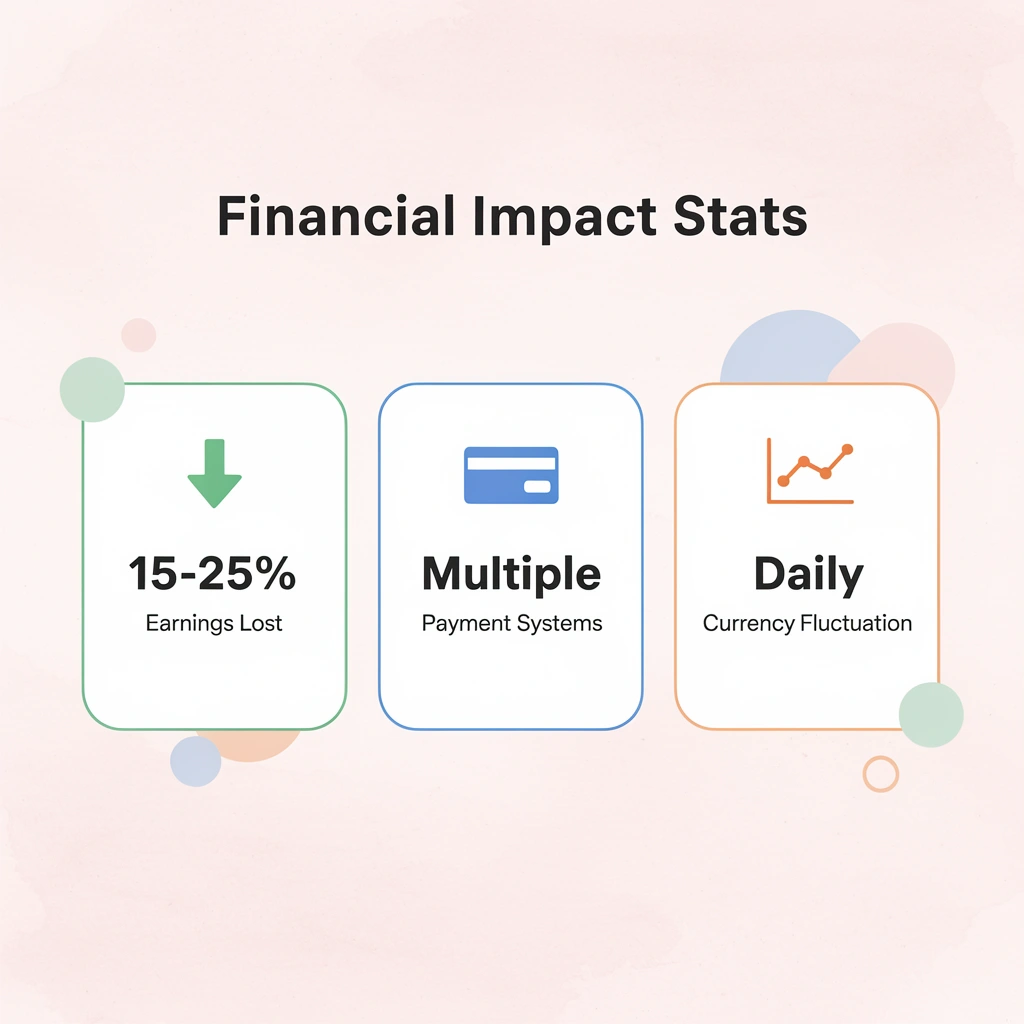
Getting international clients is only part of the challenge. Once contractors work across borders, new problems emerge: payments arrive through different systems, currency conversions reduce earnings, administrative tasks consume time, and managing multiple client relationships grows complicated. These issues impact a contractor's experience and financial stability.

🎯 Key Point: Working with global clients introduces complex operational challenges that go far beyond simply finding international opportunities.
"Cross-border payment complexities and currency fluctuations can reduce contractor earnings by 15-25% annually through fees and unfavorable exchange rates." — Global Freelancer Financial Report, 2024
💡 Tip: The most successful overseas contractors use specialized platforms that handle payments, compliance, and administrative overhead automatically, allowing them to focus on delivering quality work instead of managing backend operations.
The Infrastructure Problem Most Contractors Face
Building a successful international contracting career requires infrastructure that supports global work, not just technical skills and client acquisition.
Why do traditional banking systems fail international contractors?
Traditional banking systems struggle to serve international contractors. Payments arrive late or through complicated routes, currency conversion fees erode earnings, and receiving money from a U.S. client while living in Argentina becomes difficult.
How does fragmented tooling impact contractor efficiency?
Most contractors use multiple disconnected tools: one for invoicing, another for payments, a third for currency conversion. As client rosters expand, this fragmented approach creates friction and diverts time from client service to administrative tasks.
Platforms designed for international professionals address these challenges. Ontop helps overseas contractors simplify payment, financial, and administrative processes through a centralized platform for global work. According to businessmodelcanvastemplate.com, 74% of organizations plan to maintain or expand remote work models in 2025, making this infrastructure increasingly critical.
How does the right platform make international work easier?
Working with international clients becomes easier with the right platform. Ontop simplifies cross-border work arrangements by reducing paperwork and obstacles, allowing contractors to focus on client work and career growth.
Reliable payments are critical for international professionals. Many contractors face delayed transfers, complicated processes, and payment uncertainty. Ontop lets contractors receive payments from international clients through a platform designed for global work relationships.
What geographic flexibility benefits do contractors gain?
For professionals across 150+ countries, the ability to work from anywhere matters. Contractors can access their earnings from anywhere, benefiting freelancers, remote professionals, and digital nomads.
Access to USD accounts allows contractors to receive and manage earnings in one of the world's most widely used business currencies, providing flexibility in managing income from U.S.-based or international clients.
Why does removing friction from international work matter?
The core value is removing friction from international work. Contractors want to develop skills, serve clients, and grow careers, not navigate payment systems, solve banking issues, or manage disconnected processes. By simplifying payments and supporting global work relationships, platforms like Ontop let contractors focus on work that creates opportunities.
But infrastructure alone doesn't guarantee success without knowing how to get started.
Book a Demo Today - See why 950+ Companies Trust OnTop to Power their Global Teams
Landing international clients is only part of the equation. Getting paid efficiently matters too.

Join Ontop to see how our platform helps global contractors access USD accounts, receive payments across 150+ countries, and use financial tools designed for remote professionals. In your first session, you'll simplify the payment side of international contracting so you can focus on growing your career instead of managing cross-border logistics.
🎯 Key Point: Efficient payment processing is crucial for international contractors who want to focus on client work rather than financial logistics.
💡 Tip: With USD accounts and multi-country payment support, you can streamline your entire financial workflow from day one.
"950+ companies trust OnTop to power their global teams with seamless payment solutions across 150+ countries." — OnTop Platform Data
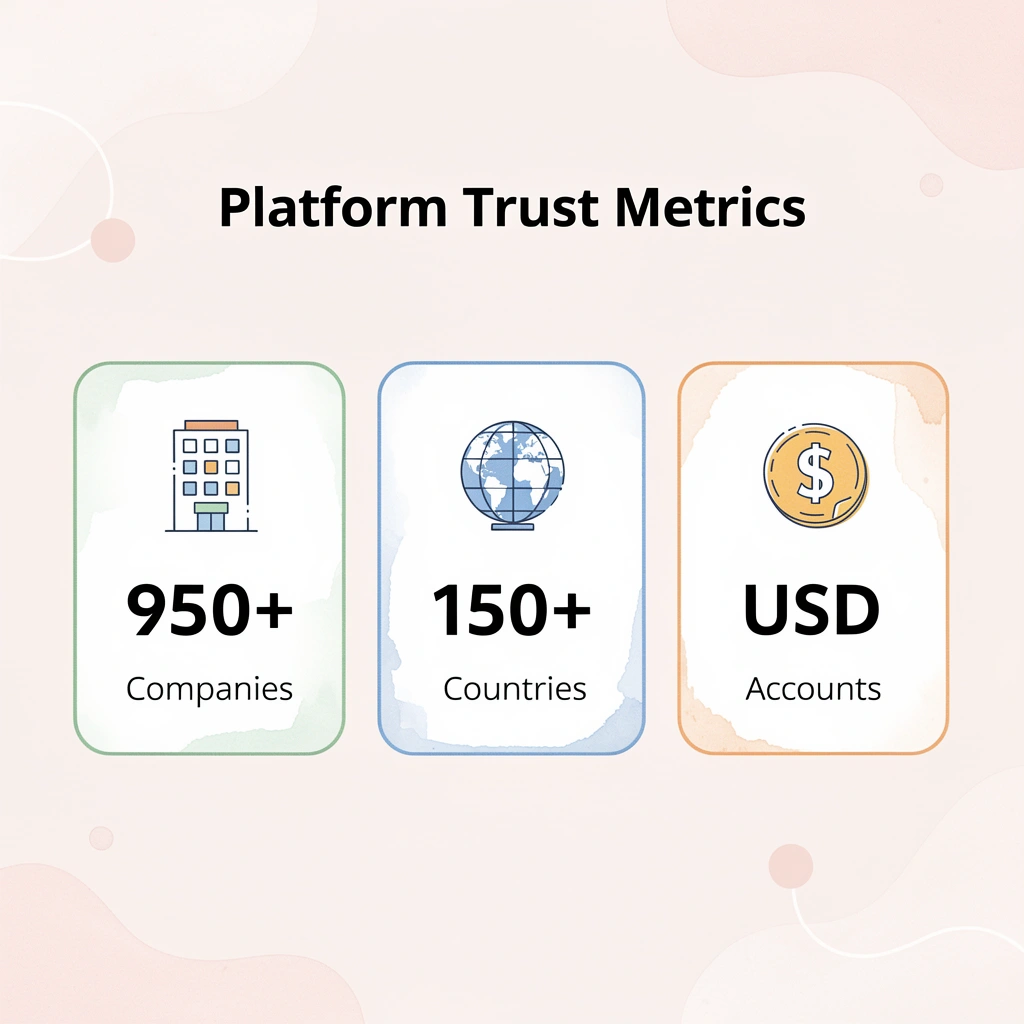
USD Accounts
- Benefit: Direct access to stable currency
150+ Countries
- Benefit: Global reach for any client
Financial Tools
- Benefit: Streamlined money management
Related Reading
- Best Payroll Software For Staffing Companies
- Best Payroll Outsourcing Companies
- Deel Vs Oyster
- Best International Payroll Software
- Best Payroll For Contractors
- Remote Competitors
- Velocity Global Competitor
- ADP Alternative


