






Managing a global workforce means dealing with different currencies, tax laws, compliance requirements, and payment schedules across multiple countries. When teams span continents, paying people accurately and on time becomes a complex puzzle that demands attention every single pay cycle. Cross-border payments require understanding local regulations while meeting the expectations of international workers.
The best international payroll software transforms this challenge from a monthly headache into a streamlined process. Automated systems handle currency conversions, ensure tax compliance, and process payments so companies can focus on building their teams instead of wrestling with spreadsheets and regulations. Whether hiring the first remote worker abroad or scaling a distributed team, the right payroll software makes all the difference.
Table of Contents
- Why International Payroll Management Matters More Than Most Workers Realize
- What Is International Payroll Management?
- The Most Common Payroll Problems Global Workers Encounter
- What Good International Payroll Management Looks Like
- How Workers Can Protect Themselves When Working Internationally
- How Ontop Simplifies International Payroll for Global Workers
- Book a Demo Today - See why 950+ Companies Trust OnTop to Power their Global Teams
Summary
- International workers face payment delays, hidden fees, and administrative complexity that most don't anticipate until problems emerge. According to the Global Payroll Payments Report 2025, 46% of global workers have experienced payroll payment delays, and 38% reported receiving incorrect payment amounts. These aren't minor inconveniences. They disrupt cash flow, erode trust, and turn straightforward compensation into a financial obstacle course where workers absorb costs through transfer fees, unfavorable exchange rates, and unpredictable processing times.
- Payroll complexity increased dramatically across global operations in the past year. Strada's 2025 Global Payroll Complexity Index found that 95% of global payroll leaders report increased complexity, driven by multiplying regulations, new reporting requirements, and constantly changing tax treaties. What worked last quarter might not work this quarter, and companies managing workers across 10 countries face 10 different regulatory frameworks, each with its own audit-trail requirements and compliance landmines.
- Real-time payment access has become the preferred standard among international workers. Niural's 2025 global payroll research found that 60% of employees prefer real-time access to pay over traditional payment schedules. Workers want visibility into when their earnings will arrive, not vague promises about processing times. Predictable payment schedules, transparent status updates, and consistent processing windows build trust faster than competitive rates, and when payments arrive late or require follow-up inquiries, workers start questioning whether the relationship is worth maintaining.
- AI-powered payroll systems dramatically reduce compliance violations that delay worker payments. The same Neural research found that AI-powered systems achieve a 70% reduction in compliance violations, which directly affects how quickly workers can access their funds without regulatory holds or documentation requests. These capabilities shift control back to workers, letting them decide how and when to convert currencies rather than accepting whatever exchange rate gets applied during processing.
- Worker classification errors create cascading financial and legal problems for both parties. Misclassification between employee and contractor status affects tax withholding, benefits eligibility, and legal protections. The mistakes can trigger penalties, back taxes, and legal disputes that cost far more than the original payment, yet many workers don't understand how their classification status determines their tax obligations and legal protections until problems arise.
- Payroll software addresses these challenges by consolidating multi-country payments, compliance tracking, and currency management into unified systems that reduce processing time and eliminate the coordination overhead causing most payment delays.
Why International Payroll Management Matters More Than Most Workers Realize
Payment turns work into real money for rent, groceries, and survival. For workers from other countries, that money navigates multiple layers: cross-border transfers, currency conversions, and government regulations. Whether payment proceeds smoothly or faces delays depends on how well payroll systems manage this complexity.

🎯 Key Point: International workers face multiple payment barriers that domestic employees never encounter, making reliable payroll systems absolutely critical for their financial stability.
"Cross-border payments can involve up to 5-7 intermediary banks, each adding potential delays and fees that impact when workers actually receive their earnings." — International Payment Processing Report, 2024

⚠️ Warning: Payment delays for international workers don't just mean inconvenience—they can mean the difference between making rent payments on time or facing serious financial hardship in a foreign country.
How do payment delays impact your bottom line?
Cross-border payments move through correspondent banks, clearing houses, and compliance checkpoints before reaching your account. According to the Global Payroll Payments Report 2025, 68% of companies report that payment delays affect employee satisfaction. Each intermediary adds fees, processing time, and conversion costs that reduce earnings. A contractor expecting $3,000 might receive $2,750 after transfer fees and unfavorable exchange rates.
What hidden costs erode your international payments?
The hidden erosion happens quietly. You negotiate a rate and assume the agreed amount will land in your account. Your payment sits in processing limbo for five days while you wait to pay bills. The exchange rate shifts unfavorably between the invoice date and the payment date. Withdrawal fees take another bite when you convert funds to local currency. These friction costs accumulate over months and years, transforming straightforward compensation into a financial obstacle course.
Why do workers bear the consequences of poor payroll systems?
Most international workers lack the negotiating power of larger companies to secure better payment terms. You accept the payment method your employer or client offers, even when it costs you money or time. If their payroll system sends payments through expensive channels, you bear those costs. If compliance processes delay onboarding, your first payment gets pushed back weeks. The power imbalance means workers rarely question payment infrastructure until problems become severe.
How do communication gaps worsen payroll problems?
Employers focused on operational efficiency may not realize how payment delays affect worker cash flow. Workers hesitant to seem difficult won't speak up about frustration with fees or timing. Problems persist because neither side understands what the other faces or what matters most to them.
What does invisible payroll infrastructure look like?
When payroll infrastructure works well, it becomes invisible. Payments arrive predictably, fees are transparent, and currency conversions happen at reasonable rates. Platforms like Ontop handle the complexity behind the scenes: automating compliance checks, optimizing payment routes, and providing visibility into processing timelines so workers know exactly when funds will arrive.
How does effective payroll management impact daily life?
The difference shows up in daily life. You can commit to rent payments confidently without maintaining large cash buffers for unexpected delays. You spend less time checking payment status and more time focused on work. These are basic expectations that good payroll management should deliver, but often doesn't in international arrangements.
What Is International Payroll Management?
International payroll management is the comprehensive system that allows companies to legally hire, classify, onboard, pay, and retain workers across multiple countries while following complex regulations. It coordinates tax obligations, employment law, currency conversion, banking networks, and documentation requirements to ensure workers in different locations receive accurate, timely payments without exposing either party to legal or financial risk.

🎯 Key Point: International payroll management serves as the critical bridge between global workforce expansion and regulatory compliance, ensuring your business can scale internationally without legal complications.
"Companies with effective international payroll systems reduce compliance risks by 85% and improve employee satisfaction scores by 40% compared to those managing payroll manually across borders." — Global Payroll Association, 2024

💡 Essential Components: The core elements of international payroll management include tax calculation engines, multi-currency processing, local compliance monitoring, and real-time reporting systems that work together to create a seamless global payment infrastructure.
The Components That Make Cross-Border Payroll Work
Before a payment reaches a worker's account, several processes must align across different legal and financial systems.
How does worker classification impact payroll compliance?
How a worker is classified determines whether they are an employee or contractor under local law. This affects tax withholding, eligibility for benefits, and legal protections. Misclassification can result in penalties, back taxes, and legal liability.
What role does contract documentation play in cross-border payments?
Contract documentation establishes payment terms, scope of work, termination conditions, and dispute resolution procedures. Clear agreements aligned with local employment standards help prevent problems when expectations diverge.
How do tax compliance requirements vary across jurisdictions?
Tax compliance rules vary significantly by location. Some countries require employers to withhold taxes from paychecks, while others make workers responsible for paying their own taxes. Payroll systems must calculate taxes, maintain records, and sometimes remit funds to the government. Rules differ based on worker location, company structure, and pay frequency.
What challenges does banking coordination create for international payroll?
Banking coordination connects different financial institutions, payment systems, and currency exchanges. A payment might pass through a local bank, correspondent banks, clearing houses, and foreign exchange providers before reaching its destination. Each intermediary adds time, fees, and potential failure points.
What factors are driving increased global payroll complexity?
According to Strada's 2025 Global Payroll Complexity Index, 95% of payroll leaders worldwide report increased complexity in their work over the past year. Rules multiply, countries introduce new reporting requirements, tax treaties shift, and payment networks update their systems regularly.
How do currency fluctuations impact international payroll?
Changes in currency exchange rates add unpredictability. A worker quoted at $3,000 might receive $2,850 or $3,100, depending on exchange rates and the timing of conversion. Old payroll processes batch transactions, exposing workers to days of rate changes between payment approval and deposit.
What compliance risks do different labor laws create?
Different labor laws create compliance risks. One country requires 13th-month payments, another has specific severance calculations, and a third enforces strict payment timing with penalties for delays. Companies managing workers across ten countries face ten distinct regulatory frameworks, each with different audit requirements.
What are the immediate impacts when payroll systems break down?
When payroll infrastructure breaks down, payments arrive late or incomplete, workers lose trust and disengage, and administrative teams spend hours reconciling errors instead of doing strategic work. Our payroll software prevents these issues by ensuring reliable, on-time payments and reducing manual reconciliation work.
The financial cost is measurable; the reputational cost is often more damaging. Contractors experiencing repeated payment issues decline future projects, warn peers, or disappear without explanation. Companies lose access to talent they've already invested in training.
What legal risks do payroll failures create?
Compliance failures carry legal risk. Tax authorities don't accept "we didn't know" as a defense. Misclassification lawsuits can last for years and cost millions of pounds, creating exposure that sophisticated companies work hard to avoid.
Most workers don't encounter these systems until something goes wrong.
Related Reading
- Best International Payroll Software
- Pay International Employees
- How Much Does It Cost To Outsource Payroll
- Global Payroll Implementation
- Benefits Of Hiring Remote Workers
- Multi-Country Payroll Outsourcing
The Most Common Payroll Problems Global Workers Encounter
Workers across different time zones face similar frustrations: late payments, hidden fees, and confusing administrative processes. The exact details vary by country and provider, but the patterns repeat with uncomfortable consistency.

🎯 Key Point: Despite geographical differences, global workers consistently report the same core payroll issues regardless of their location or payment platform.
"The patterns of payroll problems repeat across borders in a way that is uncomfortable and consistent for remote workers worldwide."
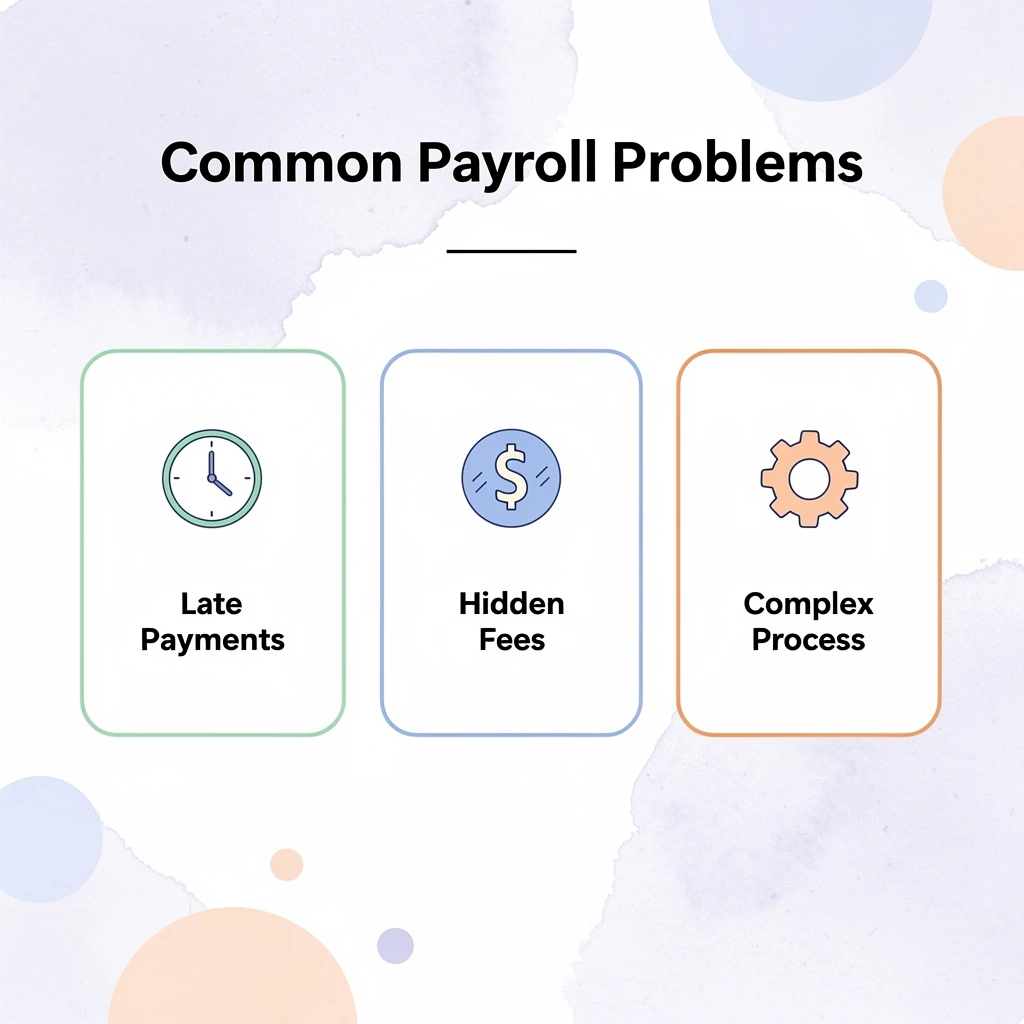
⚠️ Warning: These recurring payroll issues aren't isolated incidents—they represent systemic problems that affect millions of global workers daily, creating unnecessary stress and financial uncertainty.
What causes payment delays in international payroll?
Payment delays create mounting financial stress with each passing day.
According to The Global Payroll Payments Report 2025, 46% of global workers have experienced payroll payment delays. International banking systems process transactions at different speeds, manual approval workflows create bottlenecks, and currency conversions require additional verification steps.
How do payment delays impact workers and contractors?
Workers who need to pay rent, buy groceries, or make loan payments cannot afford to wait while their money moves through systems they don't control.
Freelancers and contractors face extra delays across multiple income sources. A three-day delay from one client and a five-day delay from another create a ten-day gap that disrupts every financial commitment. Predicting when money will arrive matters as much as the payment amount itself.
What hidden costs reduce worker payments?
The contract states one number. The bank account shows another, smaller one.
Wire transfer fees, intermediary bank charges, currency conversion spreads, and account maintenance costs reduce the amount workers receive. A $3,000 invoice might arrive as $2,750. These deductions often aren't disclosed up front, and workers discover them only after reviewing their statements.
Over time, accumulated losses become significant, particularly for those receiving weekly or biweekly payments, where fees are applied repeatedly.
How do exchange rate markups create additional costs?
Some payment providers hide costs in exchange rates instead of showing explicit fees. The difference between the interbank rate and the applied rate can represent a hidden markup of 2% to 4%, ranging from $60 to $120 on a $3,000 payment.
Incorrect Payment Amounts and Reconciliation Headaches
Numbers should be straightforward. Often they aren't.
Research from The Global Payroll Payments Report 2025 found that 38% of workers reported receiving incorrect payment amounts. Calculation errors, misapplied tax withholdings, currency conversion mistakes, and contract misinterpretations cause these discrepancies. Resolving them requires documentation, email exchanges, and follow-up requests that can take weeks, leaving workers short on funds they've already earned.
Recurring errors signal a systemic problem and erode trust in the payment relationship. Workers question whether they'll be paid correctly next time, affecting how they plan their finances and whether to continue working together.
Administrative Friction That Delays Everything
Getting paid shouldn't require extensive paperwork. Yet many international payment systems require repeated documentation, unclear contract terms, missing tax forms, and onboarding procedures that drag on for weeks. Workers submit the same information multiple times because different departments fail to communicate.
Platforms like payroll software centralize documentation and automate compliance checks, reducing onboarding from weeks to days. Our payroll solution treats administrative requirements as a technical problem to solve rather than a burden to pass on to workers.
Lack of Visibility Into Payment Status
Once a payment is processed, it enters a black box. Workers cannot see where it is, which institution is handling it, or when it will arrive. This uncertainty makes financial planning nearly impossible.
This lack of openness creates stress beyond the immediate payment. Workers cannot confidently commit to expenses, schedule bill payments, or make financial decisions without knowing when earnings will arrive. The lack of transparency turns every payment cycle into a guessing game, affecting how workers evaluate opportunities and manage their relationships with employers or clients.
Related Reading
- How To Pay a Foreign Contractor
- How to Hire Overseas Contractors
- Benefits Of Hiring Remote Workers
- International Payroll Management
- Best Way To Pay International Contractors
- Benefits Of Hiring International Employees
- Best International Payroll Providers
- B2b Cross-border Payments
What Good International Payroll Management Looks Like
The best international payroll systems have one thing in common: workers don't have to think about them much. Payments arrive on time, paperwork moves smoothly, and administrative tasks become effortless.

🎯 Key Point: The hallmark of excellent payroll management is invisibility — when systems work so seamlessly that employees can focus on their work rather than payment complications.
"The most effective payroll systems are the ones employees never have to worry about — they just work." — Global Workforce Management Study, 2024
💡 Best Practice: Seamless payroll operations require proactive monitoring, automated processes, and clear communication channels to ensure workers experience zero friction in their payment experience.
Fast Onboarding
The payroll experience begins before the first payment is processed. Workers must verify their identity, submit tax documents, and provide banking details across jurisdictions with varying rules. Well-designed payroll software accelerates this process from weeks to days by accepting digital documents, automating verification checks, and routing information to compliance checkpoints without manual handoffs. Slow onboarding delays project starts, postpones first paychecks, and signals organizational dysfunction before the working relationship begins.
Reliable Payments
According to Niural's 2025 global payroll research, 60% of employees prefer immediate payment over traditional schedules. Reliable payment schedules, clear status updates, and consistent processing windows build trust faster than higher compensation. Late payments or unresolved questions damage relationships regardless of work quality.
How does modern payroll infrastructure improve currency management?
Workers around the world manage money across different currencies, banking systems, and regulatory environments. Modern payroll infrastructure provides multi-currency support, USD account access, and digital payment options that reduce conversion friction and transfer delays. Niural's research found that AI-powered systems achieve a 70% reduction in compliance violations, enabling faster access to funds without regulatory holds or documentation requests. These capabilities shift control to workers, letting them decide how and when to convert currencies rather than accepting whatever exchange rate gets applied during processing.
Why do fragmented payroll systems create bottlenecks?
Most teams manage international payroll using fragmented systems: one platform for contractor payments, another for compliance documentation, spreadsheets for currency tracking, and email threads for resolving discrepancies. As worker counts grow across more countries, bottlenecks arise in every payment cycle. Ontop brings these workflows together into a unified system that handles multi-country payments, compliance tracking, and currency management in one place, reducing processing time and eliminating coordination overhead.
Why does payroll experience affect worker satisfaction?
Payroll used to be about moving money: pay the right amount, follow the rules, and finish. But payroll does much more than that. It shapes how workers feel about their jobs. When the process is confusing and payments come at unpredictable times, workers become less satisfied, even when the pay itself is competitive.
Workers compare their payroll systems to the money apps they use personally. Those apps send instant alerts, display balances immediately, and transfer money seamlessly. When work payments feel antiquated compared to the banking tools workers use daily, it becomes a significant problem. It's no longer an administrative inconvenience; it becomes a reason workers might leave the company.
What can workers do when payroll systems fall short?
Even perfect systems cannot protect workers from every risk inherent in international work. The question becomes: what can workers do when the surrounding infrastructure falls short?
How Workers Can Protect Themselves When Working Internationally
Working across countries creates new opportunities but also brings new responsibilities. When money moves between countries, there are more rules to follow and different systems in each place. Workers need to understand what they can control and should lower their risk through smart choices and good habits.

🎯 Key Point: International work requires understanding multiple tax systems, compliance requirements, and financial regulations that vary significantly between countries.
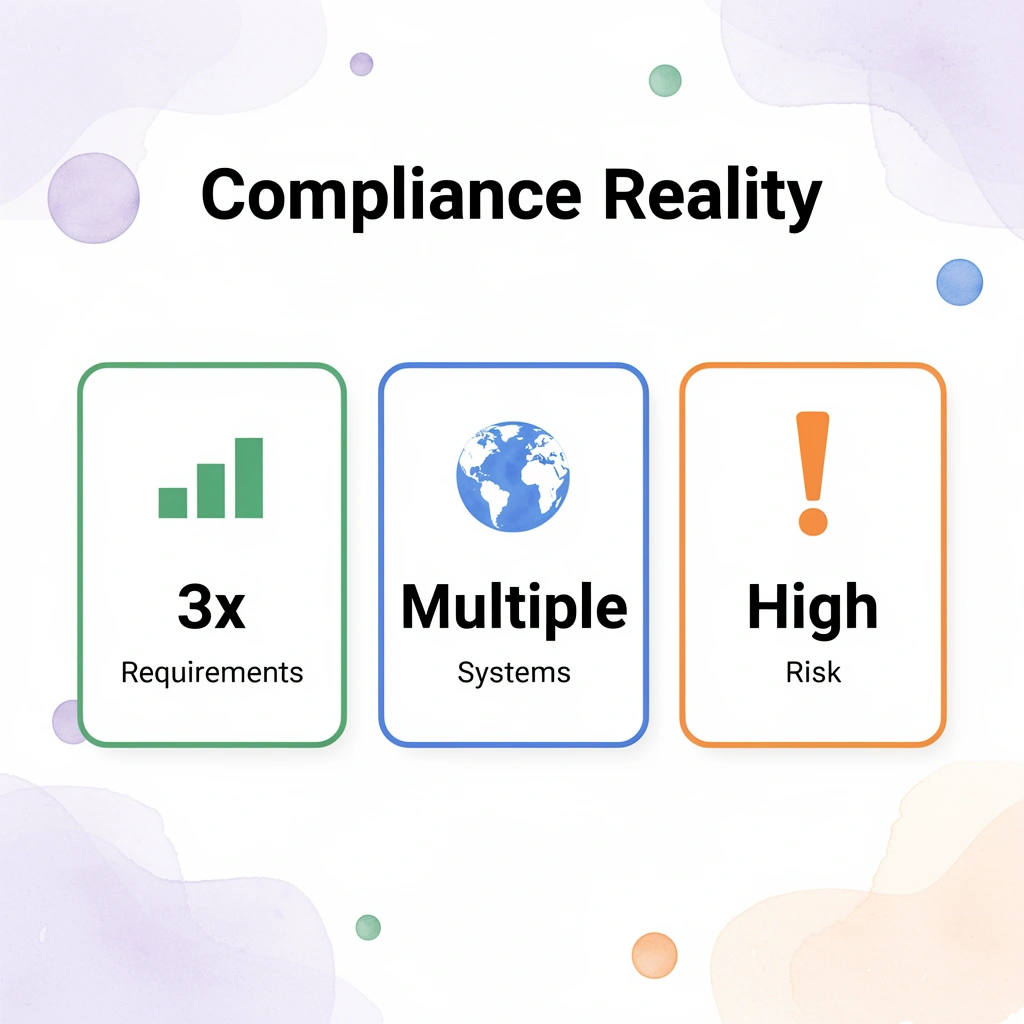
"Cross-border workers face 3x more compliance requirements than domestic employees, making proactive planning essential for financial security." — International Tax Advisory, 2024

Tax Compliance
Risk Level: High
- File in all required jurisdictions
- Maintain detailed records
Legal Documentation
Risk Level: Medium
- Secure proper work permits
- Contracts in the local language
Financial Planning
Risk Level: Medium
- Diversify banking
- Understand currency risks
Insurance Coverage
Risk Level: High
- International health insurance
- Liability insurance
- Travel insurance
⚠️ Warning: Failing to understand local labor laws and tax obligations can result in significant penalties, legal issues, and unexpected financial burdens that could impact your entire international career.
Clarify Payment Terms Upfront
Most payroll problems stem from assumptions rather than clear agreements. Before starting work, ask when payments will be processed, which currency you'll be paid in, who pays for transfer fees, and how long international transfers take. If payment terms aren't written down, request clarification before signing anything. The International Labor Organization reports that payment disputes contribute to significant workplace stress globally, affecting millions of workers annually.
Understand Your Contract
Contracts specify what work must be done, when payments are made, whether someone is an employee or a contractor, and how the contract ends. Classification affects taxes and legal protections. Review notice requirements and final payment procedures carefully to avoid disagreements if circumstances change.
Track Your Actual Earnings
Many workers focus on the pay they agreed to but overlook what actually arrives in their accounts. Currency conversion rates, transfer fees, intermediary charges, and deductions can differ significantly from the stated amount. Two workers earning the same amount on paper may receive different amounts after conversion spreads and transaction fees are applied. Tracking these differences reveals the true value of your international compensation and helps you identify patterns that erode your earnings over time.
Evaluate Payroll Infrastructure
Pay shouldn't be the only consideration when evaluating jobs in other countries. Check whether payments are processed on time, track your payment status, and ensure the platform is easy to use. Look for transparent fees, multiple payment methods, and responsive support. A company with a reliable payment system often outperforms one that offers higher pay but is plagued by payment delays. Payroll software like Ontop that consolidates worker payments, automates compliance, and provides real-time visibility can reduce payment times from weeks to days while decreasing administrative burden.
Think Beyond the Pay Rate
Hourly rates and salary figures matter, but payment reliability, transparency, and ease of access to earnings can be equally important over the long term. Successful international workers treat payroll quality as part of the overall opportunity. By clarifying payment terms, understanding contracts, monitoring actual earnings, and carefully evaluating payroll systems, they reduce financial uncertainty and build more sustainable global careers. Workers in industries with complex regulatory environments, where sudden platform restrictions or changes in payment access occur, understand this reality acutely.
Even when workers do everything right, the infrastructure they depend on determines what's possible.
How Ontop Simplifies International Payroll for Global Workers
International payroll infrastructure determines whether global work feels manageable or overwhelming. Slow onboarding, unpredictable payments, and currency friction create administrative chaos even for well-paid workers. Platforms like Ontop, built for cross-border work, eliminate this complexity by consolidating processes that traditionally required multiple systems, intermediaries, and manual coordination.
🎯 Key Point: The right payroll platform transforms chaotic international payments into streamlined, predictable processes that let workers focus on their actual work instead of payment logistics.

"Cross-border payment complexity affects 78% of remote workers, with payment delays being the top frustration in international employment relationships." — Global Remote Work Survey, 2024
💡 Tip: Look for platforms that handle onboarding, compliance, currency conversion, and payment processing in one integrated system rather than cobbling together multiple services that create gaps and delays.

Faster Onboarding, Fewer Delays
Long onboarding creates a chain of problems: delayed projects, late first payments, and workers who doubt the arrangement will work.
Digital onboarding systems compress weeks into days. Workers complete paperwork, verification, and contract signing through streamlined workflows rather than email chains or physical documents. Starting within 48 hours rather than three weeks improves cash flow and strengthens confidence in the working relationship.
Payments Designed for Cross-Border Reality
Traditional banking systems weren't designed for geographically dispersed workers. When money moves between countries, it passes through multiple banks and intermediaries. Each step involves currency conversion and compliance checks that cause delays and obscure the process.
Ontop operates payment systems across more than 150 countries and handles payouts through channels optimized for cross-border transfers. This eliminates the friction inherent in routing international payments through traditional banking systems.
Compliance Without the Administrative Burden
Documentation requirements vary by location. What's legally required in one country may not apply or may be structured differently in another.
Platforms that handle compliance workflows ease the burden on individual workers, eliminating the need to navigate requirements independently. Contract templates, tax documentation, and regulatory filings are managed through systems that understand each jurisdiction's needs, rather than forcing workers to research and implement compliance measures themselves.
Currency Access That Matches How Global Workers Operate
Managing income across multiple currencies creates practical challenges. Holding earnings in local currency sometimes makes sense, while maintaining funds in USD provides flexibility and stability.
Access to USD accounts lets workers convert earnings strategically rather than accepting immediate conversion at their local bank's rate. For professionals with multiple international clients, this flexibility compounds into a meaningful financial advantage over time.
Spending and Managing Funds Across Borders
Getting paid is one step; accessing and using that money is another. Global Visa cards extend payment tools into everyday money management, letting workers spend their earnings immediately without converting money multiple times or paying withdrawal fees that reduce purchasing power. For digital nomads moving between countries or contractors managing expenses across multiple currencies, integrated spending tools reduce the hassle of managing multiple accounts and payment methods.
Visibility That Reduces Financial Uncertainty
Payment uncertainty creates stress beyond financial concerns. When workers don't know whether a transfer is processing, is stuck in a compliance review, or is delayed by banking intermediaries, they cannot plan effectively.
Real-time payment visibility answers these questions before they become problems. Workers see when payments are started, where they are in the processing pipeline, and when funds will become available, fundamentally changing their relationship with the platforms they depend on.
Benefits That Extend Beyond Basic Payment Processing
Today's global workforce wants more than a paycheck. Perks, support systems, and worker-focused benefits influence where talented professionals choose to work.
Platforms that combine benefits with payment infrastructure create more attractive work environments. Health coverage options, professional development resources, or financial planning tools signal that the platform views workers as long-term partners rather than transaction endpoints. This distinction matters when skilled professionals evaluate competing opportunities.
The real question is whether the system works when workers need it most.
Book a Demo Today - See why 950+ Companies Trust OnTop to Power their Global Teams
The system works by taking decisions off your plate. If you're working remotely for international clients or exploring global opportunities, you shouldn't need to become an expert in correspondent banking or tax treaties. An Ontop account lets you create your profile, complete onboarding, and explore payment options available in your country without scheduling a demo or lengthy sales process. You gain clarity on what's possible before committing.
💡 Tip: Open an Ontop account to explore your payment options and get clarity on fees before committing to any lengthy sales process.
"Over 950 companies trust Ontop to power their global teams because the infrastructure handles what used to require constant attention." — Ontop, 2024
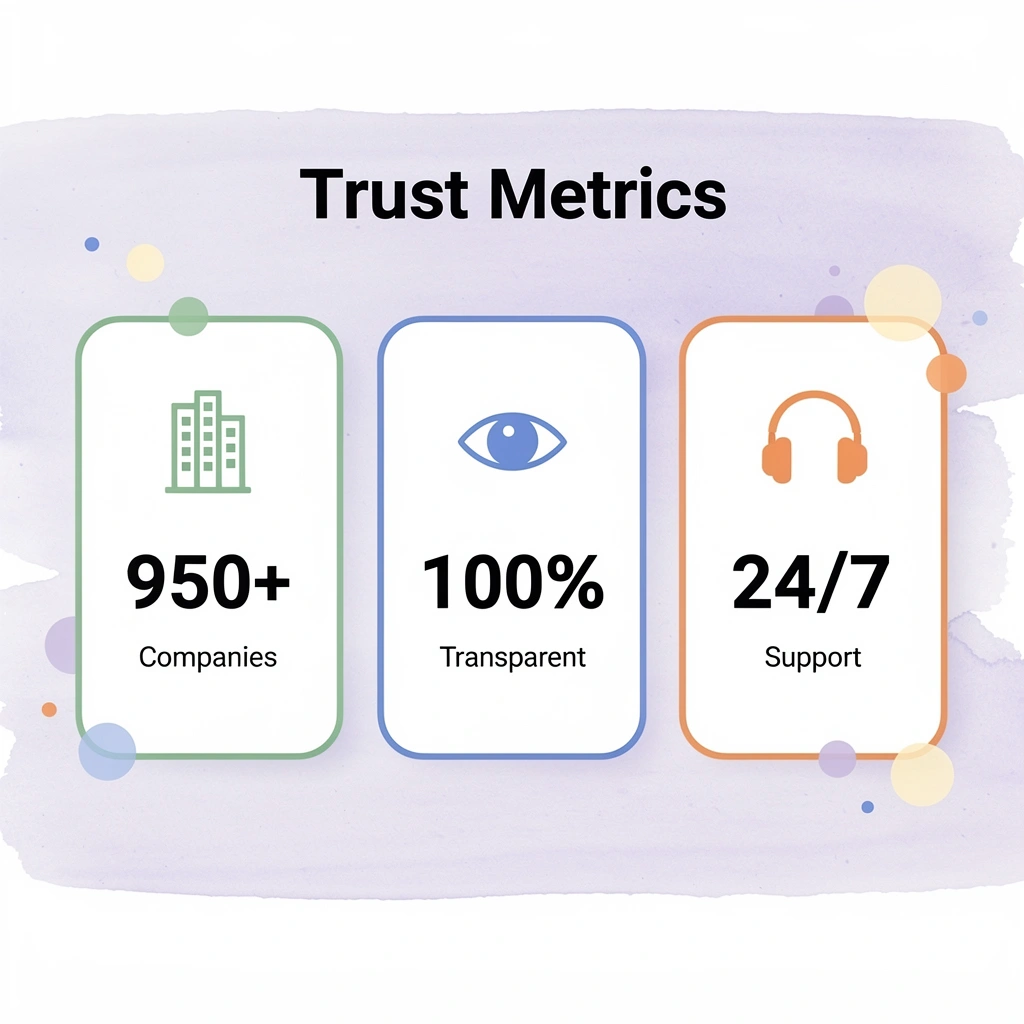
Over 950 companies trust Ontop to power their global teams because the infrastructure handles what once required constant attention. When payment timing becomes predictable, fees no longer appear unexpectedly, and currency conversions occur at transparent rates, you stop thinking about payroll and start thinking about the work itself.
🎯 Key Point: The right global payment infrastructure should be invisible—handling complexity in the background so you can focus on what matters most: your work and growth.

Related Reading
- Best Payroll Software For Staffing Companies
- Best Payroll Outsourcing Companies
- Deel Vs Oyster
- Best International Payroll Software
- Best Payroll For Contractors
- Remote Competitors
- Velocity Global Competitor
- ADP Alternative