






Managing an independent contractor workforce across borders creates a payment puzzle most businesses struggle to solve. Wire transfer fees pile up, currency conversions eat into budgets, and compliance requirements vary by country. This article walks you through the best contractor payment services for remote workers, comparing features like international transfers, tax compliance tools, and invoice management systems that actually save you time and money.
Ontop's payroll software streamlines how you pay contractors in over 150 countries, handling everything from automated invoicing to local tax documentation. Instead of juggling multiple payment platforms and spreadsheets, you get a single dashboard that processes contractor payments, manages agreements, and ensures compliance with regional labor laws. The platform converts currencies at competitive rates and allows your independent contractors to choose how they receive funds, including direct deposit, digital wallets, or local bank transfers.
Summary
- Payment infrastructure failures cost contractors 40-60 hours annually just managing logistics across fragmented systems, according to industry research on freelance work patterns. That's a full workweek lost to reconciling payments, calculating hidden fees, and tracking funds across multiple platforms, rather than doing actual billable work.
- More than half of EU companies reported difficulties caused by late payments in 2025, according to the EU Payment Observatory Annual Report. The problem extends beyond simple delays. When contractors can't predict when funds will become available, they maintain cash reserves that exceed their expenses, decline time-sensitive opportunities, and build worst-case scenarios into every financial decision.
- Currency conversion cycles quietly erode contractor income when platforms require immediate conversion rather than allowing strategic timing. A contractor earning $6,000 per month in regions with volatile local currencies may lose $300-500 annually due to conversions processed on the platform's schedule rather than their own.
- The global contractor payment software market will grow from $1,028 million in 2025 to $1,678 million by 2034, according to Intel Market Research projections. That growth reflects companies recognizing that payment infrastructure affects talent retention, not just transaction processing.
- Account freezes from automated compliance systems happen more frequently than most companies realize, leaving contractors without access to earned income while appeals move through ticket systems for days or weeks. The platforms most likely to freeze accounts are often the ones contractors can't avoid using due to marketplace integrations, client preferences, or geographic limitations.
- Research shows that 73% of freelancers earn more than they did in traditional employment, but that advantage erodes quickly when payment infrastructure drives defensive financial behavior. Contractors who find platforms supporting ongoing work rather than isolated transactions stay in those systems, recommend them to other freelancers, and choose clients using that infrastructure over those who don't, making payment reliability a competitive factor in talent acquisition.
Payroll software addresses this by consolidating payment infrastructure into systems that enable contractors to receive funds through predictable channels, with transparent fee structures, automatically generated compliance documentation, and banking access designed for mobile work across borders rather than just transaction processing.
Why Contractor Payment Services Matter More Than You Think

Payment infrastructure isn't just about moving money from one account to another. It's about whether your contractors can plan their lives, trust your business relationship, and keep working with you without constant financial stress. The system you choose directly affects retention, reputation, and whether talented people want to work with you again.
The Cash Flow Problem Nobody Talks About
Delayed payments don't just inconvenience contractors. They force impossible choices. When a payment scheduled for the 15th arrives on the 30th, rent is paid late, travel plans are canceled, and the next project becomes a financial necessity rather than a strategic choice. Planning shifts from intentional to reactive.
The Systemic Ripple Effect
According to the EU Payment Observatory Annual Report 2025, more than half of EU companies reported significant financial difficulties due to late payments, a trend that continues to create volatility for SMEs and the construction sector. That's not a contractor problem or a freelancer problem. It's a systems problem that ripples through entire economies, affecting:
- How people work
- Where they work
- Whether they can sustain independent careers at all.
The contractors who experience these delays rarely complain publicly. They just stop accepting work from companies that can't pay reliably. You lose access to talent without ever knowing why.
Currency Conversion Quietly Erodes Income
Cross-border payments look straightforward until you examine what actually lands in a contractor's account. A $5,000 invoice processed through a traditional bank may be credited as $4,650 after conversion spreads, intermediary fees, and correspondent bank charges are applied. That $350 difference isn't a one-time loss. It happens every payment cycle.
The High Cost of Friction
For contractors paid bi-weekly or monthly across multiple clients, those losses compound quickly. Over a year, the same contractor could lose $4,000 to $9,000 due to unfavorable exchange rates and hidden fees. That's not a rounding error. That's rent, healthcare, or the buffer that makes freelancing sustainable.
Most payment systems don't make these costs transparent. Contractors see a number leave the client's account and a smaller number arrive in theirs, with no clear explanation of where the difference went or whether they could have avoided it.
Platform Risk Creates Invisible Instability
Account freezes happen more often than most companies realize. Automated compliance systems flag transactions for reasons that range from legitimate fraud prevention to algorithmic false positives. When a contractor's account is frozen, access to earned income is immediately blocked. Appeals take days or weeks, during which bills still come due.
The Price of Payment Anxiety
The psychological toll matters as much as the financial one. Contractors who've experienced sudden account freezes start treating every payment platform as potentially unreliable. They diversify across multiple services, maintain larger cash reserves, and factor platform risk into their rates. That caution costs everyone.
Reliability Through Automation
Companies using payroll software find that automated compliance checks occur before payments are processed, not after. Contractors receive funds through predictable channels with transparent documentation, reducing the likelihood of surprise holds or unexplained delays. When issues do arise, human support resolves them faster than automated ticket systems.
Compliance Confusion Transfers Risk to Contractors
Tax documentation requirements vary dramatically across borders. A contractor serving U.S., EU, and APAC clients may need to manage W-8BEN forms, VAT registration, and local tax reporting simultaneously. Most payment platforms offer minimal guidance, leaving contractors to figure out requirements on their own or hire accountants they can't always afford.
The Compliance Talent Gap
When documentation errors occur, contractors bear the consequences. Payments get delayed, tax penalties accumulate, and the administrative burden grows until it rivals the actual work being done. Companies that treat compliance as the contractor's problem eventually struggle to attract experienced talent who've learned to avoid those arrangements.
Why This Affects Your Business, Not Just Your Contractors
Poor payment infrastructure creates problems for contractors. It creates business problems. Talented contractors choose clients based on payment reliability as much as project quality. When your payment system causes stress, delays, or unexpected losses, you're competing with one hand tied behind your back.
The Adverse Selection of Friction
The contractors who stay despite payment issues often do so because they have fewer options, not because they're your best talent. The ones with choices work elsewhere. You end up building teams from whoever can tolerate your payment friction rather than whoever does the best work.
What Contractor Payment Services Actually Do (And What They Don’t)

Contractor payment services move money across borders and currencies. They convert funds, route payments through local banking rails, and generate basic documentation, such as payment receipts and tax forms. That's the core function. The misunderstanding comes from assuming these services do more than facilitate transactions.
The Core Functions That Actually Work
Cross-border payment routing is where these platforms add genuine value. They connect to banking networks in dozens of countries, allowing a client in San Francisco to pay a contractor in Manila without manually navigating international wire transfer systems. The payment reaches the contractor's local bank account in their currency, usually within a few business days.
Decoding Exchange Rate Transparency
Currency conversion occurs automatically, though rates and fees vary widely across providers. Some platforms show transparent exchange rates with clear markup percentages. Others bury conversion costs in the spread between wholesale and retail rates, making it nearly impossible to calculate what you're actually paying.
Regional Flexibility and Access
Multiple payout methods give contractors flexibility. Bank transfers, local payment rails such as SEPA in Europe or PIX in Brazil, and card-based payouts enable contractors to access funds through whichever channel works best for their banking setup. This matters more than most companies realize because banking infrastructure varies wildly across countries.
Basic documentation keeps transactions legitimate. Payment records, invoices, and, in some cases, tax forms such as 1099s or equivalent international documents are generated automatically. This creates an audit trail that satisfies basic accounting requirements without manual paperwork.
What Gets Left Out of the Transaction
Onboarding support is usually minimal or nonexistent. Most platforms assume contractors already understand how to set up accounts, verify their identities, and navigate the compliance requirements applicable to their location. If a contractor in Vietnam needs guidance on tax documentation for U.S. clients, they often turn to forums or hire accountants.
The Post-Payment Compliance Gap
Ongoing compliance protection rarely extends beyond the initial setup. When tax laws change, new documentation requirements arise, or accounts are flagged for review, contractors handle these matters themselves. The platform facilitated payment, but it doesn't protect the contractor from regulatory shifts or documentation gaps that may arise months later.
The Missing Suite of Financial Tools
Financial tools built for independent work almost never appear. Contractors don't get spending cards, expense tracking, or benefits access through most payment platforms. They receive funds, then immediately transfer them to personal accounts, where they manually manage all other transactions. The service ends with the transaction.
The $280 Billion Economic Drag
According to Rabbet’s 2024 analysis of slow payments in construction, delayed payments cost the industry approximately $280 billion in wasted construction costs each year—a drag driven by stalled cash flow, inefficiencies, and project slowdowns. That number reflects more than delayed cash flow. It represents the compounding effect of payment systems that technically work but don't support the people using them.
Contractors plan around uncertainty, clients lose access to reliable talent, and entire industries operate with friction baked into every transaction.
The Experience Gap Nobody Addresses
Contractors describe a recurring frustration. Payments arrive on time, but when something goes wrong (a flagged transaction, a documentation request, a sudden account hold), support disappears. Automated ticket systems replace human conversation. Resolution timelines stretch from hours to weeks. During that period, the contractor has no access to earned income and no clear path to address the root cause.
One contractor working across multiple clients reported checking three different payment platforms daily and questioned the security of their financial information as it moves through systems they had not consented to use. The client chose the platform. The contractor adapted.
Transaction vs. Experience
When the client switched platforms without warning, payments that had previously arrived on the 15th suddenly appeared on the 22nd, with no explanation beyond "processing times vary." That's the gap. The service moved money, but it didn't create reliability, transparency, or control. It solved the transaction without solving the experience.
The Hidden Burden of Payment Platform Complexity
Most international contractors manage relationships with multiple payment platforms simultaneously. One client uses PayPal, another prefers Wise, and a third insists on Payoneer. Each platform has different fee structures, payout timelines, and documentation requirements. Contractors spend hours each month reconciling payments across systems, calculating actual take-home amounts after fees, and maintaining separate records for tax purposes.
The Productivity Tax
This fragmentation creates cognitive overhead that directly reduces productive work time. A contractor earning $100,000 annually across five clients, using four different payment platforms, might spend 40-60 hours per year managing payment logistics. That's a full workweek lost to administrative tasks that add no value to their deliverables.
Infrastructure vs. Intermediaries
Companies using payroll software consolidate payment infrastructure into a single system, enabling contractors to receive funds through predictable channels with transparent fee structures. Payments process in one click, compliance documentation is generated automatically, and contractors access earnings through cards and accounts designed for independent work rather than just transaction processing.
Why This Distinction Changes Everything
The difference between sending money and supporting contractors determines who stays in your talent network long-term. Contractors with options choose clients whose payment infrastructure doesn't create additional work, stress, or financial unpredictability. They've learned through experience which arrangements cost them time and money, and they price that friction into their rates or decline projects entirely.
Accelerating Market Growth
According to Intel Market Research, the global contractor payment software market is projected to reach $1,678 million by 2034, up from $1,028 million in 2025. This steady trajectory, fueled by a 6.8% compound annual growth rate, reflects a broader industry shift toward automated payment solutions and the rising global demand for streamlined contractor management.
That growth reflects companies recognizing that payment infrastructure affects talent retention, not just transaction processing. The market is shifting toward platforms that treat contractors as users who need support, not just recipients of funds.
Related Reading
- Independent Contractor
- How to Calculate Net Income
- Virtual Business
- Freelance Brand Scaling
- Independent Contractor Agreement
- 1099 Form Independent Contractor
12 Best Contractor Payment Services for Freelancers and Digital Nomads
1. Ontop

Companies wrestling with contractor payments across dozens of countries face a choice. They can stitch together multiple platforms, each handling a few regions with different fee structures and compliance requirements. Or they can consolidate everything into an infrastructure designed specifically for this problem.
Simplified Global Operations
Ontop's payroll software handles onboarding, payments, and compliance across 150+ countries through a single system. Contracts are generated in minutes, without requiring legal review for each jurisdiction. Payments are processed in one click rather than manual transfers through multiple banking systems.
Infrastructure for Instant Impact
Contractors receive funds via USD accounts and global Visa cards, and they also have access to perks that extend beyond transaction processing. The Quick Start option eliminates the standard sales cycle. No demos, no implementation calls, just immediate access to infrastructure that treats speed and transparency as baseline requirements rather than premium features.
2. PayPal

PayPal works when everyone involved operates in established markets where the platform already dominates:
- United States
- Canada
- Europe
- Australia
If your clients live in these regions and you do too, PayPal becomes the path of least resistance. Clients already have accounts. Setup takes minutes. Payments arrive instantly to your balance for immediate online spending.
The Compound Cost of Invisibility
The cost reveals itself slowly. Transaction fees extract 2.9% plus a fixed amount from every payment. Currency conversion adds another 3-4% when moving between currencies. A $3,000 payment from a European client to a U.S. contractor might arrive as $2,820 after fees compound. That $180 disappears without negotiation or transparency about where it went.
The Risk of Algorithmic Friction
Account freezes happen often enough that experienced contractors maintain backup options. Automated fraud detection systems flag transactions based on patterns that make sense to algorithms but not humans. During reviews, funds become inaccessible. Appeals move through ticket systems, with response times stretching across days.
Contractors accept these terms when client convenience outweighs cost optimization. When a client insists on PayPal, and the project matters more than the fees, you adapt. But nobody chooses PayPal for its contractor experience.
3. Wise (formerly TransferWise)

Wise built its reputation on transparent currency conversion. Mid-market exchange rates with clearly stated fees, typically 0.4-1% depending on currency pairs. For contractors receiving international payments and regularly converting currencies, this transparency matters enormously.
The platform lets you hold balances in 50+ currencies simultaneously. A contractor working with U.S., UK, and Australian clients can receive USD, GBP, and AUD without immediate conversion, then exchange funds when rates favor them rather than when payments arrive.
The Absence of Native Invoicing
What Wise doesn't do is process payments. Clients must initiate bank transfers to your Wise account details. There's no invoice system, no payment requests, and no way to collect funds directly. You send an invoice via email or another platform, include your Wise account details, and wait for the client to initiate the transfer.
The Friction of Manual Transfers
This creates friction with clients unfamiliar with the service. Some hesitate when account details show foreign banks or unfamiliar institution names. Others prefer platforms that let them click a button rather than manually enter transfer information. Wise optimizes for cost and currency flexibility, not client convenience.
4. Payoneer

Contractors in developing markets often discover Payoneer through necessity rather than choice. According to Xflowpay, there are now 35 million digital nomads worldwide navigating a payment infrastructure that wasn't designed for their unique work patterns. Payoneer emerged as the solution in regions where PayPal charges prohibitive fees or doesn't operate fully.
Bridges to Global Markets
Eastern Europe, Asia, Africa, and Latin America. These markets see Payoneer as the bridge to international clients. The platform provides local receiving accounts with U.S., UK, and EU bank details, making it easier for clients to send domestic transfers that Payoneer then routes to your actual location.
Integration with major freelance platforms (Upwork, Fiverr, Amazon) makes Payoneer unavoidable for marketplace contractors. These platforms often list Payoneer as a preferred payout method, sometimes the only option in certain countries.
The Erosion of Earnings
Withdrawal fees accumulate quickly. Transferring funds from your Payoneer balance to your local bank account may incur a fee of up to 2% in some regions. Currency conversion adds another 1-3%. Annual maintenance fees apply to certain account types. The total cost of receiving $10,000 may range from $300 to $ 500, depending on your location and how often you withdraw funds.
The platform feels dated. Interface design, customer service response patterns, and feature development lag behind newer fintech competitors. Contractors use Payoneer because it works in their country and their clients accept it, not because the experience delights anyone.
5. Deel
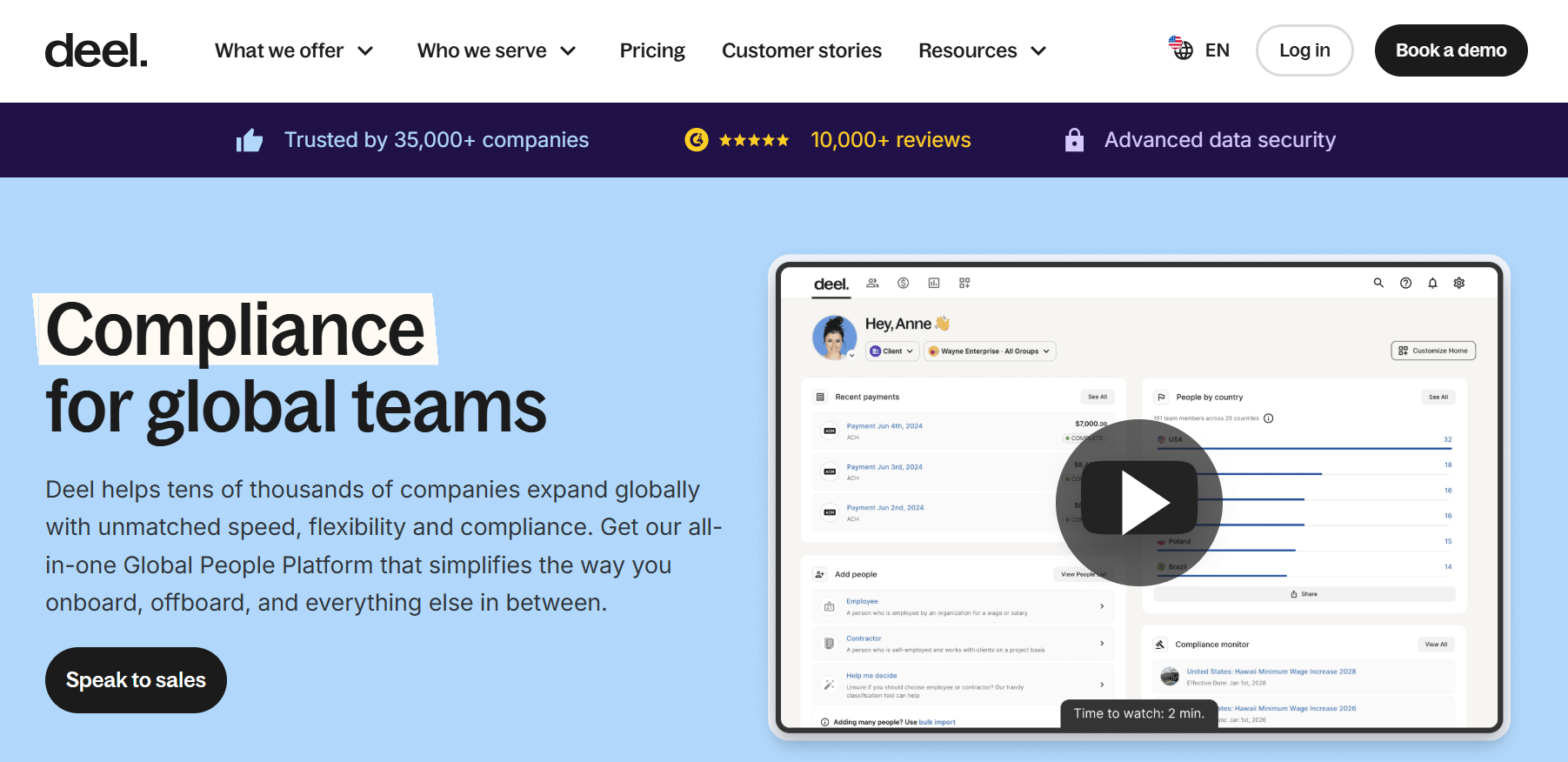
Deel serves companies, not freelancers. That distinction matters because the platform requires your client to use Deel's infrastructure. You can't receive payments from clients who aren't already Deel customers. This works when you're contracting with established tech companies or remote-first organizations that have already adopted Deel for their contractor management.
The platform handles compliance documentation, contract generation, and payment processing as a package. Companies pay Deel, Deel pays you. Payments arrive in 120+ currencies through local banking systems, typically within 1-5 business days depending on your location.
The Rigidity of Standardization
For contractors, Deel removes friction in contract negotiation and payment terms. Everything operates through standardized processes. But that standardization also removes flexibility. You can't negotiate custom payment schedules or request alternative payout methods outside Deel's supported options.
Corporate-Centric Optimization
The service optimizes for company needs rather than contractor preferences. Features prioritize compliance protection and administrative efficiency for the hiring company. Contractors benefit indirectly through reliable payments and proper documentation, but the platform wasn't designed with contractor experience in mind.
6. Remote
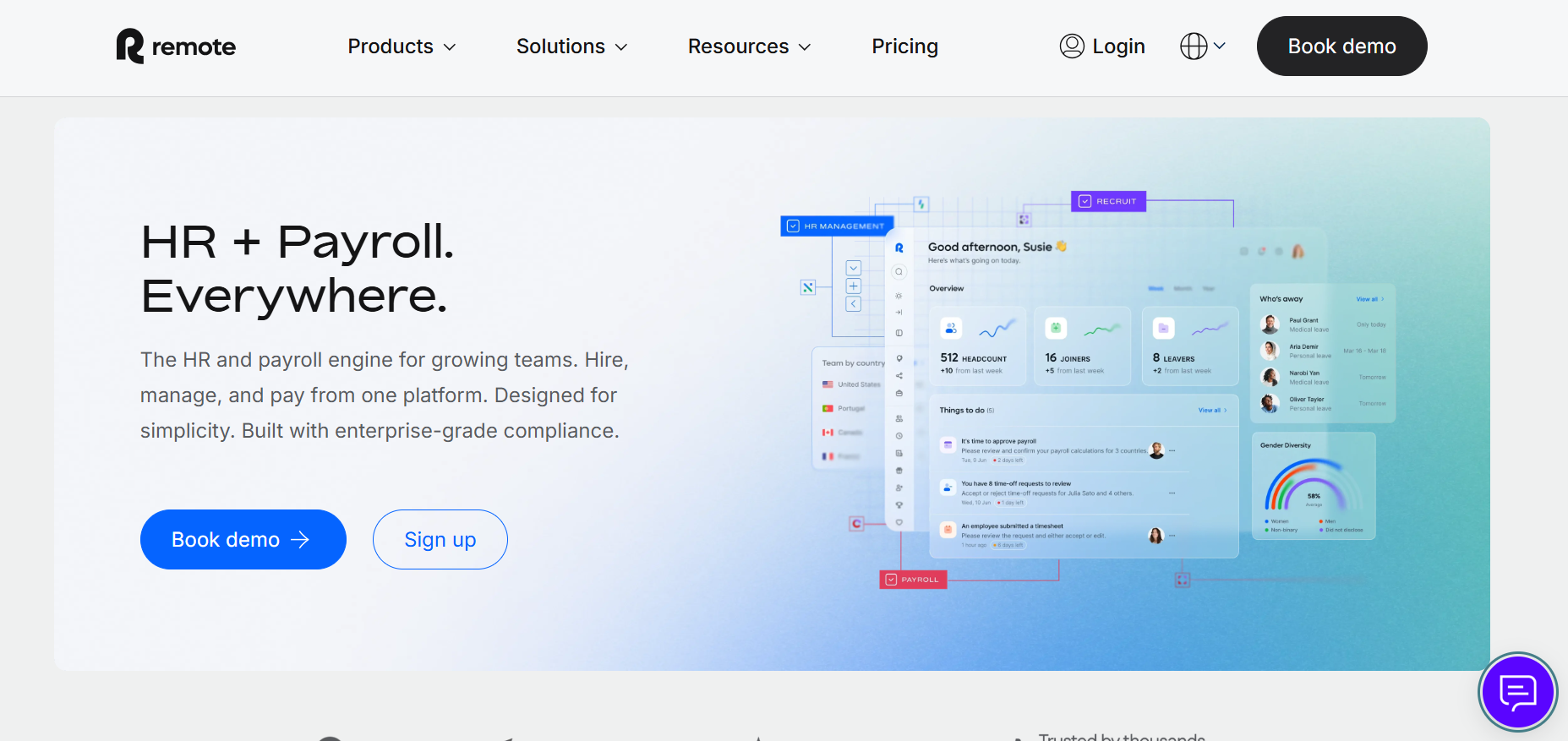
Remote follows the same model as Deel. Companies use the platform to manage contractor relationships, and contractors receive payments through Remote's infrastructure. You can't use Remote unless your client uses Remote.
Automated Global Compliance
The platform handles 70+ currencies and processes payments within 1-5 business days, depending on location. Compliance documentation is generated automatically, contracts comply with local legal requirements, and payments are routed through the proper channels.
Like Deel, Remote serves companies that manage multiple contractors across multiple countries. The value proposition targets businesses worried about compliance risk and administrative overhead, not freelancers seeking flexible payment options.
The Limitation of Locked Ecosystems
Contractors working through Remote benefit from reliable infrastructure and proper documentation. But the platform doesn't solve problems for contractors working with multiple ad-hoc clients or those who need to collect payments independently.
7. Stripe
Stripe built infrastructure for businesses selling products and services online. Freelancers can use Stripe to generate payment links or send invoices that clients pay via credit card or bank transfer. This works when you run your own business, and clients are comfortable paying via digital payment systems.
The Inescapable Transaction Tax
Transaction fees match PayPal at 2.9% + $0.30 per transaction for card payments. Currency conversion occurs at rates set by Stripe, which include a markup above wholesale rates. A contractor processing $5,000 per month incurs $145 in transaction fees alone, before accounting for any currency conversion.
Payout timing varies by country and account history. New accounts often wait 7 days for initial payouts. Established accounts in supported countries can access funds within 2 days. Some regions still wait 5-7 days for standard processing.
The Stress of Algorithmic Holds
Account holds happen when transaction patterns trigger automated review systems. Sudden increases in payment volume, first-time large transactions, or payments from new countries can all freeze access to funds while Stripe investigates. Reviews resolve faster than PayPal's typically, but the uncertainty creates the same stress.
Stripe works best for contractors who've built their own client base and need professional payment infrastructure. It doesn't help contractors working through agencies, companies with established payment systems, or clients who prefer traditional invoicing and bank transfers.
8. TransferMate
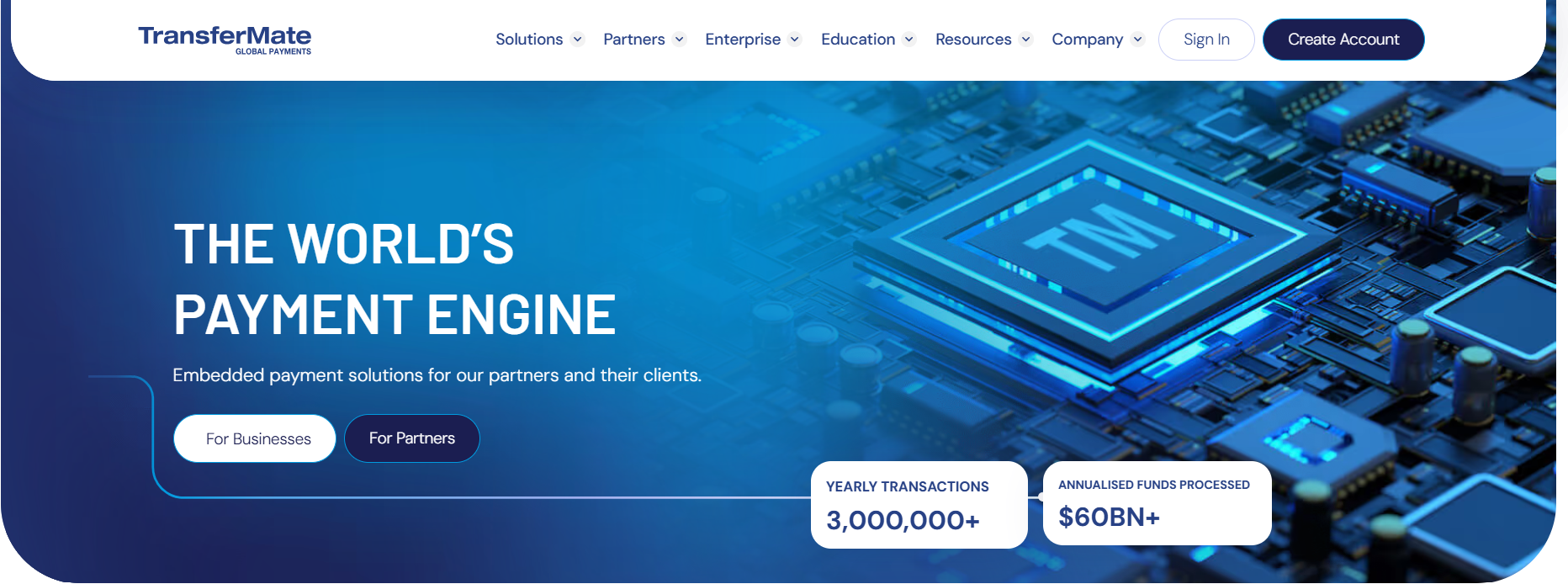
TransferMate targets business-to-business transactions rather than individual freelancers. The platform handles large international payments between companies, providing local receiving accounts in 200+ countries and supporting 140+ currencies.
High-Volume Efficiency
For contractors operating as registered businesses and receiving substantial payments (typically thousands rather than hundreds), TransferMate offers better rates than consumer-focused platforms. Transfers are complete within 1-2 business days once initiated.
Minimum transfer amounts often apply, making TransferMate impractical for smaller projects or frequent small payments. The platform assumes business-level transaction sizes and formal invoicing processes.
The Branding Trust Gap
Client hesitation surfaces frequently. TransferMate lacks the name recognition of PayPal or the fintech appeal of Wise. Convincing clients to send payments through an unfamiliar corporate payment platform requires explanation and trust that many client relationships haven't yet built.
9. Revolut Business

European contractors and digital nomads find Revolut Business appealing for its integrated approach. Multi-currency accounts, payment cards, and business banking features combine into a single platform. You can:
- Hold 28+ currencies
- Exchange at interbank rates (within fair usage limits)
- Manage business expenses through the same system used to receive client payments.
Transfers between Revolut accounts happen instantly. External bank transfers take 1-2 business days. The platform is modern, mobile-first, and designed for people who regularly work across borders.
Regional Availability Barriers
Geographic limitations restrict adoption. Revolut operates primarily in Europe and select other markets. Contractors outside these regions can't access the service. Even within supported countries, some features remain limited compared to domestic banking options.
Monthly fees apply to business accounts, with tiers offering different features. The cost remains reasonable for contractors processing regular payments, but it adds another subscription to monthly expenses.
Collection and Workflow Gaps
The platform requires clients to send bank transfers to their Revolut account. There's no payment processing, invoicing system, or way to collect funds directly from clients. Likewise, Revolut optimizes for currency holding and exchange rather than payment collection.
10. Skrill

Contractor Payment Services
Skrill is primarily used by contractors in regions where PayPal doesn't operate effectively or charges excessive fees. In Eastern Europe, parts of Asia, and some African markets, Skrill is seen as the alternative that actually works.
The Premium of Accessibility
The platform supports 40+ currencies and provides multi-currency wallet functionality. Transaction fees for receiving money run 1.9% plus a fixed fee. Currency conversion adds approximately 3.99%. These costs rival PayPal's, but Skrill's availability in underserved markets makes it the practical choice rather than the optimal one.
Client acceptance remains limited. Most clients in established markets use PayPal, Wise, or direct bank transfers. Convincing clients to create Skrill accounts or send payments through an unfamiliar platform creates friction that contractors in competitive markets can't always afford.
The High Cost of Liquidity
Withdrawal fees to local bank accounts vary by country. In some regions, moving funds from Skrill to your bank account incurs higher fees than the initial fee for receiving the payment. The total cost of receiving and accessing $1,000 may range from $80 to $ 100, depending on your location.
Contractors use Skrill when better options don't exist in their market. It solves access problems rather than experience problems.
11. Mercury
Mercury serves U.S.-based contractors operating as LLCs or corporations. The platform provides business banking with integrated payment features, designed specifically for startups and independent businesses.
Standard ACH transfers take 1-3 business days. Internal Mercury transfers between accounts happen instantly. The banking experience feels modern and built for digital-native businesses.
Mandatory U.S. Incorporation
Geographic restrictions eliminate Mercury as an option for international contractors. You must have a U.S. business entity to open an account. Contractors outside the U.S. or those operating as sole proprietors can't access the platform.
Domestic-First Design
International payment capabilities remain limited compared to global alternatives. Mercury focuses on domestic U.S. banking rather than cross-border contractor payments. It works well for U.S.-based contractors receiving payments from U.S. clients, but it doesn't address challenges in global contractor relationships.
12. Pingback (formerly Bitwage)

Pingback serves the narrow intersection of contractors who want cryptocurrency payments and clients willing to send them. The platform automatically:
- Converts traditional currency payments to Bitcoin or stablecoins.
- Accepts direct cryptocurrency payments from clients.
Rapid Cross-Border Settlement
Cryptocurrency payouts process within hours. Fiat withdrawals to banks take 1-3 business days. For contractors who believe in cryptocurrency as a long-term store of value or who work in countries with unstable local currencies, this conversion happens automatically rather than requiring manual exchanges.
The Client Adoption Barrier
The practical limitations are substantial. Most clients don't send cryptocurrency payments. Convincing traditional businesses to pay contractors in Bitcoin creates friction that kills deals before they start. Even contractors interested in cryptocurrency often prefer receiving stable fiat payments and converting portions to crypto on their own schedule.
The Volatility and Fragmentation Risk
Cryptocurrency volatility creates income uncertainty. A $5,000 payment converted to Bitcoin might be worth $4,700 or $5,300 by the time you need to cover expenses, depending on market movements. Stablecoins reduce this volatility but introduce questions about which stablecoin, which blockchain, and whether your local exchange supports it.
Exponential Tax Complexity
Tax implications multiply complexity. Receiving cryptocurrency payments creates taxable events in most jurisdictions, requiring detailed record-keeping and often professional accounting help that costs more than any payment processing fees you might have saved.
Pingback works for a specific type of contractor in a specific situation. For everyone else, it solves problems they don't have while creating new ones they'd rather avoid.
Related Reading
- How to Send an Invoice
- Contractor Invoice
- Self-Employed Jobs
- How to Become a Freelancer
- How to Invoice as a Freelancer
Where Most Contractor Payment Services Fall Short for Global Workers

Most contractor payment services succeed at moving money; very few succeed at supporting the people who receive it. The gap between transaction processing and contractor experience determines whether talented professionals stay in your network or quietly move to clients whose infrastructure doesn't create constant friction.
The Payment Arrival Problem
Payments that technically arrive on time still fail contractors when access gets delayed. A payment marked "complete" on Tuesday may not be available for spending until Friday, depending on how funds clear through local banking systems. That three-day gap forces contractors to maintain larger cash reserves than their actual expenses require, tying up capital that could otherwise support business growth or personal stability.
The Global Labor Contraction
According to the International Labour Organization's 2025 employment forecast, shifting economic conditions are expected to impact 7 million jobs globally. Within this downgraded employment outlook, independent workers face heightened vulnerability to payment infrastructure failures and broader economic volatility.
The Cost of Financial Illiquidity
When contractors can't predict when funds will be available, they can't plan purchases, commit to expenses, or pursue time-sensitive opportunities. The uncertainty compounds across multiple clients, creating financial stress that has nothing to do with earnings and everything to do with access.
Most payment platforms optimize for the company's timeline, not the contractor's cash flow needs. Funds leave the client's account, enter processing, and eventually reach the contractor's bank. Each step follows the platform's schedule rather than the contractor's bills.
Currency Conversion Opacity
Exchange rate markups hide in plain sight. A platform advertising "low fees" might charge 1% for transfers while embedding 2.5% in currency conversion. The contractor sees one number leave the client's account and a smaller number arrive, with no itemized explanation of where the difference went or whether it could have been avoided.
The Hidden Cost of Opacity
This opacity makes it impossible to compare actual costs across platforms. One service charges higher transfer fees but offers transparent exchange rates. Another advertises free transfers while burying costs in conversion spreads. Without clear breakdowns, contractors can't calculate true take-home amounts until after payments process, making it difficult to price projects accurately or budget effectively.
The Illusion of Choice
The platforms with the most transparent pricing tend to serve the smallest share of global contractors. Most workers use whatever system their clients prefer, accepting hidden costs as the price of doing business. That acceptance doesn't mean the costs don't matter. It means contractors have learned they can't always control which platform processes their payments.
Limited Banking Infrastructure Access
Contractors paid in USD often can't hold actual USD balances. Payments arrive, are converted immediately to local currency, and expose the contractor to exchange rate fluctuations they never chose to assume. When they need to make USD payments for tools, subscriptions, or subcontractors, they convert back, paying fees in both directions for currency movements they never wanted.
This forced conversion cycle particularly affects contractors in countries with volatile local currencies.
The Stealth Tax of Immediate Conversion
A payment received on Monday might lose 3-5% of its value by Friday simply because the platform converted it immediately, rather than allowing the contractor to hold USD and convert strategically. Those losses accumulate across every payment, every month, creating a hidden tax on international work that domestic contractors never face.
The Multi-Currency Access Divide
The few platforms offering true multi-currency accounts often restrict access based on geography, account type, or minimum balance requirements. Contractors who need this functionality most, those in emerging markets with unstable local currencies, frequently can't access it.
Relationship Infrastructure That Doesn't Exist
Payment platforms treat every transaction as independent. There's no recognition that the same contractor receives monthly payments from the same client, no tools to acknowledge ongoing professional relationships, and no features that support the continuity needed for independent work to be sustainable.
The Burden of Fragmented Workflows
Recurring payments require manual processing each cycle. Documentation resets with each transaction rather than building a cumulative record. Communication about payment issues occurs through generic support channels rather than relationship-specific threads where context is preserved.
Continuity Through Automation
Companies using payroll software find that contractor relationships get treated as ongoing arrangements rather than isolated transactions.
- Payments are processed automatically according to the agreed schedule.
- Documentation accumulates into comprehensive records
- Support teams understand the full context of each contractor relationship rather than treating every inquiry as a new issue.
The Retention-Relationship Link
The difference matters because contractor retention depends heavily on relationship quality, not just payment speed. Contractors stay with clients who make ongoing work feel stable and supported. They leave arrangements that require constant administrative attention to maintain basic payment reliability.
The Support Gap When Things Break
Automated systems handle routine payments efficiently. When exceptions occur, flagged transactions, documentation requests, and sudden verification requirements, those same systems fail catastrophically.
Support tickets replace human conversation. Resolution timelines stretch from hours to days or weeks. During that period, contractors have no access to earned income and no clear path to resolution.
Forced Platform Dependency
The platforms most likely to freeze accounts are often the ones contractors can't avoid using. Marketplace integrations, client preferences, and geographic limitations force workers onto specific platforms regardless of the quality of support. When problems surface, contractors can't simply switch to better alternatives. They're waiting for a resolution while bills continue to arrive.
The Erosion of Financial Reliability
This creates a specific kind of stress that goes beyond delayed payments. It's the uncertainty of not knowing when access will return, whether documentation will satisfy whatever triggered the review, or if the next payment will process normally or trigger another hold. That uncertainty makes it impossible to treat contractor income as reliable, even when clients pay consistently.
Feature Design That Serves Companies, Not Contractors
Most contractor payment platforms prioritize features that matter to companies. Bulk payment processing, accounting integrations, compliance documentation, and risk management tools. These features solve real problems for businesses managing multiple contractors across different countries.
The Contractor Support Deficit
What's missing are features that solve contractor problems. Expense tracking, spending cards that work internationally, benefits access, financial tools designed for variable income, and support for the specific challenges of independent work. The platforms process payments but don't support the people receiving them.
Customer-Centric Design Bias
This design bias isn't accidental. Companies choose payment platforms, and contractors adapt to whatever infrastructure their clients use. Platforms optimize for buyers, not users. That makes business sense from a customer acquisition perspective. It creates terrible experiences for the people whose income depends on these systems working well.
The Multi-Platform Cognitive Tax
The contractors who suffer most are those working with multiple clients across different platforms. They manage separate accounts, different fee structures, varied payout timelines, and disconnected documentation systems. The cognitive overhead of tracking payments across fragmented infrastructure reduces productive work time and creates constant low-level stress about whether everything was processed correctly.
What Freelancers and Digital Nomads Should Look for Instead
.jpg)
The best contractor payment service doesn't announce itself with feature lists. It reveals itself through absence. Absence of delays you've learned to expect, absence of fees you've stopped questioning, absence of stress about whether this month's payment will actually arrive when promised. What freelancers and digital nomads should look for isn't what platforms advertise. It's what disappears when infrastructure works correctly.
Fast, Predictable Payments Across Borders
Speed without predictability just creates different anxiety. A payment that arrives in two days sometimes and five days other times forces the same defensive planning as consistently slow payments. You maintain larger cash reserves, decline time-sensitive opportunities, and build a buffer into every financial decision because you can't rely on timing.
The Power of Spendable Certainty
What matters is knowing exactly when funds become available. Not when it leaves the client's account or enters processing, but when you can actually spend it. That certainty allows you to plan purchases, commit to expenses, and pursue opportunities based on your actual financial position rather than worst-case scenarios.
The platforms that handle this well make payment timelines explicit before transactions process. They don't hide behind vague "1-5 business days" ranges that could mean anything. They tell you Tuesday's payment arrives Thursday, and it does.
Access to Stable Currencies Like USD
Currency volatility isn't an abstract economic concept when it's your rent money. Contractors in countries with unstable local currencies watch their earnings lose value between payment and spending, not because they made poor financial decisions, but because their payment platform forced immediate conversion.
The Freelance Earning Paradox
Based on recent freelance market analysis, 73% of independent professionals report higher earnings than they previously achieved in traditional employment. This shift highlights a significant trend toward the "gig economy" as a viable and often more lucrative alternative to conventional career paths. That advantage evaporates quickly when currency conversion happens on the platform's schedule rather than yours.
The Strategy of Income Preservation
A contractor earning $6,000 per month might lose $300-500 annually due to forced conversions at unfavorable times. The ability to hold USD balances, spend directly in USD when needed, and convert strategically rather than automatically protects income from forces completely outside your control. It's not about speculation or currency trading. It's about keeping what you earned.
Banking Tools That Work Internationally
Getting paid solves half the problem. The other half is used in the countries where you live and work. Most payment platforms stop at the transaction. They move funds into your local bank account and consider the job done. What happens when you need to pay for software subscriptions in USD, book accommodations in EUR, and cover living expenses in your current location's currency?
You convert back and forth, paying fees in multiple directions for movements the platform could have handled in a single transaction. Or you maintain accounts across multiple services, each solving part of the puzzle while creating coordination overhead that eats into productive work time.
Frictionless Global Mobility
Banking infrastructure designed for mobile work includes cards that function globally without foreign transaction fees, accounts that hold multiple currencies simultaneously, and spending tools that don't break when you cross a border. When these pieces work together, you stop thinking about payment logistics and start focusing on actual work.
Simple Onboarding Without Legal Confusion
The contractor who posted on Reddit about DAC7 reporting wasn't trying to evade taxes. They wanted clarity about whether logging in from Spain while maintaining tax residency elsewhere would trigger reporting to the wrong jurisdiction. The platform's documentation didn't address this scenario.
Support couldn't provide definitive answers. Other freelancers offered conflicting advice based on their own experiences.
The Administrative Research Burden
That confusion multiplies across every compliance requirement, tax form, and documentation request. Platforms assume contractors already understand these systems or can figure them out independently. In practice, freelancers spend hours researching requirements, consulting with peers in forums, and hoping they've interpreted rules correctly.
Human-Centric Compliance
Clear onboarding means platforms explain:
- What documentation do you need?
- Why do you need it?
- What happens if your situation changes?
It means human support that understands cross-border work patterns rather than automated systems designed for domestic transactions. When setup is genuinely simple, you can complete it in minutes rather than spend days on research and uncertainty.
Perks and Benefits That Support Long-Term Work
Transaction-only platforms treat every payment as isolated. There's no recognition that you've been receiving payments monthly for two years, no tools that acknowledge ongoing professional relationships, no features designed for the reality that independent work is a career, not a series of disconnected gigs.
The Autonomy Over Compensation Shift
Market research indicates that 60% of freelancers prioritize flexibility and work-life balance over higher compensation. This preference underscores a fundamental shift in professional values, in which the autonomy to manage one's schedule is often considered more valuable than a higher paycheck.
Infrastructure as Professional Validation
That preference only works when basic financial infrastructure doesn't create constant stress. Perks such as expense tracking, benefits access, and financial tools designed for variable income signal something important. The platform understands you're building a long-term career, not just collecting one-off payments.
The Loyalty of Seamless Systems
The difference shows up in retention. Contractors who find platforms that support ongoing work stay in those systems. They recommend them to other freelancers. They choose clients who use that infrastructure over those who don't. The platform becomes part of their professional identity rather than just a payment mechanism they tolerate.
Strengthening Partnerships Through Automation
Companies using payroll software find that contractor relationships strengthen when payment infrastructure extends beyond transactions. Automated recurring payments, cumulative documentation, and benefits access transform the contractor experience from transactional to supported. Contractors focus on delivering work rather than managing payment logistics across fragmented systems.
The Shift That Changes Everything
The best contractor payment service doesn't feel like a tool you use to get paid. It feels like the infrastructure you build on. Something stable enough that you stop thinking about whether payments will arrive correctly and start thinking about what you'll do with reliable income. Something predictable enough that financial planning becomes strategic rather than defensive.
The Productivity of Financial Alignment
When payments, banking, and access align with how independent workers actually live, the cognitive overhead of managing cross-border payments drops to near zero. That freed attention goes into better work, stronger client relationships, and long-term career planning that makes freelancing sustainable rather than precarious.
Related Reading
- Contractor Payment Solutions
- Contractor Payment Services
- Contractor of Record
- Payment Methods for Freelancers
Why Ontop is Built for Contractors

Most contractor payment services optimize for the company writing checks, not the people receiving them. The interface, the features, and the support structure are all designed around whoever controls the budget. Contractors adapt to whatever system their client chooses, accepting:
- Delays
- Hidden fees
- Fragmented banking as the cost of getting paid
Ontop reverses that equation. It's built around how freelancers, contractors, and digital nomads actually live across borders, where speed, access, and reliability determine whether independent work remains sustainable or becomes precarious.
Payments That Actually Arrive When Promised
Waiting days or weeks for international payments makes financial planning impossible. You can't commit to expenses, accept time-sensitive opportunities, or maintain consistent cash flow when payment timing can vary by a week depending on which intermediary banks are involved.
Unpredictability forces defensive financial behavior, larger cash reserves, fewer opportunities, and constant stress about whether this month's payment will follow the same pattern as last month's.
The End of Processing Delays
Ontop enables instant payments in 150+ countries. Not "1-5 business days depending on your location and banking infrastructure." Not "usually within a week unless there's a holiday or verification delay." Instant.
Predictability matters as much as speed. When you know Tuesday's payment arrives on Tuesday, you plan accordingly. When it might arrive on Tuesday or Friday, depending on factors outside your control, you plan for Friday and miss opportunities that required Tuesday's certainty.
Banking Access That Works Across Borders
Getting paid in USD without a true USD account creates a forced conversion cycle that erodes income with every transaction. The payment arrives, is converted immediately to your local currency at the platform's exchange rate, and you lose control over timing, exchange rates, and strategic currency management.
When you need to pay for software, tools, or services in USD, you convert back, incurring fees in both directions for movements you never intended.
The Erosion of Competitive Earnings
Industry analysis shows that 73% of freelancers report higher earnings than they earned in traditional roles. This trend suggests that independent work has evolved into a highly competitive and lucrative alternative to conventional career paths. That advantage disappears quickly when currency infrastructure works against you.
A contractor earning $6,000 per month might lose $300-500 annually due to forced conversions at unfavorable exchange rates, not because they made poor financial decisions, but because their payment platform didn't provide direct USD access.
Currency Control and Capital Preservation
Ontop provides USD accounts and a global Visa card. You hold the currency you earn, spend it where you need it, and convert strategically rather than automatically. When your rent, subscriptions, and client payments all happen in USD, you stop losing money to conversion cycles that serve the platform's convenience rather than your financial reality.
Onboarding That Removes Legal Confusion
The freelancer trying to understand whether logging in from Spain while maintaining tax residency elsewhere would trigger DAC7 reporting wasn't avoiding compliance. They wanted clarity. The platform's documentation didn't address cross-border work patterns. Support couldn't provide definitive answers.
The Compounding Cost of Conflicting Advice
Other contractors offered conflicting advice due to a partial understanding. That confusion multiplies across every:
- Tax form
- Documentation requirement
- Compliance question
The Hidden Tax of Administrative Anxiety
Most platforms assume contractors already understand these systems or can figure them out independently. In practice, freelancers spend hours researching requirements, consulting peers in forums, and hoping they've interpreted rules correctly. The anxiety around potential penalties runs high.
One contractor mentioned being concerned about a $25k penalty for missing a filing requirement they didn't know existed until reading conflicting advice online.
Rapid Compliance and Onboarding
Ontop supports contractor onboarding in minutes, not weeks. The documentation requirements are clearly explained, the process handles compliance automatically, and you start receiving payments without navigating legal complexities on your own. When setup genuinely simplifies cross-border complexity, you focus on work rather than whether you've satisfied requirements that vary by jurisdiction and change without warning.
Support That Treats Contractors as Partners
Transactional platforms make it easy to get paid in a single transaction. They make it hard to feel supported ongoing basis.
- There's no recognition that you've been receiving monthly payments for two years.
- There are no tools to acknowledge professional relationships that extend beyond isolated transactions.
- There are no features that reflect the reality that independent work is a career requiring stability and growth, not just a series of disconnected gigs.
When payment issues surface on transaction-only platforms, automated ticket systems replace human conversation.
The Toll of Financial Uncertainty
Resolution timelines stretch from hours to days. During that period, you have no access to earned income and no clear path to fixing whatever triggered the problem. The stress comes not just from delayed payment but also from uncertainty about when access will return and whether the next payment will process normally or trigger another hold.
Infrastructure for Career Longevity
Ontop offers perks and tools designed to help contractors stay and grow. Automated recurring payments, cumulative documentation, benefits access, and financial tools built for variable income. The infrastructure acknowledges that you're building a long-term career, not collecting one-off payments. That recognition shows up in retention.
Contractors who find platforms supporting ongoing work stay in those systems, recommend them to other freelancers, and choose clients using that infrastructure over those who don't.
Infrastructure Built for Mobile Work
Ontop is trusted by 950+ companies globally to hire and pay freelancers, contractors, and digital nomads. But the experience is built with the worker in mind. Payments process wherever you are. Banking functions across borders without foreign transaction fees or access restrictions. Compliance happens automatically rather than requiring constant attention.
The cognitive overhead of managing money internationally drops to near zero, freeing attention for better work, stronger client relationships, and the kind of long-term career planning that makes freelancing sustainable.
Foundation for Financial Stability
When payments, banking, and access align with how independent workers actually live, the infrastructure stops feeling like a tool you use to get paid and starts feeling like something you build on. Something stable enough that you stop wondering whether payments will arrive correctly and start planning what you'll do with reliable income.
Book a Demo Today and See how Ontop Helps Remote Workers Get Paid
If you're tired of payment delays, hidden fees, and platforms that treat you like a transaction number, Ontop removes the usual barriers. No sales calls, no lengthy demos, no waiting weeks for account approval. You get immediate access to infrastructure that:
- Processes payments in one click
- Provides USD accounts and global Visa cards
- Handles compliance automatically across 150+ countries
For freelancers and digital nomads who've spent years adapting to systems designed for companies rather than workers, this shift matters because it puts control back where it belongs.
Eliminating the Friction of Normalcy
The friction you've accepted as normal, checking three platforms daily to see if payments cleared, calculating hidden conversion fees after the fact, maintaining excessive cash reserves because timing stays unpredictable, disappears when infrastructure aligns with how you actually work.
Reclaiming the Administrative Tax
Ontop's payroll software turns payment processing from a monthly source of stress into a reliable, automated background process while you focus on the work that actually generates revenue. When contractors report spending 40 to 60 hours annually just managing payment logistics across fragmented systems, reclaiming that time becomes its own form of compensation.
The Infrastructure Proof of Concept
See whether instant payments, transparent pricing, and human support change the experience of sustainable independent work. The difference between platforms that move money and platforms that support careers shows up quickly once you stop accepting friction as inevitable.