





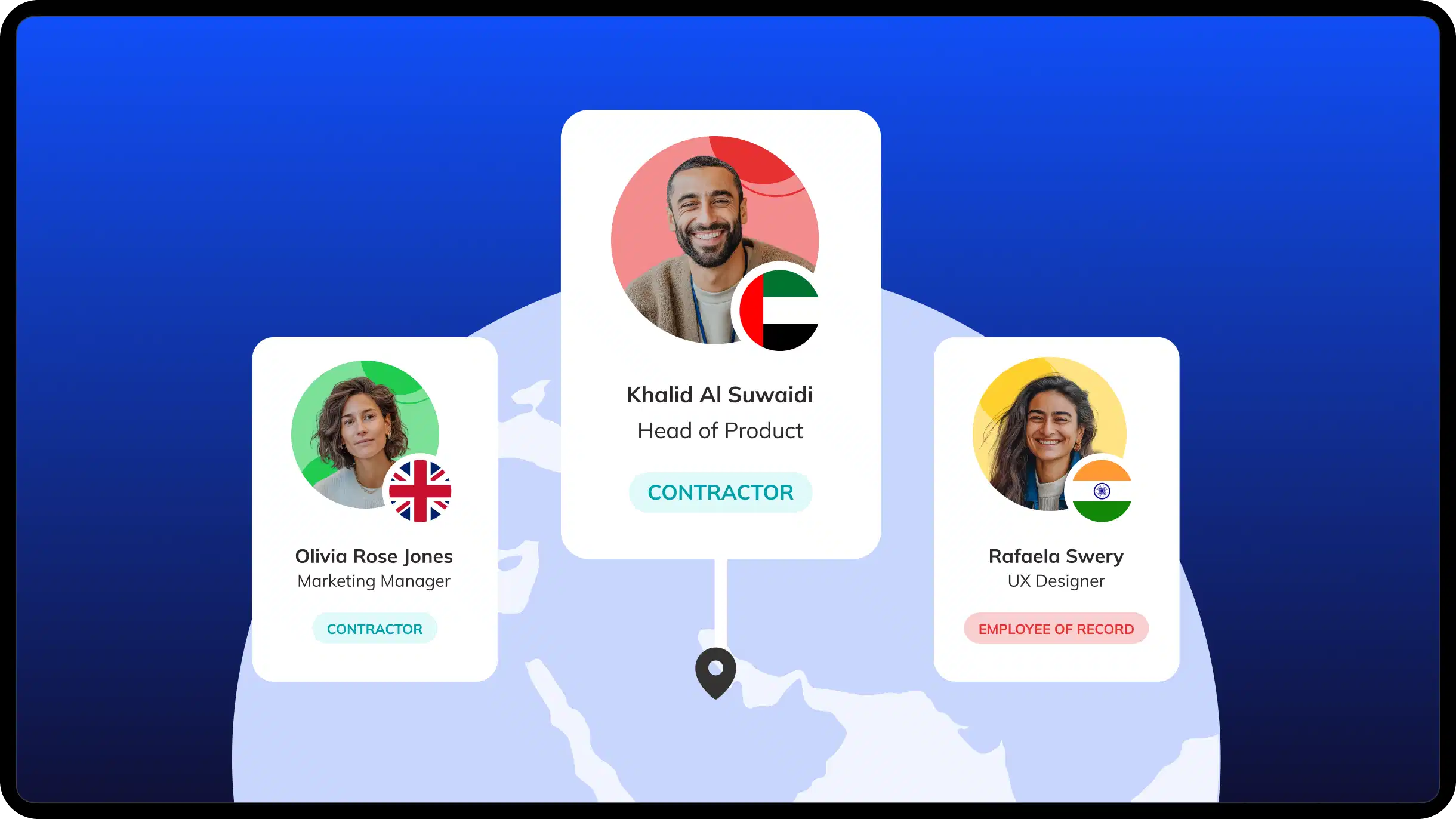
Managing a distributed workforce means facing questions you never had to answer before. How do you handle tax compliance across different countries? What about currency conversions, payment methods, and varying labor laws when paying overseas contractors? These challenges multiply when your team spans continents, and getting payroll wrong can mean delayed payments, unhappy workers, or unexpected legal complications. This article breaks down what you need to know about payroll for remote workers, from understanding international payment regulations to ensuring your global teams get paid reliably, no matter where they call home.
The good news is that modern payroll software like Ontop simplifies these complexities. Instead of juggling multiple platforms, spreadsheets, and banking systems to manage contractor payments and employee salaries across borders, you can centralize everything in one place. Ontop handles currency exchange, local compliance requirements, and payment processing so your remote workers receive accurate, timely compensation while you maintain clear records and stay on the right side of international employment laws.
Summary
- Remote workers expect consistent pay cycles regardless of banking hours, holidays, or processing systems across different countries. When payment timing becomes unpredictable, workers cannot reliably schedule rent, loan payments, or childcare fees. This forces them to maintain larger cash reserves rather than investing or saving, undermining the financial benefits that global work is supposed to provide.
- International transfers remain expensive, with the World Bank reporting global remittance costs averaging about 6.49% of the amount transferred. This means workers can lose nearly $200 from a $3,000 payment through conversion and transfer costs alone. Hidden deductions through currency spreads applied by providers, often 3% to 5% worse than mid-market rates, erode income without advance disclosure.
- Currency volatility exposes remote workers to financial risk they cannot control when forced to convert immediately into weaker or unstable currencies. If a local currency loses 8% against the dollar in three months, housing costs effectively increase even though nothing about the living situation changed.
- Compliance and validation processes account for 37% of the payment cycle, according to research from Sidetrade Data Lake. More than a third of the time it takes to move from employer to worker is spent on regulatory checkpoints rather than actual transfer.
- Traditional global hiring requires establishing legal entities, opening local bank accounts, and navigating employment law in each country, a process that can take months and cost tens of thousands of dollars per jurisdiction. This overhead makes international hiring impractical for companies adding their first remote worker in a new market.
- Seventy-four percent of employees now expect flexible payment options, according to Trupay Blog research, reflecting a fundamental shift in what workers consider acceptable. Waiting five business days after payroll processing no longer meets baseline expectations, as speed has moved from a luxury feature to a core requirement for sustainable remote employment.
Payroll software addresses this by consolidating payments, compliance, and currency management into a single system that delivers funds in minutes rather than days while providing full visibility into timing and costs.
Why Remote Payroll Feels Uncertain for Workers

Remote workers expect their salary to arrive on time, in full, and without confusion. Instead, many face delayed payments, unexplained deductions, and income that fluctuates with exchange rates they never agreed to monitor. This isn't a minor inconvenience. It's a trust issue that undermines the entire promise of borderless work. The problem affects scale. According to Forbes' 2025 remote work analysis, over 32.6 million Americans work remotely, representing 22% of the workforce. Each person navigating international payroll faces a unique combination of banking delays, currency risk, and compliance gaps that their employer may not fully understand either.
Payments Arrive Late or Never Arrive at All
International transfers don't follow the same schedule as domestic payroll. A company can process payments on the 30th, but workers might not see funds until the 5th of the following month. Banking intermediaries, compliance holds, and weekend cutoffs create unpredictable lag times. For someone covering rent or medical expenses, three extra days feels like three weeks. The uncertainty compounds when there's no explanation. Workers refresh their bank apps, wondering if the payment was sent, held, or lost entirely.
Currency Fluctuations Quietly Erode Income
When your salary is denominated in one currency but paid in another, exchange rates become a silent variable in your financial life. A 5% currency swing can mean losing half a week's groceries without any change to your contract or performance. This volatility makes budgeting feel like guesswork. You can't predict what you'll actually receive until the money lands. And if your local currency weakens over months, your purchasing power declines even though your nominal salary stays the same.
No Visibility Into the Payment Process
Most workers can't see how their employer processes payroll. They don't know which payment rails are used, when transfers are initiated, or why some months take longer than others. The system is opaque by design, not malice, but the effect is the same. Without transparency, every delay feels personal.
- Was there a mistake?
- Did someone forget?
- Is the company having financial trouble?
The absence of information creates anxiety that wouldn't exist if workers could simply track their payment status the way they track a package.
Benefits and Deductions Vary by Employment Structure
A remote worker hired as an employee receives different protections than someone classified as a contractor, even if they do identical work. Health insurance, retirement contributions, and tax withholdings depend entirely on the legal structure of the relationship. Two people earning $60,000 can have wildly different take-home pay and security. One might have employer-sponsored health coverage and automatic tax compliance. The other might receive the full amount upfront but face a surprise tax bill later, with no safety net if they get sick.
The Trust Gap Between Global Opportunity and Local Reality
Remote work promised access to better jobs, higher pay, and geographic freedom. For many, it delivered. But the infrastructure supporting that promise hasn't caught up. You can work for a company with offices in twelve countries and still wonder when your next paycheck will clear. Platforms like payroll software address this by centralizing payments, automating currency conversion, and giving workers real-time visibility into their earnings. Instead of waiting days for international wires to settle, payments move faster with fewer intermediaries. Workers see exactly when funds are sent and when they'll arrive, removing the guesswork that makes remote payroll feel unreliable.
The Psychological Toll of Financial Friction
The gap between expectation and reality isn't just frustrating. It's expensive. Workers who can't rely on a consistent income make different financial decisions. They avoid long-term commitments, keep larger cash reserves, and stay alert for backup opportunities. The instability doesn't just affect their bank account. It affects how they think about their career.
What Payroll for Remote Workers Actually Means

Remote payroll isn't just domestic payroll with a longer wire transfer. It's a system that coordinates employment law, tax obligations, currency conversion, and payment infrastructure across different countries simultaneously. When someone in Argentina works for a company in Delaware, the payment isn't just crossing borders. It's navigating:
- Two legal systems
- Two tax codes
- Two banking networks that weren't designed to talk to each other
Cross-Border Payments and Compliance Requirements
Every international payment triggers a series of regulatory checks that domestic transfers skip entirely. Banks screen for sanctions, verify anti-money laundering compliance, and confirm that both the sender and the recipient meet financial reporting standards. These aren't optional steps. They're mandated by law in both jurisdictions. When a company sends $5,000 to a contractor in Brazil, that transaction passes through correspondent banks, clearinghouses, and regulatory filters. Each checkpoint adds time. A payment initiated on Tuesday might not clear until Friday, not because of a technical failure, but because compliance reviews are conducted in sequence. The system prioritizes legal certainty over speed.
Contractor vs Employee Payroll Structures
The distinction between a contractor and an employee determines everything about how payments flow. Employees receive salaries through formal payroll systems that withhold taxes, contribute to social security, and maintain statutory records. Contractors submit invoices and receive gross payments, with tax responsibility shifting entirely to them. This isn't just paperwork. It affects health insurance eligibility, retirement contributions, unemployment protection, and legal recourse if something goes wrong. A contractor earning $80,000 and an employee earning the same amount live in different financial realities. One has predictable withholdings and employer-sponsored benefits.
The other has full income upfront but faces quarterly tax estimates, self-funded health coverage, and zero safety net during gaps between projects. Misclassification creates legal exposure for companies, which is why many use intermediaries or employer-of-record services to stay compliant. That adds another entity between the company and the worker, further obscuring the payment path.
Currency, Tax, and Reporting Implications
Paying someone in another country means deciding which currency to use and when to convert. A company can pay in USD, convert to the worker's local currency before transfer, or send USD and let the receiving bank handle conversion. Each choice shifts exchange rate risk to a different party. Workers paid in foreign currency face volatility they can't control. If your contract specifies $4,000 per month but you live in the Philippines, you're exposed to peso fluctuations every month. A 3% currency shift doesn't sound dramatic until you realize it's $1,440 annually, the cost of a medical emergency or two months of groceries.
Navigating International Tax Compliance for Remote Workers
Tax treatment varies, too. Some countries tax foreign income at the point of receipt. Others require workers to report it annually. Companies must decide whether to withhold taxes on behalf of remote workers or treat them as independent for tax purposes. Get it wrong, and both parties face penalties.
Role of Payroll Providers and Intermediaries
According to Career Launch Campus Blog, companies can save 20 to 30% on labor costs by hiring globally, which explains why remote teams have grown so rapidly. But accessing that talent requires infrastructure most companies don't build internally. Instead, they rely on global payroll providers, employer-of-record services, or local partners to manage compliance and distribution.
Streamlining International Hiring Through Intermediaries
These intermediaries handle legal employment requirements in each country, process tax withholdings, and route payments through local banking systems. They make international hiring possible without establishing legal entities in every market. But they also add layers. A worker might see funds pass through three or four entities before landing in their account, each one taking time and sometimes a small percentage. Been Remote reports that nearly 60% of the global workforce now works remotely at least part of the time, which means this multi-layered payment infrastructure isn't serving a niche anymore. It's the primary system through which millions of people receive income.
The Legacy System Gap
Traditional payroll providers weren't designed for this scale or complexity. They evolved to serve companies with centralized offices and employees in a single tax jurisdiction. Adapting those systems to handle contractors across 30 countries creates friction at every step:
- Payments slow down.
- Visibility disappears.
- Workers refresh their banking apps, wondering if the transfer was sent, held, or lost.
Platforms like payroll software address this by consolidating the entire payment process into a single interface. Instead of coordinating with multiple intermediaries, companies initiate payments that move directly to workers' accounts, often within minutes rather than days. Workers gain real-time visibility into payment status, eliminating the uncertainty that makes remote payroll feel unreliable.
Payroll is Not Just an Internal Business Function
The key misconception is treating payroll as something that happens inside the company. In reality, payroll decisions directly shape a worker's:
- Financial security
- Tax compliance
- Currency exposure
- Access to benefits
When payments arrive late, workers can't pay rent on time. When currency is converted at unfavorable rates, purchasing power declines. When tax withholdings are mishandled, workers face penalties they didn't cause. For remote professionals, payroll isn't background infrastructure. It's the mechanism that determines whether global work translates into stable, usable income or a monthly gamble on timing and exchange rates.
Related Reading
- Paying Overseas Contractors
- Global Payroll Trends
- Benefits of Automated Payroll System
- International Payroll Compliance
- Global Payroll Best Practices
- How to Pay Overseas Employees
- Global Payroll Strategy
- Cross Border Transaction
The Most Common Ways Remote Workers are Paid

Companies choose payment channels based on infrastructure, cost tolerance, and the speed at which they need someone operational. Workers inherit those choices. You might sign a contract in minutes, but if the payment method requires three intermediary banks and a five-day settlement window, speed upstream doesn't translate into speed downstream.
International Bank Transfers
Traditional wire transfers move funds directly from the employer's bank to the worker's account, often passing through correspondent banks that facilitate cross-border transactions. This method works everywhere and carries institutional credibility, which is why it remains the default for many companies.
The Erosion of Value
The cost shows up in layers. Sending banks charge initiation fees. Intermediary banks deduct handling fees. Receiving banks apply their own charges, plus currency conversion spreads that rarely favor the recipient. A $3,000 payment can incur $75 to $150 in transit fees, and the worker sees only the final credited amount. The timeline stretches across three to seven business days, sometimes longer if compliance reviews flag the transaction for manual review. For someone expecting payment on the 30th, funds arriving on the 6th create a gap that affects rent, utilities, and groceries. The delay isn't malicious. It's structural. But the worker still waits.
Digital Payment Platforms
Online platforms allow employers to send money to a digital wallet, which workers can withdraw to a local bank or spend directly. These systems bypass some traditional banking friction, making them faster and often cheaper than wire transfers.
The Cost of Financial Friction
Fees still accumulate. Receiving funds might cost 2%. Withdrawing to a bank account adds another percentage. Currency conversion occurs at rates set by the platform, not at market rates. A contractor receiving $5,000 might lose $200 across platform fees, withdrawal charges, and conversion spreads before the money becomes usable. Availability varies. Some platforms operate in 50 countries. Others cover 150 but restrict certain features based on local regulations. A worker in Vietnam might access the platform but face withdrawal limits that force them to keep funds in USD longer than they'd prefer, exposing them to exchange rate risk they can't control.
Employer-of-Record Services and Local Payroll Partners
Some companies hire through intermediaries that employ workers locally on the company's behalf. The employer sends funds to the intermediary, which processes payroll domestically in the worker's country. This smooths compliance and reduces banking friction for recipients. It also adds opacity.
The Transparency Deficit
Workers don't always know whether the employer initiated the payment or the intermediary processed it. Deductions for local taxes, social contributions, and service fees happen before funds arrive, but the breakdown isn't always transparent. Two workers earning identical salaries through different intermediaries can see different net amounts because fee structures vary. The benefit is reliability. Domestic payroll systems are faster and more reliable than international wire transfers. The tradeoff is control. Workers depend on the intermediary's processing schedule, and if something goes wrong, they're troubleshooting with a third party instead of their actual employer.
Multi-Currency Accounts
Multi-currency accounts let workers hold balances in foreign currencies without immediate conversion. If you're paid in USD but live in Mexico, you can keep dollars until the exchange rate improves, then convert on your terms.
The Geography of Financial Access
Access depends on where you live and which providers operate there. Regulatory approval varies by country, and not all banks offer this functionality. Transferring funds into local banking systems for everyday expenses still involves fees, and some accounts charge monthly maintenance costs that eat into the flexibility they're supposed to provide. For workers paid consistently in a stable foreign currency, these accounts reduce exposure to volatile local currencies. For those whose expenses are entirely local, the added complexity might not justify the benefit.
Cryptocurrency Payments
Digital assets can move across borders without traditional banking infrastructure, making them attractive in regions where financial systems are unstable or inaccessible. Transactions settle quickly, and workers gain control over their funds without intermediaries.
The Volatility Barrier
Volatility makes this impractical for most people. A salary paid in Bitcoin on Monday can lose 8% of its value by Friday. Converting crypto into local currency introduces another step, often through exchanges that charge fees and require identity verification. Wallet security becomes the worker's responsibility, and mistakes can result in permanent loss. Regulatory uncertainty compounds the risk. Some countries treat crypto income as taxable, others ban it entirely, and enforcement changes faster than most workers can track. For someone relying on a stable income to cover fixed expenses, the risk outweighs the speed.
Enhancing Efficiency With Integrated Payroll Platforms
Platforms like payroll software address payment friction by consolidating the process into a single system that handles compliance, currency conversion, and distribution simultaneously. Instead of coordinating across banks, intermediaries, and payment processors, companies initiate transfers that reach workers in minutes rather than days. Workers see exactly when funds were sent and when they'll arrive, eliminating the uncertainty that makes remote payroll feel unreliable. The platform manages local tax requirements and provides multi-currency flexibility, so workers can hold earnings in the currency that makes sense for their situation without having to navigate multiple providers.
Speed, Cost, and Reliability Trade Off Against Each Other
Every payment method prioritizes certain attributes and sacrifices others. Faster systems charge higher fees. Cheaper options take longer. Widely available methods lack transparency. Secure infrastructure introduces delays. Workers don't choose these tradeoffs. Employers do, based on what their finance team can manage and what their payroll provider supports. The worker experiences the outcome, whether that's waiting an extra week for funds to clear or losing 5% to fees they didn't anticipate. Understanding the method your employer uses explains why your payment experience feels inconsistent, even when the company acts in good faith. The infrastructure determines the outcome more than intent does.
Related Reading
- Global Payroll Analytics
- Global Payroll Challenges
- Global Payroll Complexity
- Top Global Payroll Solutions for HR Teams
- ERP Payroll Software
- Multi Company Payroll Software
- International Payroll Companies
- Employer of Record Service Companies
- Best Multi-Country Payroll Softwares
Hidden Problems That Cause Payment Delays or Reductions

Even when employers intend to pay on time and in full, remote workers still experience delays or reduced amounts. The root cause is rarely negligence. It's the architecture of international payroll systems, which involves multiple institutions, regulations, and processing layers that operate independently.
Compliance Checks and Documentation Requirements
Cross-border payments trigger anti-money laundering, sanctions compliance, and fraud prevention checks. Transactions that exceed certain thresholds, contain mismatched details, or appear unusual based on algorithmic risk scoring get paused for manual review.
The Impact of Compliance on Payment Delays
According to Sidetrade Data Lake, compliance and validation processes account for 37% of the payment cycle. That's more than a third of the time it takes money to move from employer to worker, spent on regulatory checkpoints rather than actual transfer. A payment initiated Monday morning might sit in review until Wednesday afternoon, not because anything is wrong, but because the system prioritizes legal certainty over speed. For workers, this creates anxiety without explanation. They don't receive notifications that their payment is under review. They just see an empty account and wonder if something broke.
Banking Cut-Off Times Across Time Zones
International payroll must pass through banking systems operating in different time zones, each with its own processing windows. Missing a cut-off in either country can delay a payment by a full business day. Weekends and public holidays in the sending or receiving country further extend delays. A payment initiated late Friday in New York may not begin processing until Monday in Manila, pushing delivery well into the following week. The employer sees the transaction as complete. The worker sees nothing and has no way to know where the money is or when it will arrive.
Exchange-Rate Losses
Currency conversion introduces hidden reductions even when no explicit fee is charged. Providers typically apply exchange rates that include a margin above the mid-market rate. That spread is how they profit from the transaction, and it's rarely disclosed upfront.
High Costs of International Money Transfers
Research from the World Bank shows the global average cost of sending money internationally remains about 6.49% of the amount transferred, combining fees and currency spreads. A worker paid $3,000 could effectively lose nearly $200 through conversion and transfer costs alone. That's not a rounding error. It's a week of groceries or a utility bill. The loss compounds when workers have no visibility into the rate being applied. They see a number land in their account and assume that's what was sent, unaware that the conversion rate was 3% to 5% worse than what they'd find on a currency exchange site.
Fees From Intermediaries
Many payments travel through correspondent banks before reaching the final institution. Each intermediary may deduct processing fees during transit, often without advance notice to the recipient. Because these deductions occur mid-transfer, the amount received can differ from both the amount sent and the amount expected. A company sends $4,000. The correspondent bank in the U.S. deducts $25. The correspondent bank in the destination country deducts another $30. The receiving bank charges $15 for incoming wire transfers. The worker sees $3,930 and has no breakdown explaining where $70 went.
Employer Risk Controls Slowing Payouts
Companies themselves may introduce delays through internal safeguards. Payroll approvals, fraud-prevention procedures, funding limits, or reconciliation checks can delay the release of funds, especially for large or first-time payments. While these controls protect organizations, they can leave workers waiting even after payroll has technically been processed. Platforms like payroll software address this by consolidating the entire payment process into a single system that handles compliance, currency conversion, and distribution simultaneously. Instead of coordinating across banks, intermediaries, and payment processors, companies initiate transfers that reach workers in minutes rather than days.
Radical Visibility and Flexibility
Workers see exactly when funds were sent and when they'll arrive, eliminating the uncertainty that makes remote payroll feel unreliable. The platform manages local tax requirements and provides multi-currency flexibility, so workers can hold earnings in the currency that makes sense for their situation without having to navigate multiple providers.
Structural Friction, Not Personal Failure
The most important insight is that payment problems are usually systemic rather than individual. Multiple institutions, compliance layers, and currency conversions must align for funds to move smoothly. For remote workers, this means delays or shortfalls often reflect the infrastructure behind global payroll, not the employer's intentions. Understanding this distinction is key to identifying solutions that improve reliability rather than simply assigning blame. The question isn't whether your employer cares. It's whether the system they're using was built for the kind of work you're doing.
What Reliable Remote Payroll Should Look Like Today

After seeing how delays, fees, and uncertainty undermine global pay, the standard for remote payroll is no longer "eventually correct." It must be predictable, transparent, and usable in everyday life. This matters because remote work is now mainstream, and many companies hire across borders, making dependable payroll infrastructure essential rather than optional.
Predictable Payment Timing
Workers need to know when funds will arrive, not just that they were sent. Reliable payroll delivers consistent pay cycles regardless of differences in banking hours, holidays, or processing systems across countries. Uncertainty about timing creates cascading financial stress, especially for workers without local employer protections or backup income sources. When you can't predict whether your payment arrives on the 1st or the 7th, you can't:
- Schedule rent
- Loan payments
- Childcare fees
The unpredictability forces you to keep larger cash reserves, reducing your ability to invest, save, or spend confidently.
Transparent Fees and Exchange Rates
A trustworthy system shows the full payment cost upfront. Hidden deductions erode income and make budgeting impossible. You should see exactly:
- What's being sent?
- What conversion rate applies?
- What arrives in your account before the transaction completes?
International transfers remain expensive. The World Bank reports global remittance costs averaging about 6.4 percent of the amount sent, meaning workers can lose significant income to fees and currency spreads alone. This level of friction is unsustainable for long-term remote careers. When a quarter of your monthly grocery budget disappears into conversion margins you never agreed to, the promise of global work feels hollow.
Ability to Hold Funds in Stable Currencies
Workers paid across borders are exposed to currency volatility. Being forced to convert immediately into a weaker or unstable currency can reduce real income overnight. Reliable payroll allows recipients to hold funds in stable currencies such as USD or EUR and convert when conditions are favorable, preserving purchasing power. This isn't speculation. It's financial survival. If your local currency loses 8% against the dollar in three months, your rent just became more expensive even though nothing about your housing changed. Multi-currency flexibility turns that risk into a choice you control.
Fast Access to Earnings
Receiving funds should not require multiple withdrawals or transfers before the money becomes usable. Delays between payment arrival and actual availability defeat the purpose of digital payroll. Modern systems provide near-immediate access once funds clear, enabling workers to pay expenses without waiting additional days. According to Trupay Blog, 74% of employees expect flexible payment options, reflecting a shift in what workers consider acceptable. Waiting five business days after payroll "processing" no longer meets that expectation. Speed has moved from a luxury to a baseline requirement.
Easy Local Spending and Withdrawals
Global income still needs to function locally. Reliable payroll supports debit card use, local bank transfers, or ATM withdrawals without excessive fees or complex steps. Without this capability, funds can remain trapped in intermediary accounts, creating friction in daily life. You shouldn't need to open three apps and pay two conversion fees just to buy groceries with money you already earned. The system should make your income as accessible as if you worked down the street rather than across an ocean.
Streamlining Payments with Unified Payroll Solutions
Platforms like payroll software address this by consolidating payments, compliance, and currency management into a single system. Instead of coordinating across banks and intermediaries, companies initiate transfers that reach workers in minutes rather than days, with full visibility into timing and costs. Workers gain access to multi-currency accounts, instant fund availability, and local spending options without navigating separate providers or absorbing hidden fees at each step.
Clear Contracts and Documentation
Remote workers often operate under unfamiliar legal arrangements. Transparent contracts and clear documentation about taxes, benefits, and payment structure reduce uncertainty and prevent disputes. This clarity is especially important because remote teams frequently span multiple jurisdictions, increasing the likelihood that workers are paid under foreign systems they don't fully understand. When your employment contract references tax codes from another country, you need plain-language explanations of what gets withheld, what you're responsible for, and what protections you have. Ambiguity doesn't just create confusion. It creates legal exposure.
Infrastructure for Sustainable Global Work
Reliable remote payroll is not just a convenience feature. It is the financial backbone of borderless employment. As millions of workers earn income across countries, predictable delivery, fair costs, currency flexibility, and usable access determine whether remote work provides stability or constant uncertainty. In practical terms, good payroll is what turns a global job into dependable local income. It's the difference between checking your account with confidence and refreshing it with dread.
How Ontop Simplifies Payroll for Remote Workers
Onboarding completes in minutes, not weeks. Workers can start receiving payments almost immediately after signing their contract, without having to navigate multi-step verification processes across different banking systems. This speed matters because the gap between accepting a job and receiving the first paycheck often determines whether someone can afford to take the role.
Global Coverage for Seamless Payroll Management
Coverage spans more than 150 countries, which means companies don't need to build separate payroll infrastructure in each market where they hire. A team distributed across Argentina, Vietnam, Poland, and Kenya operates through the same system, with the same visibility and reliability. Workers aren't left wondering whether their location creates special complications.
Fast Onboarding Without Legal Infrastructure
Traditional global hiring requires establishing legal entities, opening local bank accounts, and navigating employment law in each country. That process can take months and cost tens of thousands of dollars per jurisdiction. For companies hiring their first remote worker in Brazil or their third contractor in Indonesia, that overhead makes international hiring impractical. Ontop removes that barrier. Companies can hire someone in a new country today and process their first payment this week, without incorporating locally or hiring legal counsel to interpret labor codes. The platform handles compliance requirements in the background, which means speed doesn't come at the cost of legal exposure. For workers, this translates into income stability from day one. You're not waiting for your employer to figure out how to pay you. The system already exists.
Currency Flexibility Through USD Accounts
Holding earnings in USD protects purchasing power when local currencies fluctuate. A worker in Turkey or Argentina can receive payment in dollars and convert only what they need for immediate expenses, preserving the rest against devaluation. This isn't speculation. It's financial survival when your local currency loses 8% in a month. Access to stable currency accounts also simplifies budgeting. When your rent, groceries, and utilities all cost predictable amounts in your local currency, but your income arrives in a volatile one, you're constantly recalculating what you can afford. Flipping that dynamic, where income stays stable, and you control conversion timing, restores predictability.
A Global Visa Card That Works Everywhere
Receiving payment into an account you can't easily spend from creates unnecessary friction. Ontop provides a Visa card linked directly to your earnings, so funds are immediately usable without additional transfers or conversions. You can pay for groceries, book flights, or cover subscriptions the same day your paycheck arrives. This eliminates the multi-step process many remote workers face: payment arrives in a digital wallet, gets transferred to a local bank, incurs another fee, and then finally becomes accessible. Each step adds time and cost. Consolidating access into a single card removes those layers.
Predictable Payment Timing
Uncertainty about when funds will arrive compounds stress at every billing cycle. Ontop shortens the path between employer initiation and worker access, often delivering payments within minutes rather than days. Workers can see exactly when funds were sent and when they'll be available, removing the guesswork that makes budgeting feel impossible. According to Ontop's global payroll comparison, the platform processes payments faster than traditional international wires by eliminating intermediary banks and compliance delays that stretch timelines. That speed isn't just convenient. It's the difference between paying rent on time and scrambling to explain a late fee.
Benefits That Support Remote Life
Remote workers face challenges that office workers don't. Health insurance across borders, retirement savings without employer matching, and financial tools that work in multiple currencies all become individual responsibilities. Ontop addresses these gaps with benefits designed specifically for distributed teams, from wellness perks to financial planning resources. These aren't luxury add-ons. They're the infrastructure that makes remote work sustainable in the long term. When your employer can't offer traditional benefits because you're not a local employee, having access to equivalent support through your payroll platform keeps you from falling through the cracks.
Scale Without Complexity
More than 950 companies use Ontop to manage global teams, which means the platform operates at scale while maintaining reliability for individual workers. Whether a company hires five contractors or five hundred, the experience remains consistent. Workers don't absorb the operational complexity that comes with growth. Ontop's 2025 workforce management guide highlights how companies reduce administrative overhead by consolidating payroll, compliance, and benefits into a single system. For workers, this consolidation translates into fewer points of failure. You're not dependent on three different providers coordinating correctly. One system handles everything.
Reducing Uncertainty at Every Step
The core value isn't just speed or coverage. It's predictability. Workers know when they'll be paid, how much they'll receive after fees, and how to access their earnings immediately. Employers know they're compliant across jurisdictions without hiring local legal teams. Both sides gain confidence that the system will work the same way next month as it did this month. Consistency is what transforms remote work from a series of monthly gambles into dependable employment. As millions of workers earn income across countries, predictable delivery, fair costs, currency flexibility, and usable access determine whether remote work provides stability or constant uncertainty.
Book a Demo Today to See How Ontop Simplifies Payroll for Remote Workers
You can start with Ontop plans from $49 per contractor per month today. Set up your account, add team members across any of the 150+ countries the platform supports, and process your first payment within minutes. The system handles compliance, currency conversion, and local banking requirements automatically, so you don't have to coordinate with multiple providers or wait for legal approvals to hire someone in a new market.
Instant Access to Earnings with Global Accounts
Workers gain immediate access to their earnings through a global account with a Visa card, multi-currency flexibility, and transparent fee structures that show exactly what arrives before the transaction completes. This turns payroll from a monthly source of uncertainty into a reliable infrastructure that works the same way every time, regardless of where your team lives or which currencies they prefer to hold. When speed determines whether you secure top talent or lose them to competitors with faster onboarding, friction isn't just inconvenient. It's expensive.
Related Reading
- Papaya Global Alternatives
- Rippling vs. ADP
- Global HR Systems
- Adp Alternatives
- Deel Vs Remote
- Best Multi-Company Payroll Software
- International Payroll Companies
- Oyster Hr Alternatives
- Employer Of Record Service Companies
- Best Multi-country Payroll Softwares
- Deel Alternatives