






Growing teams across borders face complex challenges when paying overseas contractors. Beyond simple wire transfers, companies need compliance tracking, tax documentation, currency conversions, and systems that adapt to changing regulations across multiple countries. Rippling and ADP both offer solutions for global workforce management, each with distinct approaches to handling international contractor payments.
Managing contractor payments across multiple countries requires specialized features that go beyond basic payroll functions. Companies need platforms that handle compliance requirements, generate the appropriate tax forms, and ensure accurate payments regardless of the contractor's location. For businesses seeking a dedicated solution for these needs, specialized payroll software can provide focused functionality for global contractor management.
Table of Contents
- You’re Trying to Get Paid Globally, But It’s Complicated
- The Common Belief That Holds Workers Back
- What Rippling and ADP Actually Do
- Where Global Workers Still Struggle
- What Actually Matters for Global Workers
- How Ontop Helps You Work and Get Paid Globally
- Book a demo today: see how Ontop powers global teams in 150+ countries
Summary
- Late payments are a widespread reality for freelancers, hitting a large share at least some of the time. The problem isn't just that payment arrives late. It's that you never know when it will arrive. This uncertainty forces workers to build budgets around guesses instead of guarantees, creating a baseline of financial instability that becomes accepted as normal.
- Studies estimate that about 29% of freelance invoices are paid late, according to research cited by Bonsai in 2024. Nearly one in three payments doesn't arrive when expected. The real cost isn't just the wait. It's the time spent following up instead of working, and the way protective billing strategies (never getting more than 25% ahead of billed work, breaking deliverables into small chunks) shape how you work in ways that shouldn't be necessary.
- Traditional payroll platforms solve employer problems first. They handle tax withholding for W-2 employees, administer benefits, track PTO accruals, and generate compliance reports for internal HR teams. When companies try to route contractor payments through these systems, they're forcing a square peg into a round hole. Cross-border transfers still route through traditional banking rails, which can take 3 to 7 business days, even when the platform itself processes them instantly on the company side.
- Data shows that 65% of freelancers wait over 30 days to get paid, and a significant portion wait even longer. That kind of delay makes income unpredictable, which is one of the biggest risks in global work. You can't plan expenses, negotiate rates confidently, or take on new projects when you're still waiting for last month's payment to clear. Consistency matters more than anything else because payment delays aren't occasional; they're systemic.
- Freelancers already spend 8 to 12 hours every month chasing payments and admin tasks, time that could be spent working or earning more. When onboarding takes weeks instead of minutes, you're not just waiting. You're watching potential income slip away while forms sit in approval queues designed for employees, not independent workers. Speed matters because delays cost opportunities, and many freelancers lose work simply because companies can't onboard them quickly enough.
- Payroll software addresses this by building payment infrastructure specifically for contractor relationships, processing payments that clear the same day, and onboarding workers in minutes instead of weeks.
You’re Trying to Get Paid Globally, But It’s Complicated
You finish the work. You send the invoice. Then you wait. A large share of freelancers report experiencing late payments at least some of the time. The problem isn't that payment arrives late—it's that you never know when it will arrive.
🔑 Takeaway: Payment uncertainty affects the vast majority of freelancers, making financial planning nearly impossible.
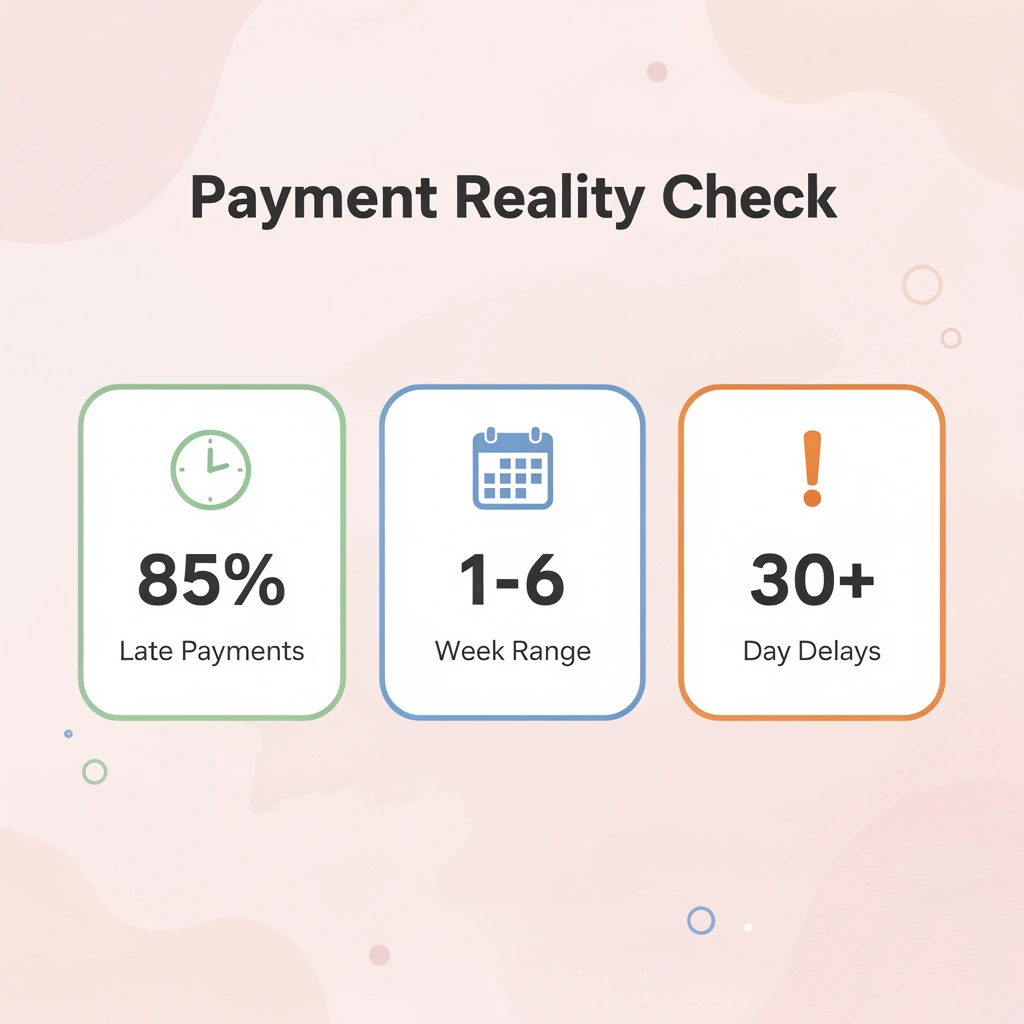
This uncertainty becomes your baseline. You build your budget around guesses instead of guarantees. One client pays within a week. Another takes six. A third disappears for a month, then apologizes and blames their accounting department. The pattern is inconsistent enough that you can't plan around it, yet consistent enough that you know it will happen again.
"Late payments hit a large share of freelancers at least some of the time."
⚠️ Warning: This payment inconsistency forces freelancers to operate on unpredictable cash flow, creating financial stress.
Why do different countries create payment complexity?
Different countries have different banking systems, compliance requirements, and payment rails. Your US client might use one platform; your German client uses another. Each requires separate onboarding, different tax forms, and unique approval workflows. What appears simple—sending money from A to B—becomes complicated within an infrastructure not designed for this work.
How do most companies handle international contractor payments?
Most companies manage international contractor payments through systems built for employees, not independent workers. They send payments via traditional payroll platforms or wire transfers, requiring manual approvals at multiple stages. Each approval creates delays, leaving money waiting for someone to authorize the next step.
What does this cost you?
The real cost isn't just the wait. Studies show that about 29% of freelance invoices get paid late, according to 2024 research cited by Bonsai. You spend time sending reminder emails and following up instead of working, balancing firmness with the desire to maintain the client relationship.
How does payment insecurity shape your work approach?
When you structure projects around billing milestones to protect yourself (never getting more than 25% ahead of billed work, breaking deliverables into small, approvable chunks), you're optimizing for payment security, not great work. That protective instinct is rational, but it shapes how you work in ways that shouldn't.
But the infrastructure problem runs deeper than most freelancers realize.
The Common Belief That Holds Workers Back
You assume that if your client uses Rippling or ADP, payment will be smooth. These platforms manage payroll for thousands of companies, so it seems logical to trust they'll improve your experience as a contractor.

🎯 Key Point: Most contractors believe that enterprise payroll platforms automatically mean faster, more reliable payments - but this assumption can lead to costly disappointment.
"These systems weren't designed with you in mind."
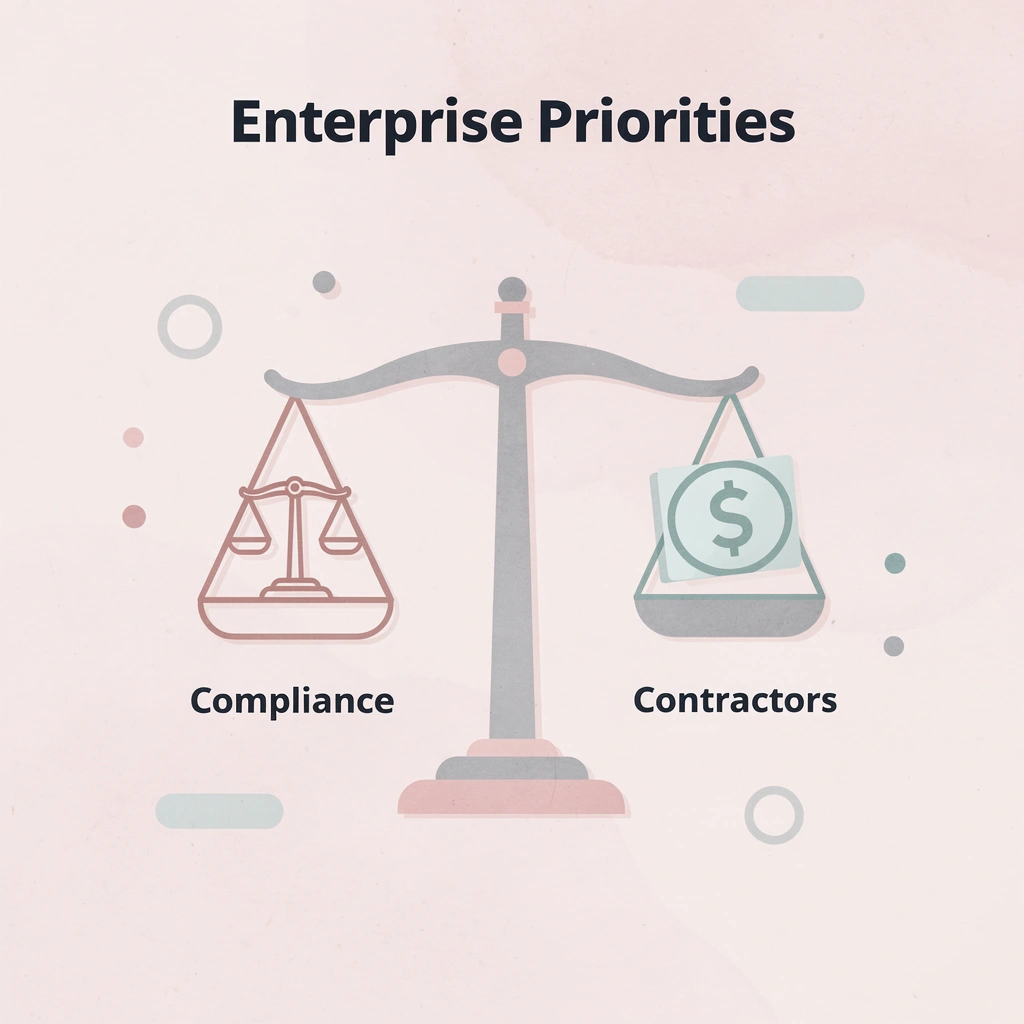
⚠️ Warning: Enterprise payroll systems like Rippling and ADP prioritize corporate compliance and internal processes over contractor experience - meaning your payment timeline and ease of access are secondary concerns.
Built for companies, not contractors
Traditional payroll platforms focus on employer needs: tax withholding for W-2 employees, benefits administration, PTO tracking, and compliance reporting. Their design assumes full-time US workers. Routing contractor payments through these systems forces a fundamental mismatch.
Onboarding reveals this disconnect. Contractors complete employee-focused forms, wait for approval workflows designed for internal departments, and receive payments on fixed payroll cycles (bi-weekly or monthly) rather than on project timelines. Cross-border transfers still rely on traditional banking, taking 3-7 business days, despite the company's ability to process payments instantly.
Why the belief persists
Rippling and ADP dominate workforce management conversations. According to G2's 2024 software satisfaction data, both rank among the most widely adopted HR systems globally. Their visibility creates an assumption of universality: if a tool works for employees, contractors assume it works equally well for them. Brand recognition becomes a way to build trust.
But visibility doesn't equal suitability for the job. A platform optimized for managing hundreds of full-time employees in one country faces different challenges than one built to pay independent contractors across 150+ countries. Compliance requirements, speed expectations, and user experience priorities differ entirely.
What infrastructure do you actually need for global payments?
Getting paid globally requires infrastructure that treats contractor payments as a first-class workflow. You need systems that sign you up in minutes, not weeks; payments that clear in hours, not days; and certainty about when money will arrive, not unclear estimates tied to the next payroll cycle.
How do contractor-focused platforms differ from payroll systems?
Platforms like payroll software build systems designed for contractor relationships. Rather than adapting employee-focused systems, our payroll software creates payment systems built for speed and global reach. Companies can add contractors across borders in minutes and process payments that clear the same day.
The gap between what these platforms promise companies and what you experience as a worker becomes clear when you're stuck waiting for payment that's "processing."
Related Reading
- Paying Overseas Contractors
- Global Payroll Trends
- Benefits of Automated Payroll System
- International Payroll Compliance
- Global Payroll Best Practices
- How to Pay Overseas Employees
- Global Payroll Strategy
- Cross Border Transaction
- Payroll for Remote Workers
What Rippling and ADP Actually Do
Rippling combines payroll, benefits, and IT management into one unified system, while ADP focuses on payroll compliance and tax administration across multiple locations. Neither prioritizes the contractor experience.

🎯 Key Point: Both platforms excel at employee management but treat contractors as an afterthought rather than a core user group.
"Traditional HR platforms like ADP and Rippling were built for the employee-centric workplace of the past, not the contractor-driven economy of today." — HR Technology Report, 2024

Platform
- Rippling
- ADP
- Contractor-focused tools
Primary Focus
- Unified employee management
- Payroll compliance & tax
- Freelancer experience
Contractor Priority
- Low
- Low
- High
⚠️ Warning: If your business relies heavily on contractors or freelancers, these traditional platforms may not provide the specialized features you need for optimal contractor relationship management.

Rippling: The all-in-one automation play
Rippling connects HR, payroll, and IT into a single platform, enabling you to set up a new employee's laptop, grant app access, and add them to payroll in one workflow. The system integrates with over 1,000 apps, eliminating the need to switch between tools for onboarding and offboarding.
For startups and mid-market companies, one login replaces five, and approvals happen faster through a unified system. However, the system is built for W-2 employees, not independent contractors across different countries. Paying contractors through Rippling places them into payroll cycles and approval workflows designed for traditional staff.
ADP: The enterprise compliance standard
ADP has processed payroll since 1949, handling tax withholding, unemployment claims, workers' compensation, and regulatory reporting for large organizations. It holds a 4.1-star rating across thousands of reviews, demonstrating its reliability for complex, multi-state payroll operations.
Enterprises choose ADP to manage risk at scale, not for speed. The platform suits organizations needing deep HR services, but contractors often face long setup times, rigid payment schedules, and support channels designed for HR departments rather than individual workers.
Why do traditional payroll platforms struggle with contractors?
Neither Rippling nor ADP makes contractor payments a primary feature. They send international transfers through regular banking systems, which can take several days to process. Setting up an account requires employee-focused forms, and payment schedules follow set payroll cycles rather than project milestones.
The user experience shows what the company needs to manage internally, not what determines quick and clear payment.
How do contractor-focused platforms solve these issues?
Platforms like payroll software handle this differently by building payment systems designed specifically for contractor relationships. Our platform lets companies add contractors in minutes instead of weeks.
Payments clear the same day because the system was designed for speed and global reach from the start, not adapted from employee payroll systems. Yet knowing what these platforms do doesn't explain why payments still arrive late or get stuck in approval lines for weeks.
Related Reading
- Global Payroll Analytics
- Global Payroll Challenges
- Global Payroll Complexity
- ERP Payroll Software
- Multi Company Payroll Software
- International Payroll Companies
- Employer of Record Service Companies
Where Global Workers Still Struggle
The platforms exist, and infrastructure runs, but cross-border workers still wait weeks to get started, days to get paid, and hours trying to find out what's happening with their status. The problem isn't whether companies have payroll systems—it's whether those systems accommodate how you actually work.

🎯 Key Point: The gap between having a global payment infrastructure and delivering a seamless worker experience remains massive for most platforms.
"Cross-border workers still wait weeks to get started, days to get paid, and hours trying to find out what's happening with their status." — Current State of Global Workforce Management, 2024

⚠️ Warning: Companies often assume that having basic payroll capabilities means they're ready for global talent—but the real test is whether workers can get onboarded quickly, paid reliably, and stay informed throughout the process.
Onboarding designed for the wrong person
You submit tax forms meant for full-time employees, wait while HR sets up approval chains for internal departments, and answer questions about benefits you won't receive. The process assumes permanent employment, not project-based work across time zones. What should take minutes stretches into weeks because contractor onboarding is treated as an unusual situation rather than a standard workflow.
Payment cycles that ignore project reality
Traditional payroll runs on fixed schedules (every two weeks, monthly, end of quarter), but your work doesn't. You finish a milestone on Tuesday, yet the payment waits until the next payroll cycle, two weeks away. Cross-border transfers add another 3-7 business days once processing begins. According to Gallup's State of the Global Workplace 2026, only 20% of employees worldwide were engaged in 2025, and contractors face steeper challenges when payment uncertainty compounds the disconnect between work and reward.
What happens when payment platforms only handle transactions?
Most platforms process the payment, then disappear. You receive money in your local bank account and lose 3-5% to currency conversion fees. You cannot easily move funds between countries where you work, see upcoming payments, or access transparent fee structures.
How do comprehensive platforms address contractor financial needs?
The platform solved the company's compliance problem, but left you to manage the financial complexity alone. Platforms like payroll software approach this differently by giving contractors a global account to receive, spend, and manage money across 150+ countries, treating financial infrastructure as essential for workers as much as for companies.
The gap between what companies think they've solved and what you experience every payment cycle reveals something most people miss about global work.
What Actually Matters for Global Workers
If you work across borders, what matters isn't which payroll system a company uses—it's whether you can work, get paid, and manage your income without problems. The main problems freelancers face involve payment speed, reliability, and the effort required to manage everything.

🎯 Key Point: For global workers, the technology behind payments matters far less than the actual experience of receiving reliable, timely compensation.
"The biggest challenge for remote workers isn't finding work—it's getting paid consistently and managing the administrative burden that comes with cross-border payments." — Global Remote Work Survey, 2024

💡 Tip: Focus on companies that can demonstrate clear payment timelines and have established processes for international contractors, rather than getting caught up in which specific platform they use.
Fast onboarding without complex setup
Speed matters because delays cost opportunities. Many freelancers lose work simply because companies can't bring them on board quickly enough. Research shows freelancers already spend 8 to 12 hours every month chasing payments and admin tasks. When onboarding takes weeks instead of minutes, potential income slips away while forms languish in approval processes designed for employees, not independent workers.
Reliable, timely payments across countries
Payment delays are widespread: 65% of freelancers wait over 30 days to get paid. This unpredictability prevents planning expenses, negotiating rates with confidence, or committing to new projects while awaiting payment for previous projects.
Clear contracts and compliance handled for you
Most payment issues stem from unclear systems rather than bad intent. Administrative friction, unclear terms, and approval processes delay payments. Clear contracts and upfront compliance handling eliminate much of that risk. You shouldn't need to become an expert in international tax law or spend hours deciphering payment terms to receive money you've already earned.
Access to financial tools that support your lifestyle
Working around the world requires more than earning income—it demands the ability to use your money easily across different currencies and countries without excessive fees or delays. Traditional systems stop after payroll, leaving workers to handle conversions (usually 3-5% in fees) and fund transfers independently. Platforms like payroll software solve this by providing global accounts to receive, spend, and manage money across 150+ countries, treating financial infrastructure as a core need for workers.
The best solution removes friction from how you start work, get paid, and manage income globally.
How Ontop Helps You Work and Get Paid Globally
Global workers can easily find opportunities; the challenge is getting set up, paid, and supported without delays. Ontop is built to fill that gap, designed around how you work as an international freelancer or remote professional, not for company-side payroll.

🎯 Key Point: Unlike traditional payroll platforms that focus on employer needs, Ontop prioritizes the worker experience with faster onboarding, reliable payments, and dedicated support for global talent.
"The biggest barrier for remote workers isn't finding work—it's navigating the complex payment systems and compliance requirements that come with international employment." — Remote Work Report, 2024
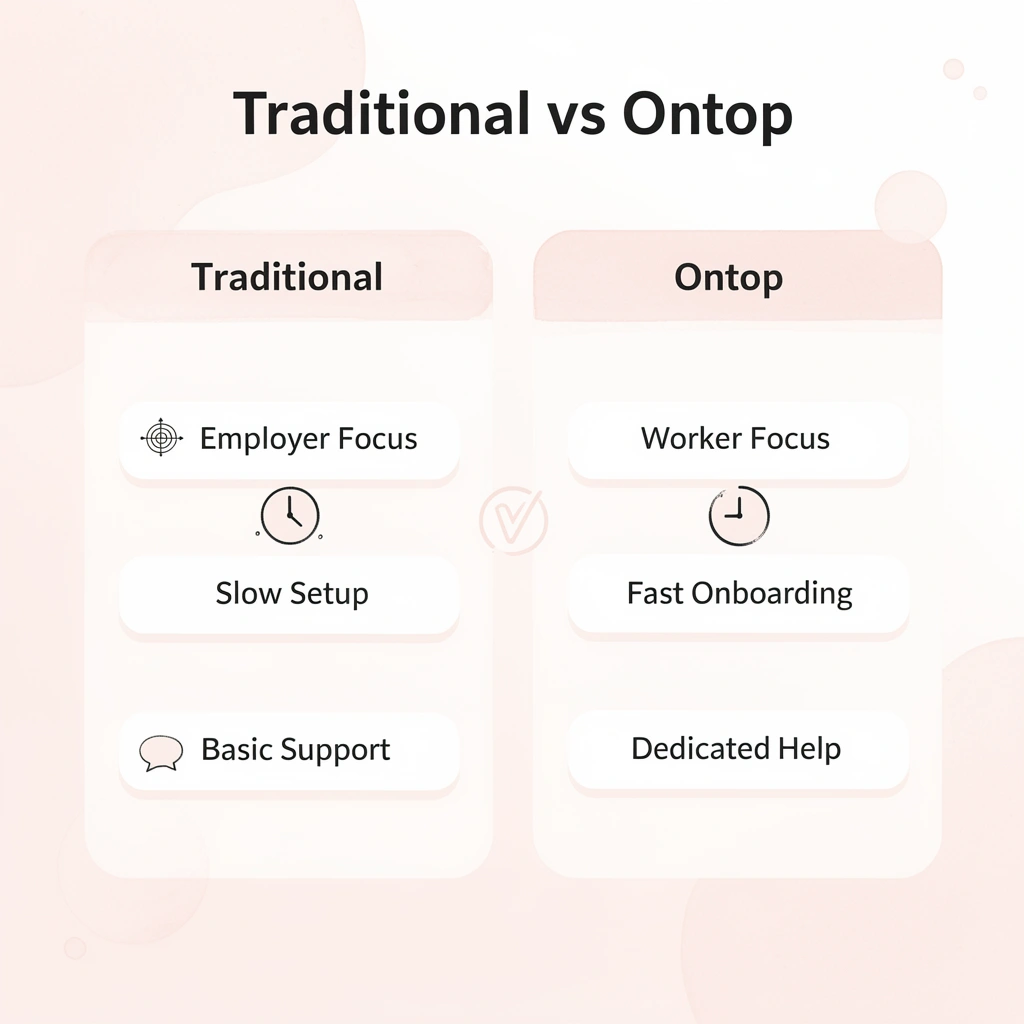
💡 Tip: With Ontop's streamlined platform, you can focus on delivering great work instead of worrying about payment delays, currency conversions, or tax compliance issues that often plague international remote arrangements.
Speed that matches how work actually happens
You can get set up in minutes, not weeks. Speed determines whether you start a role or miss the opportunity entirely. According to Sacra, U.S. companies hiring Latin American talent have increased 63%, creating pressure for faster onboarding. Traditional systems slow you down with form approvals and account setup. Ontop treats contractor onboarding as the core workflow, removing that friction.
Payments that clear when you need them
Once you're working, payments become predictable. You receive money instantly across 150+ countries, eliminating the uncertainty of traditional payroll cycles or cross-border bank delays. This consistency lets you treat global work as reliable income rather than something you must chase.
Financial tools that work across borders
With access to a USD account and a global Visa card, you can hold, spend, and manage earnings across borders without local banking constraints. Compliance is handled automatically, removing the burden of contracts, regulations, and country-specific requirements: one of the biggest barriers to cross-border work.
What this looks like in practice
A freelancer joins Ontop, gets set up quickly, and starts receiving payments without delays. There's no back-and-forth on contracts, no uncertainty around timelines, and no need to manage multiple systems. Our payroll software lets you work and get paid globally without friction.
But knowing a platform exists and seeing why hundreds of companies trust it are two different things.
Book a demo today: see how Ontop powers global teams in 150+ countries
Opening an Ontop account gets you set up in minutes. Create your account and access global payments without the delays of traditional systems.

💡 Tip: Teams in 150+ countries use Ontop to power their global teams because it solves problems that slow down international work: fast setup, fast payments, and financial tools across 150+ countries.
"Teams in 150+ countries trust Ontop to eliminate the weeks-long waits of traditional global payment systems." — Ontop, 2024

🎯 Key Point: Book a demo to test the platform with your actual workflow and experience the difference between waiting weeks and working right away.
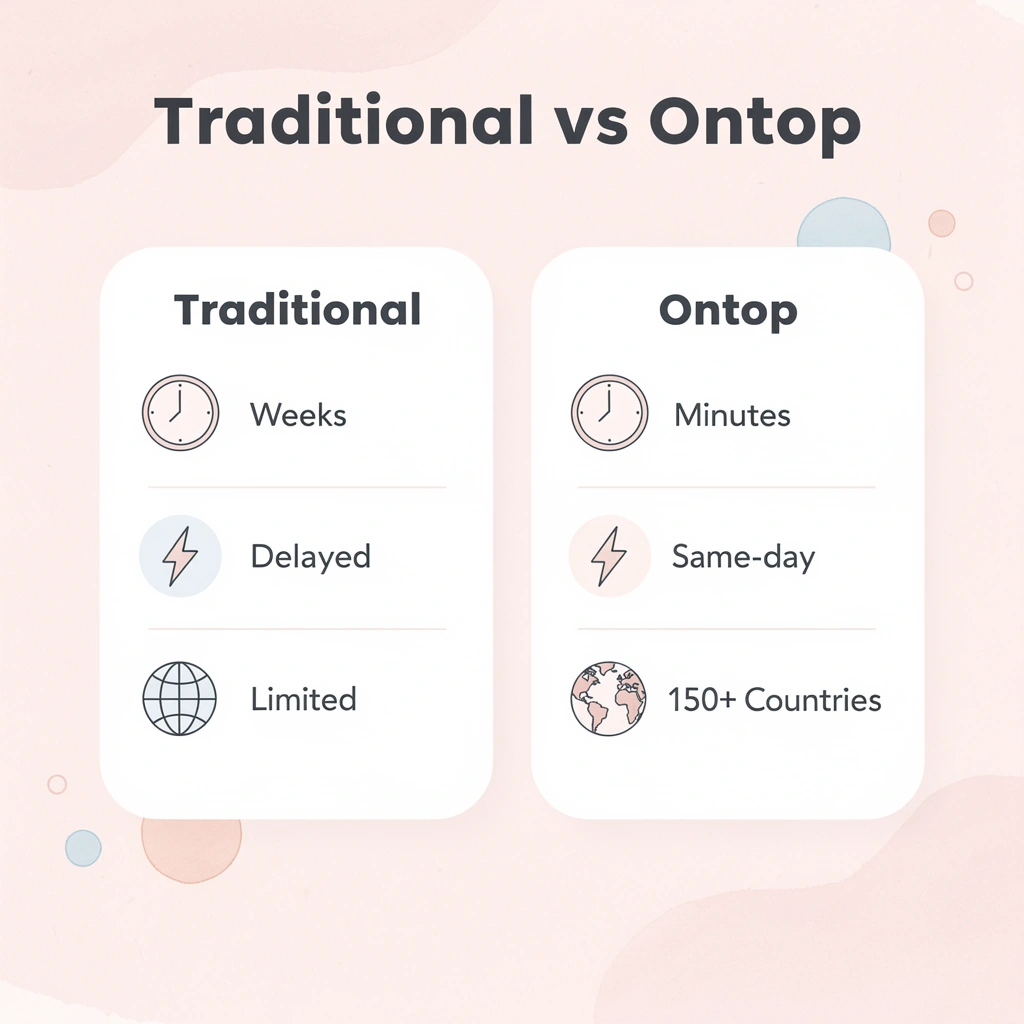
Traditional Systems
- Weeks to set up
- Delayed payments
- Limited countries
Ontop
- Minutes to get started
- Fast payments
- 150+ countries supported
Related Reading
- Papaya Global Alternatives
- Global HR Systems
- Adp Alternatives
- Deel Vs Remote
- Best Multi-Company Payroll Software
- International Payroll Companies
- Oyster Hr Alternatives
- Employer Of Record Service Companies
- Best Multi-country Payroll Softwares
- Deel Alternatives


