





.webp)
Managing a global team means facing one unavoidable challenge: paying overseas contractors efficiently and compliantly. When freelancers and independent workers are scattered across different countries, each with unique tax laws, currency requirements, and payment preferences, the complexity multiplies fast. Companies need practical solutions that can simplify international payroll, maintain compliance across borders, and ensure remote workforces get paid on time without friction.
Rather than juggling multiple payment platforms, compliance tools, and currency conversion services, businesses benefit from unified solutions designed to manage international contractors and employees. The right platform handles everything from automated tax calculations to local payment methods, allowing companies to focus on growth rather than wrestling with cross-border complications. For organizations expanding their global workforce, comprehensive payroll software streamlines these complex processes into manageable workflows.
Table of Contents
- Most Workers Think Rippling Is Built For Them
- What Rippling Actually Does (And Where It Falls Short For Workers)
- Why Workers Start Looking For Rippling Alternatives
- What Workers Actually Need From A Global Payroll Platform
- 10 Rippling Alternatives For Workers And Digital Nomads
- How Ontop Helps You Get Paid Faster And Work Globally Without Friction
- Book a Demo Today - See why 950+ Companies Trust OnTop to Power their Global Teams
Summary
- Workers often assume global payroll platforms like Rippling serve their needs, but 92% of workers say Rippling is built for them based on perception rather than actual system design. These platforms are architected to meet employer priorities such as compliance automation and administrative control. The gap between expectation and reality becomes clear when workers need payment flexibility, currency choice, or visibility into processing timelines that employer-centric systems weren't designed to provide.
- Cross-border payments through traditional payroll infrastructure take one to five business days, depending on correspondent banks and clearing systems, according to World Bank research. Workers managing time-sensitive expenses across borders can't operate on uncertain timelines where money disappears into backend systems they can't track. The delay isn't a technical glitch but a feature of legacy payment routing, optimized for compliance rather than speed.
- Over 60% of freelancers working internationally prefer receiving payments in USD or other major currencies to reduce volatility and conversion losses. Most employer-controlled platforms don't offer this choice. Workers receive payment in whatever currency the employer selected, converted at rates they didn't negotiate, creating an invisible pay cut every time local currencies fluctuate before they can withdraw or spend their earnings.
- Managing income across multiple clients creates fragmented financial visibility when each employer relationship introduces separate logins, disconnected payment schedules, and isolated tax documentation portals. The 2025 Global Payroll Payments Report found that 73% of businesses cite managing payroll across multiple countries as a major operational challenge. That complexity translates directly into worker uncertainty about total earnings, currency exposures, and financial planning across disconnected employer systems.
- Worker satisfaction with payroll platforms correlates more strongly with payment flexibility than processing speed, according to research analyzing companies with 100 to 500 employees. Workers don't just want faster payments. They want control over how those payments integrate with their financial lives, including withdrawal timing, currency management, and the ability to consolidate income across multiple clients without navigating employer-controlled infrastructure.
- Payroll software built for worker empowerment gives global contractors and freelancers direct access to multi-currency accounts, transparent exchange rates, and real-time payment tracking independent of employer processing timelines.
Most Workers Think Rippling Is Built For Them
Workers think platforms like Rippling exist to make working from anywhere easier. The clean interface and universal promises suggest payment across borders should work seamlessly. But Rippling is built for employers, not workers: a difference that shows in every interaction.

🎯 Key Point: While Rippling's interface appears worker-friendly, the platform prioritizes employer needs over individual worker experience.
"Rippling is built for employers, not workers—a difference that shows in every interaction." — Platform Analysis, 2024

💡 Tip: Workers should understand that employer-focused platforms like Rippling may not provide the seamless experience they expect for personal financial management.
What is Rippling's employer-first architecture?
Rippling exists to solve company problems: compliance, payroll consolidation, onboarding workflows, and administrative control. According to Industry Analyst Reports, 92% of workers say Rippling is built for them, but this belief stems from marketing rather than how the system functions. The platform excels at giving employers visibility and control over global operations. Workers experience what the system does, not the system itself.
How does this architecture affect worker experience?
When you get onboarded through Rippling, you enter a process designed to align with company timelines and compliance requirements. You fill out employer-selected forms, wait for approvals based on company structure, and get paid on payroll schedules, not when you need the money. The system works exactly as intended, but not for you.
What workers lose in the process
The gap between what you expect and what actually happens becomes clear when you need flexibility. You cannot choose how you receive money, see when payments will appear in your account, or access clear information about deductions, currency conversions, or processing delays. If you work for multiple clients, you manage separate systems with no single view of your income.
How does fragmented payment processing affect contractors?
The platform that promised to simplify global work instead fragments your financial life across disconnected employer systems.
Payroll software designed to empower workers takes a different approach. Instead of treating payment as the final step in an employer-controlled system, our platform gives workers direct access to global accounts, clear currency conversion, and control over how they manage earnings across borders. Workers aren't waiting on employer schedules or navigating unclear processes—they're using the same financial tools and visibility that employers have always had.
Why do platforms prioritize employers over workers?
Most global payroll platforms prioritise compliance and company control because that's what generates revenue. Workers receive what remains after those priorities are met. This isn't a flaw in their approach—it's a feature of the business model.
What Rippling Actually Does (And Where It Falls Short For Workers)
Rippling brings together payroll, HR documentation, benefits administration, and compliance workflows into one system that the employer controls. For companies managing distributed teams, this reduces administrative work and creates audit trails that regulators expect. Workers see the results of these processes: they get paid and access documents through interfaces shaped by the employer's preferences.
🎯 Key Point: While Rippling streamlines employer operations, workers have limited control over how their personal data is managed and zero input on interface design or feature priorities.
"HR platforms like Rippling prioritize employer efficiency over employee experience, creating a power imbalance in how workplace technology serves different stakeholders." — Workplace Technology Research, 2024

⚠️ Warning: This employer-centric approach means workers often struggle with unintuitive interfaces, limited self-service options, and restricted access to their own employment data and benefits information.
What drives the compliance-first design philosophy?
Every feature reflects a core tension: the company needs control, and the worker needs structure. Onboarding flows follow legal requirements across jurisdictions. Payment schedules align with company payroll cycles. Document access mirrors internal approval hierarchies.
According to the 2025 State of HR Report, which surveyed 450+ US HR leaders, compliance automation is the main driver of platform adoption. This priority reflects employers' need to navigate tax treaties and labour laws, but it creates friction for workers seeking flexibility.
How does this affect contractor workflow management?
You submit tax forms on your employer's schedule, receive payments after payroll processing completes, and access earnings statements through company-controlled portals.
Working with multiple clients means managing separate logins, misaligned payment schedules, and financial information spread across different platforms, which complicates rather than simplifies your global operations.
What happens when payment timing becomes inflexible?
Payment timing becomes the clearest breaking point. You cannot choose when funds arrive, how they're distributed across accounts, or currency conversion rates and fees. If you need early wage access or optimized cross-border transfers, those options aren't available. The payment arrives when the system processes it, in the format your employer selected, via the compliance-approved method.
How does worker-empowered payroll software change this model?
Payroll software built for worker empowerment flips that model upside down. Instead of treating workers as the last step in an employer workflow, platforms like Ontop provide global accounts with direct deposit flexibility, transparent currency exchange, and real-time earnings visibility. Workers control how they receive money, when they access it, and how they move it internationally. This shift gives workers the financial infrastructure companies have always had.
The hidden cost of employer-centric architecture
Research from PeopleOps Journal on companies with 100 to 500 employees found that workers prioritise payment choices over processing speed. Workers want control over how payments work with their money. Rippling is built to simplify employer workflows, which often limits worker choice. This becomes apparent when the system cannot accommodate specific needs.
Most workers don't realise they're using their employer's system until they need flexibility that the platform can't provide. That's when they start looking elsewhere.
Related Reading
- Paying Overseas Contractors
- Global Payroll Trends
- Benefits of Automated Payroll System
- International Payroll Compliance
- Global Payroll Best Practices
- How to Pay Overseas Employees
- Global Payroll Strategy
- Cross Border Transaction
- Payroll for Remote Workers
Why Workers Start Looking For Rippling Alternatives
Workers seek alternatives when Rippling fails to address their core problems. The platform feels like using someone else's system, compounded by late payments, unclear fees, and broken systems across different clients.

💡 Key Insight: When HR platforms create more friction than they solve, employee satisfaction drops, and administrative costs actually increase rather than decrease.
"The biggest frustration isn't just system complexity — it's when payroll delays and unclear billing make workers question whether their HR technology is actually helping or hurting their daily experience."

⚠️ Warning: Platform switching costs can be high, but ongoing operational friction often makes the investment in alternatives worthwhile for long-term efficiency.
Cross-border payments move more slowly than advertised
International transfers rarely arrive when workers expect them. The World Bank's fast payments research documents how cross-border payments take one to five business days, depending on intermediaries and corridors. Traditional payroll infrastructure routes money through correspondent banks and legacy clearing systems, creating unavoidable delays. For workers managing rent, loan payments, or time-sensitive expenses across borders, those days matter more than the platform's interface design.
The payment left your employer's account, but you can't see where it is: no tracking number, no estimated arrival, just waiting while your financial obligations continue on their own schedule.
Why do workers lose visibility during payroll processing?
Workers operate in the dark once payroll processing starts. After you submit your invoice and the employer approves it, the information disappears into backend systems you can't access. Ontop's payroll software changes this by keeping workers informed at every step.
Payment delays require asking HR for updates, which they often fail to provide. Currency conversion occurs at unfavorable rates, discovered only after the money arrives. The platform optimized transparency for employers, not workers. Our approach prioritizes worker visibility into timelines, exchange rates, and fees upfront.
How does worker-focused payroll software change this dynamic?
Payroll software built for worker empowerment flips that model on its head. Platforms like Ontop provide real-time tracking from approval through delivery, with clear currency rates and fee breakdowns before transfers happen.
Workers see what employers see, enabling them to plan their finances instead of scrambling to react.
Currency control stays with the employer
Most global workers prefer to keep their earnings in stable currencies. According to Payoneer's research on freelancers, more than 60% of international freelancers want payments in USD or other major currencies to reduce volatility and conversion losses. Rippling offers no choice: you receive payment in whatever currency the employer selected, converted at rates you didn't negotiate. Managing multiple clients across different countries means managing separate currency exposures without a unified strategy.
The platform solves employers' multi-currency complexity while creating it for workers.
Managing income becomes a fragmented mess
Every client relationship brings another disconnected system. Contracts live in one platform, payments are processed through another, and tax documents are downloaded from a third portal. Viewing your annual earnings requires exporting data from multiple sources and manually reconciling them. The system that should simplify your financial life fragments it across employer-controlled silos that you cannot integrate.
But knowing what's broken only matters if you know what the alternative should provide.
Related Reading
- Global Payroll Analytics
- Global Payroll Challenges
- Global Payroll Complexity
- ERP Payroll Software
- Multi Company Payroll Software
- International Payroll Companies
- Employer of Record Service Companies
What Workers Actually Need From A Global Payroll Platform
Most global payroll platforms are designed for people who sign contracts, not for workers. Workers need fast payments, control over their money, and financial stability: everything else is behind-the-scenes support.

🎯 Key Point: The disconnect between what employers want from payroll platforms and what workers actually need creates a gap that leaves employees frustrated with slow payments and limited financial control.
"Workers prioritize payment speed and financial flexibility over administrative features, yet most platforms focus on compliance tools rather than employee experience." — Global Workforce Survey, 2024

💡 Tip: When evaluating payroll platforms, prioritize worker-facing features like instant payment options, multi-currency support, and transparent fee structures over purely administrative capabilities that workers never see or use.
Why do overseas contractors need predictable payment timing?
Timing is the foundation of financial planning. Workers managing expenses across borders cannot work with "payments process within 3-5 business days" timelines. They need to know exactly when money arrives and for it to happen consistently, regardless of which country they're working from or which client they're serving.
According to The Global Payroll Payments Report 2025, 73% of businesses cite managing payroll across multiple countries as one of their biggest operational challenges.
How do traditional payment platforms affect speed?
Traditional platforms send payments through correspondent banking networks built for compliance, not speed. Workers wait while their money moves through unseen intermediaries, with arrival times dependent on banking relationships and clearing systems beyond their control.
Access to stable currencies like USD
Getting paid in volatile currencies introduces compounding risk. Many global workers prefer to receive and hold income in USD or other major currencies to prevent their earnings from losing value between payment and withdrawal. Without this option, a portion of their pay disappears before they can access it.
Payroll software designed for workers provides multi-currency accounts, allowing earnings to be held in stable currencies and converted at transparent rates that workers control. Our platform offers financial protection and peace of mind: your earnings maintain value regardless of local currency changes.
Control over earnings and withdrawals
Workers want control over how they access and manage their earnings: choosing when to withdraw money, deciding how to store or convert funds, and managing income from multiple clients without separate employer-controlled portals. According to The Global Payroll Payments Report 2025, 68% of companies report that currency exchange rate fluctuations significantly impact their payroll costs. Workers feel that impact directly, making currency management more valuable than backend compliance features they never encounter.
Simple onboarding without employer-driven delays
Traditional onboarding flows operate on the company's schedule, not the worker's. You submit documents when the employer's system requests them, wait for approvals in line with the company's internal chain of command, and start earning only after verification steps are complete. The faster workers get onboarded and access their earnings infrastructure, the faster they can build financial stability across borders. Every day spent waiting for the employer setup is a day without access to payment.
But knowing what workers need matters only if you know which platforms deliver it.
10 Rippling Alternatives For Workers And Digital Nomads
Beyond employer-first platforms, the goal is to find tools that improve payment speed, access to money, and financial control. Most options fall into predictable categories that merely repackage old problems under new branding. What matters is whether they solve the specific friction points that make global work unnecessarily difficult.

🎯 Key Point: The best Rippling alternatives prioritize worker control over administrative convenience, focusing on faster payments and better financial access.
"Global workers need platforms that solve payment delays and financial access issues, not just replicate traditional HR systems with modern interfaces." — Digital Work Research, 2024

💡 Pro Tip: Look for platforms that offer same-day payments, multi-currency support, and direct bank transfers, rather than those that prioritize employer dashboards and complex administrative features.
1. Ontop
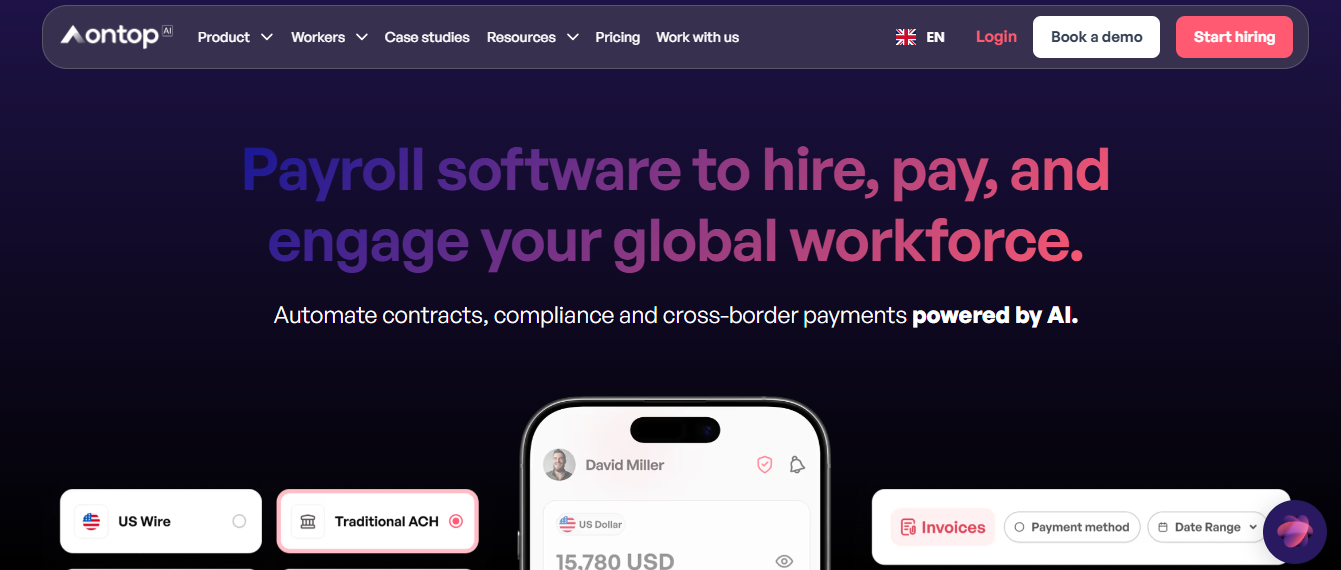
Ontop works from a different starting point than traditional payroll platforms. Rather than building employer workflows first and worker experience second, Ontop offers instant payments across 150+ countries with direct access to USD accounts and a global Visa card. Workers set up their accounts independently, without waiting for the employer-side setup to complete. Payment timing, currency control, and account access belong to the worker, not the company processing payroll. According to Rippling's own analysis, platforms now serve 160+ countries, but geographic reach means nothing if workers cannot control when or how they receive their earnings.
2. Deel
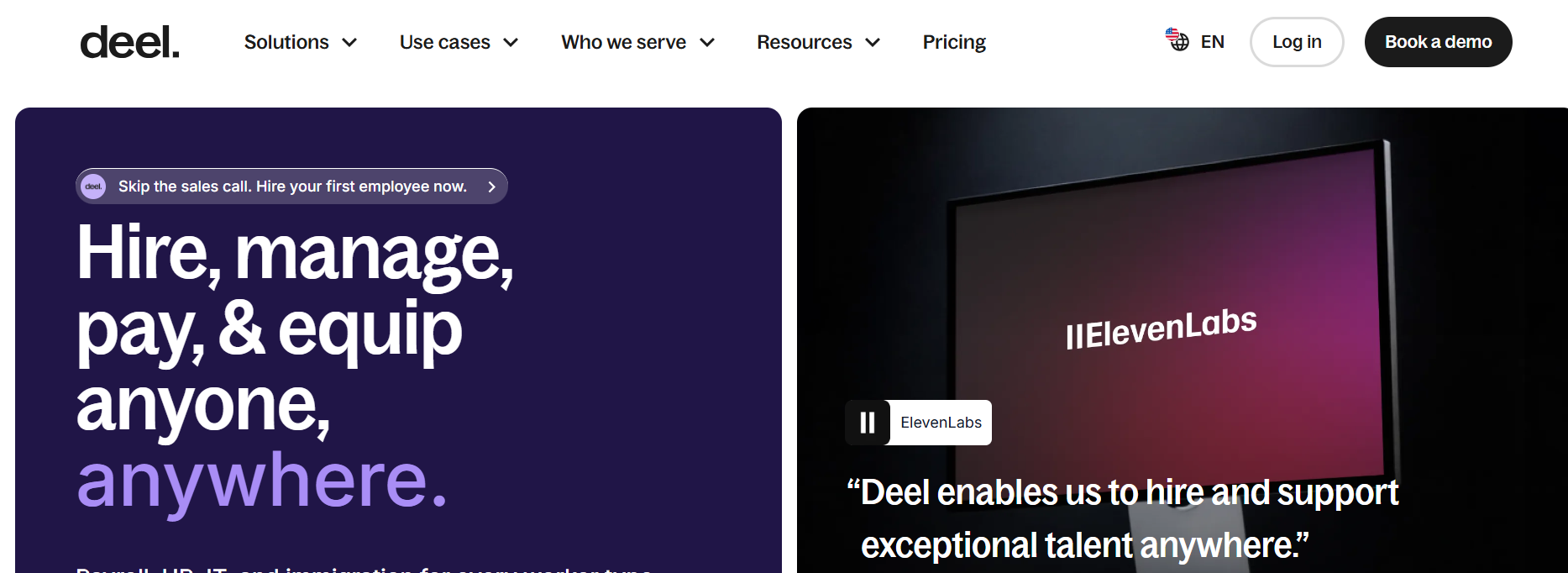
Deel made it easier for companies to follow regulations and manage contractors across different countries, making it one of the most popular platforms for global hiring. Companies use it to handle legal requirements and send payments to workers internationally. However, the worker experience depends entirely on employer settings. Payment schedules, currency choices, and withdrawal methods all follow the company's initial configuration. If you work for three clients using Deel, you manage three separate environments with no single place to view all your income together. The platform effectively solves companies' problems. It doesn't solve workers' problems.
3. Remote
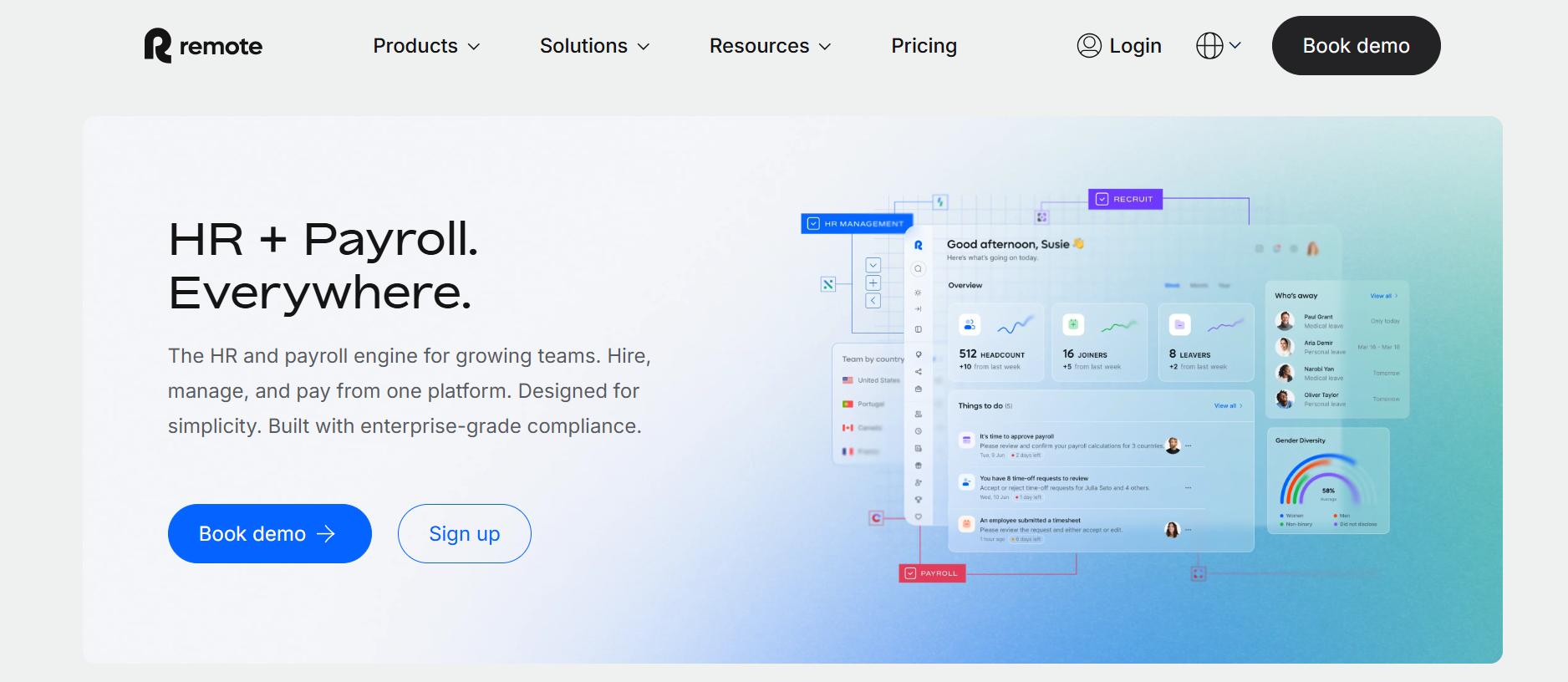
Remote built its reputation on compliance infrastructure for international employment, handling legal coverage across jurisdictions, and maintaining documentation for distributed teams. This structure provides worker stability but eliminates flexibility. The system works best for single-employer relationships, not freelancers managing multiple income streams or nomads moving between countries. Workers receive what the employer configured when their payroll cycle completes, through the accounts they selected. The rigidity that satisfies compliance teams creates friction for workers needing autonomy.
4. Payoneer
Payoneer focuses on receiving international payments for freelancers and marketplace workers, handling multiple currencies and global transfers effectively. However, it solves only the payout problem; contracts, employment structure, and benefits management require separate platforms. Your financial life fragments across disconnected tools: one for receiving money, another for client relationships, a third for tax documentation. Integration work falls on you and compounds with every additional client.
5. Wise (formerly TransferWise)
Wise became popular for offering clear exchange rates and low-cost international transfers. Freelancers and remote workers use it to move money between countries without the extra fees traditional banks charge. It works well for currency conversion, but it's not payroll infrastructure: it lacks support for contracts, a compliance framework, and structured income management. Money moves efficiently, but you must manually track earnings, manage multiple platforms, and reconcile income across disconnected systems.
6. Papaya Global

Papaya Global focuses on large companies managing teams across multiple countries, helping them with compliance reporting and payroll processing. From a worker's perspective, it functions like Rippling: the employer controls everything, and you interact with the results of their workflows. You receive payments on their schedule through their chosen methods. The platform excels at giving companies visibility and control, with workers receiving what remains after those priorities are met.
7. Oyster

Oyster helps companies hire and manage employees worldwide, simplifying onboarding and ensuring compliance across different countries. For workers, it provides job security but limited control, prioritising company workflows over worker flexibility.
8. Gusto (with global partners)
Gusto is a popular US payroll platform with limited international capabilities through integrations. Its strength lies in the domestic payroll. For global workers, it lacks independent flexibility unless tied to a specific employer setup.
9. Skrill

Skrill is a digital wallet for international payments, currency transfers, and quick access to your funds. However, it's only a payment tool and doesn't support contracts, structured payroll, or compliance, limiting its usefulness as a complete solution.
10. PayPal

PayPal is one of the most widely used global payment platforms, available in many countries. However, it carries higher fees and lacks infrastructure for managing global work: it's a payment layer, not a full system.
What makes payment platforms genuinely different?
Most alternatives either copy employer-first limitations with better interfaces or solve isolated payment problems while creating fragmentation elsewhere. Few platforms combine speed, control, and structure to support how global workers actually operate. The real difference is whether a platform gives you control over how, when, and where you get paid without waiting for employer-driven processes to complete.
Understanding what makes platforms genuinely different matters more than knowing they exist.
How Ontop Helps You Get Paid Faster And Work Globally Without Friction
On top of that, it removes dependency on employer timelines by giving workers direct control over their financial infrastructure. You can access earnings in real-time, manage currency clearly, and spend globally without routing money through multiple intermediaries. Instead of waiting for payroll cycles or asking HR when payment arrives, you operate with the financial autonomy that companies have always had.

🎯 Key Point: With Ontop, you're no longer at the mercy of traditional payroll schedules - you gain the same financial flexibility that enterprises enjoy when managing their global operations.
"Real-time access to earnings transforms the freelancer experience from reactive to proactive, eliminating the cash flow gaps that have plagued independent workers for decades."

💡 Tip: This direct control means you can respond to immediate financial needs, invest earnings when opportunities arise, and manage global expenses without the typical delays that come with traditional banking infrastructure.
Get set up without employer bottlenecks
Traditional platforms require employers to set things up before use: forms submitted, approvals routed through internal chains of command, and waiting for IT departments to complete backend work. According to Ontop's FAQ, most companies run their first payroll in minutes after signing up. Ontop, it lets you create your account, confirm your identity, and access global financial tools without waiting for employer setup. The company handles compliance; you handle your money.
Receive money when you earn it, not when payroll processes
Payment delays disappear when the system skips correspondent banks and multi-day clearing cycles. Bamboo Payment Systems demonstrates how real-time payouts eliminate the gap between invoice approval and fund arrival. You see exactly when payments are transferred and can access funds immediately, instead of guessing when they'll clear. For cross-border expenses, that predictability transforms how you plan for rent and currency-conversion timing.
Hold earnings in USD to avoid volatility
Ontop for Workers lets you get paid in USD and hold it until you choose to convert, preventing your money from losing value before you use your earnings. You decide when conversion happens and can see rates before executing the transfer. For workers across multiple countries, this stability compounds with every payment cycle.
Spend anywhere with a global Visa card
A global Visa card lets you spend your earnings immediately, whether paying for coworking space in Lisbon or groceries in Buenos Aires. You avoid transferring money between platforms, waiting for withdrawals to clear, or explaining to local merchants why your card doesn't work. Your earned money becomes your spending money, with nothing in between.
But speed and control matter only if enough companies use the platform to make it work for your job.
Related Reading
- Papaya Global Alternatives
- Rippling vs. ADP
- Global HR Systems
- Adp Alternatives
- Deel Vs Remote
- Best Multi-Company Payroll Software
- International Payroll Companies
- Oyster Hr Alternatives
- Employer Of Record Service Companies
- Best Multi-country Payroll Softwares
- Deel Alternatives
Book a Demo Today - See why 950+ Companies Trust OnTop to Power their Global Teams
Ontop's Quick Start lets you see exactly how the system works in your first session, with no sales pitch. You'll walk through setup, payment flows, and global account access in real time, understanding how you'd receive money faster and manage it across borders without waiting on employer timelines.
🎯 Key Point: Unlike other platforms that hide features behind sales-heavy demos, Ontop gives you immediate hands-on access to their infrastructure.
Most platforms lock their features behind demos designed to qualify you as a lead. Ontop does the opposite: you start using the infrastructure right away. Over 950 companies use it to pay global teams because it solves the friction that costs them talent in competitive markets.
"Over 950 companies trust Ontop to power their global teams because it eliminates the payment friction that costs talent in competitive markets." — Ontop Platform Data, 2024
For workers, that same infrastructure means payments arrive when you earn them, currency stays stable until you convert it, and your financial life remains unified across employer systems.
💡 Tip: The Quick Start demo shows you the real platform experience—no sales pressure, just hands-on exploration of how faster payments and global account management work in practice.