




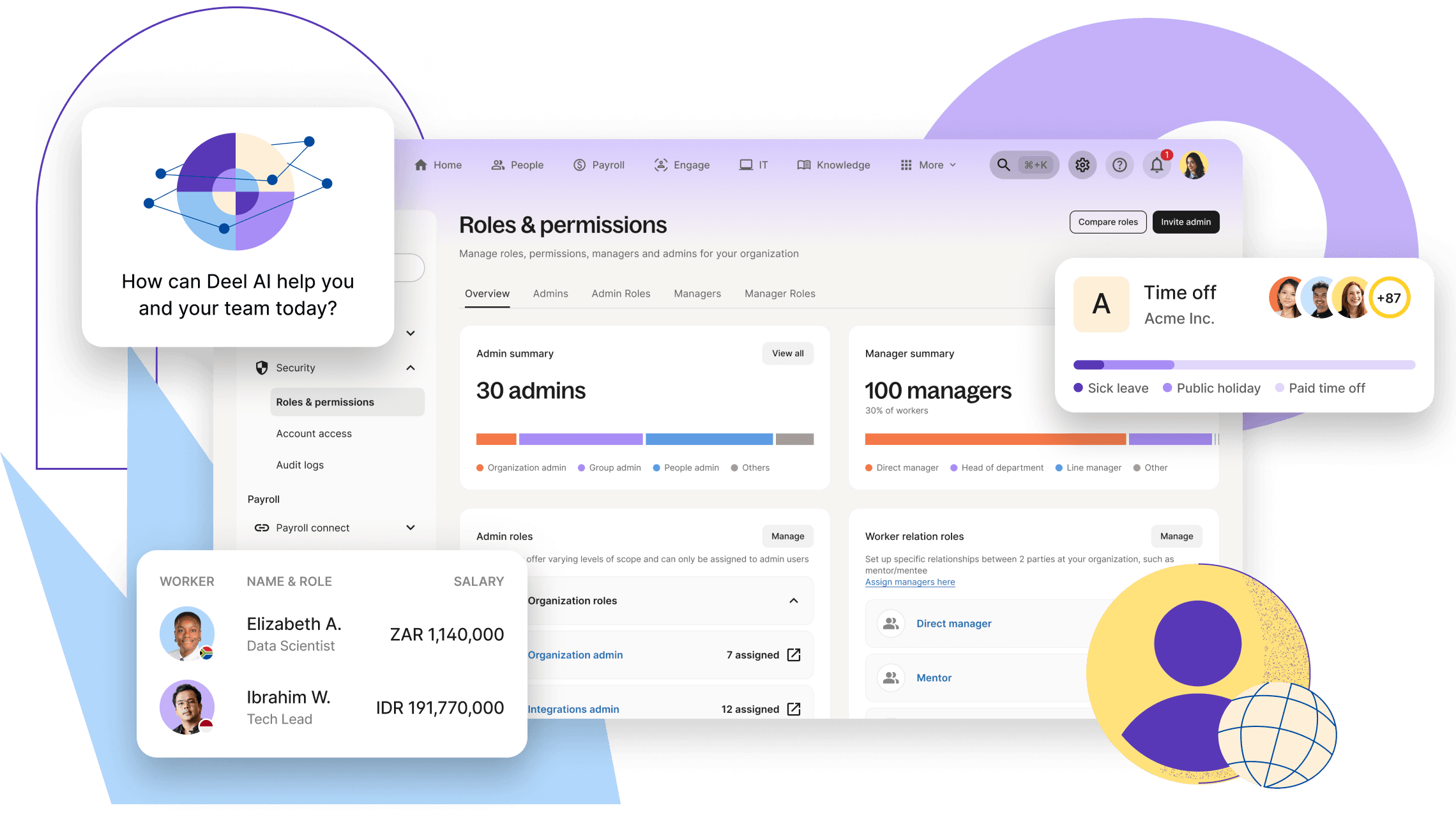
Managing a distributed team means paying overseas contractors efficiently, securely, and compliantly across different countries and currencies. You've likely heard of Deel as a popular solution for global payroll and contractor management, but it's not the only option available. Whether you're concerned about pricing, specific features, customer support, or simply want to explore what else exists in the international payments space, this article breaks down the best Deel alternatives for global workers and freelancers.
If you're searching for a platform that simplifies how you handle international contractor payments while offering competitive rates and intuitive tools, Ontop's payroll software deserves your attention. The platform helps businesses manage compliance requirements, process payments in multiple currencies, and handle tax documentation, without the administrative burden typically associated with cross-border payments.
Summary
- Platforms designed for employer compliance often leave workers dependent on company-driven timelines, limited payout options, and currency conversion at rates and on terms they can't control. Research shows that 54% of workers say payroll issues have caused them to consider leaving their job, revealing that payment friction affects entire employment relationships, not just administrative convenience.
- Currency conversion strips value from contractor earnings when platforms force automatic conversion to local currency at exchange rates workers don't choose. The gap between contracted amounts in USD and the actual amounts that arrive after conversion isn't a rounding error but a structural feature of systems built for employer convenience rather than worker financial protection.
- Most Deel alternatives replicate the same employer-first infrastructure rather than shifting control to workers. Switching platforms rarely changes the underlying power dynamic because the new provider still centers company workflows, approval timelines, and platform-defined payout methods, rather than giving workers tools to manage earnings on their own terms.
- Hidden fees and conversion spreads reduce take-home income in ways that aren't immediately visible. Workers lose money not through obvious deductions but through small, opaque costs at multiple transaction points, making it impossible to optimize earnings or even to understand what portion of the contracted rate actually reaches their accounts.
- Remote contractor work continues accelerating, with Deel's Global Hiring Report 2026 showing a 283% surge in AI roles, yet most payment platforms still treat workers as transaction recipients rather than users who need financial infrastructure. This design gap affects retention because managing income across borders requires constant workarounds when platforms stop at payment delivery instead of providing currency management, spending tools, and accessible funds.
Payroll software addresses this by giving workers a global account with multi-currency support and instant transfers, keeping earnings accessible without forcing money through additional conversion or withdrawal layers after payments arrive.
Deel Works for Companies, Not Always for Workers

Deel solves a business problem, not necessarily a worker problem. The platform exists to help companies hire across borders without establishing legal entities in every country. That means every feature, every workflow, every design decision optimizes for compliance, contract management, and employer control.
Workers assume the platform makes their lives easier because payments arrive and contracts get signed. But ease of payment doesn't mean the system was built with your financial needs in mind.
The Control You Don't Have
Payment timing follows employer payroll cycles, not your cash flow needs. If your company processes payments monthly and there's a delay in approval, you wait. The platform facilitates the transaction, but you're dependent on internal workflows you can't influence. Currency conversion adds another layer of constraint. You might negotiate a contract in USD, but receive payment in local currency at an exchange rate and timing you didn't choose.
According to Deel's own research, 70 million Americans do gig work, yet most platforms still treat currency management as an afterthought for the worker. That gap between contract value and what actually hits your account? It's not a bug. It's a feature designed for company convenience.
Where the Platform Stops
Deel processes your payment, then its job is done. What happens after the money arrives is your problem. You can't hold multiple currencies without transferring to another service. You can't access funds early when an unexpected expense hits. You can't optimize when or how conversion happens.
The platform doesn't offer savings tools, spending cards, or financial infrastructure that helps you manage earnings across borders. It delivers the payment, closes the loop on the employer side, and moves on. For companies, that's exactly what they need. For workers building a financial life across countries, it's where the real work begins.
The Expectation Gap
On paper, everything looks handled. Contracts are signed, taxes are documented, and payments are scheduled.
But workers often discover the platform's design priorities when something goes wrong.
- A delayed approval means waiting days or weeks with no alternative.
- A currency fluctuation cuts into your effective rate with no recourse.
- A compliance requirement in your country isn't supported, so you're left figuring out tax documentation on your own.
The platform works beautifully for companies that need legal coverage and streamlined payroll. It works less well for people who need financial flexibility, control, and tools that recognize their earnings don't stop being relevant the moment they're deposited.
Why This Matters Now
Deel's Global Hiring Report 2026 shows a 283% surge in AI roles, signaling that remote contractor work isn't slowing down. More people are building careers without geographic anchors, which means the financial tools they use matter more than ever. A platform designed primarily for employer compliance can't also be the financial infrastructure workers rely on unless it's built to serve both sides equally.
Systemic Priorities and Worker Friction
When your payroll system prioritizes company workflows over worker financial empowerment, you're solving half the problem. The other half, the part that affects daily financial decisions, retention, and long-term engagement, gets left to workers to figure out elsewhere.
But understanding the platform's design is only part of the story. The frustrations workers actually experience day-to-day reveal something deeper about what gets prioritized and what gets ignored.
The Real Frustrations Workers Face Using Platforms Like Deel

These frustrations show up in specific, recurring patterns. Payment delays happen even when the setup is complete. Currency conversion strips value at moments you can't predict. Payout options lock you into methods that add steps, time, and cost between the work completed and the money available.
Payment Delays Cascade Into Real Financial Pressure
When payments arrive late, everything else shifts with it. According to Deel's research on payroll tech and employee experience, 54% of workers say payroll issues have caused them to consider leaving their job. That's not just frustration with a process.
That's people reconsidering entire employment relationships because the money they earned isn't reaching them when promised. Bills don't pause. Rent doesn't negotiate. Short delays create immediate pressure that compounds quickly.
Currency Conversion Happens on Someone Else's Timeline
You negotiate a rate in USD. You complete the work. Then the platform converts your payment to the local currency at an exchange rate and at a time you didn't choose. The same deliverable, the same agreed amount, but what actually arrives depends on exchange rates and when the transaction is processed.
You're exposed to fluctuation with no control over when or how the conversion happens. That gap between what you expect and what you receive isn't a rounding error. It's a structural feature of systems designed for employer convenience, not worker protection.
Payout Methods Limit How You Access Your Own Money
Instead of choosing how to receive and manage earnings, you work within the methods the platform supports. That often means slower withdrawals, additional transfer steps, or fees that surface only after the payment has been processed.
Platforms like payroll software address this by giving workers a global account with multi-currency support, instant transfers, and spending tools that keep money accessible without forcing it through multiple conversion or withdrawal layers. When the platform stops at payment delivery, workers are left managing the rest on their own.
The Cumulative Cost Isn't Always Visible Upfront
Income becomes less predictable. A portion of earnings is consumed by conversion and fees. Time that should go toward work instead goes toward managing payment logistics. What should be a simple, complete work-and-get-paid task turns into something that requires monitoring, waiting, and workarounds. Not because the platform failed, but because it wasn't designed with the worker's financial experience as the priority.
But switching platforms doesn't always solve the underlying issue if the new one replicates the same design priorities.
Related Reading
- Paying Overseas Contractors
- Global Payroll Trends
- Benefits of Automated Payroll System
- International Payroll Compliance
- Global Payroll Best Practices
- How to Pay Overseas Employees
- Global Payroll Strategy
- Cross Border Transaction
- Payroll for Remote Workers
Why Most Deel Alternatives Don’t Actually Fix the Problem

Switching platforms rarely changes your position in the system. Most alternatives to Deel operate from the same foundation: employer-first infrastructure. They optimize for compliance, contract management, and company workflows. You remain part of that workflow, not its center.
The Structure Stays the Same
The company initiates setup. The company defines payment cycles. The company controls contract terms and approval timelines. Your access to funds depends on their internal processes completing first. A different platform might process payments slightly faster or offer a cleaner interface, but the underlying power dynamic doesn't shift. You're still waiting on employer-driven timelines, still dependent on platform-defined payout options, still operating with limited visibility into fees and conversion rates.
Control Doesn't Transfer to You
When you move to another provider, you expect more flexibility. What you often get instead is the same constraint packaged differently. Payment speed might improve by a day or two. The dashboard might look more modern.
But the fundamental questions remain unanswered:
- Can you choose when currency conversion happens?
- Can you access funds early when expenses hit unexpectedly?
- Can you hold multiple currencies without forcing everything through conversion?
Most platforms stop at payment delivery. What happens after the money arrives, how you manage it, optimize it, protect it from fluctuation, that's still your problem to solve elsewhere.
The Worker Experience Reflects Design Priorities
According to Torc research, 70% of companies using EOR platforms still struggle to find qualified tech talent. That statistic reveals something important: these platforms solve for hiring logistics, not for the experience that keeps talent engaged. When financial tools don't serve workers beyond the transaction itself, retention becomes harder. People leave not because contracts are complicated, but because managing their income across borders requires constant workarounds.
Platforms like payroll software address this by giving workers a global account with multi-currency support, instant transfers, and financial infrastructure that extends beyond the payment itself, keeping earnings accessible and manageable without additional conversion layers or withdrawal delays.
Why the Pattern Persists
The problem isn't which platform you choose. It's whether the platform changes where you sit in the relationship. If the system still centers the employer, your experience will continue to reflect that priority. Delays persist because approval workflows haven't changed. Fees remain opaque because transparency isn't required when the company, not you, is the primary user.
Payout flexibility remains limited because the platform's role ends once the employer's obligation is met. You can switch providers a dozen times and still encounter the same friction, because the friction isn't a bug in one platform's execution. It's a feature of the model itself.
What to Look for in a Deel Alternative (as a Worker)

If you are choosing an alternative to Deel, the criteria should reflect what actually impacts you day-to-day. Not compliance. Income stability, speed, and control.
Fast Onboarding Without Employer Bottlenecks
Getting paid globally often starts with getting set up, and that is where delays begin. International payment systems involve multiple banks, compliance checks, and approvals. If onboarding is tied to employer workflows, those delays compound before you even receive your first payment.
What you want instead is simple: a platform where you can get set up quickly and start receiving payments without waiting on multiple layers of approval.
Predictable, Reliable Global Payments
Speed matters, but predictability matters more. Payment delays do not just slow you down; they disrupt your entire financial planning. When you cannot count on when money will arrive, everything else becomes harder to manage. Bills do not pause. Rent does not negotiate. The key question is not "How fast can it be?" It is "Can I rely on when I will be paid?"
Access to USD or Stable Currencies
One of the biggest hidden problems in global work is losing money during conversion. Cross-border payments often pass through multiple intermediaries, each adding fees or applying exchange rate markups. Without access to a stable currency like USD, you are exposed to exchange rate fluctuations, forced conversions at unfavorable rates, and reduced take-home income.
A strong alternative should give you control over how and when your money is converted, not force you to convert at times that benefit the platform's workflow rather than your financial planning.
Transparent Fees and Clear Payment Breakdowns
Most workers do not lose money in obvious ways. They lose it in small, hidden deductions. If those costs are not clearly shown, you cannot optimize or even understand what you are earning. Transparency is not a bonus. It is essential. You should be able to see exactly what you were paid, what was deducted, and why the final amount changed.
Tools That Improve How You Use Your Earnings
Getting paid is only part of the equation. According to research from Juicebox, which analyzed 12 top EOR platforms, most stop at processing payments. Very few help you store value in stable currencies, spend globally without friction, or manage your income across borders. That is where real differentiation happens.
Platforms like payroll software address this by giving workers a global account with multi-currency support, instant transfers, and spending tools that keep earnings accessible without forcing money through additional conversion or withdrawal layers after the payment arrives.
Payment Predictability and User Autonomy
The key shift is this: you are not asking "Is this platform compliant?" You are asking, "Does this platform reduce delays, protect my income, and give me control over how I get paid?" Because getting paid globally is the baseline. Getting paid predictably, transparently, and with control is what actually makes it work.
But knowing what to look for only matters if you know which platforms actually deliver on these criteria.
Related Reading
- Global Payroll Analytics
- Global Payroll Challenges
- Global Payroll Complexity
- ERP Payroll Software
- Multi Company Payroll Software
- International Payroll Companies
- Employer of Record Service Companies
Top 5 Deel Alternatives for Global Workers
1. Ontop

Ontop operates differently because it was designed to serve both sides of the transaction. Companies get fast onboarding and compliant payroll infrastructure across 150+ countries.
But workers get something most platforms don't provide:
- A global account with multi-currency support
- Instant transfers
- Financial tools that extend beyond the payment itself
You're not just receiving money. You can hold it in stable currencies, spend it globally, and access it without forcing everything through additional conversion layers.
That matters because most platforms stop at delivery. Once the payment hits your account, their job is done. Ontop continues from there, giving you control over how you manage and use your income across borders. The platform compresses onboarding from days to minutes, which means you start earning faster without waiting for employer workflows to complete.
2. Remote

Remote built its reputation on compliance infrastructure and owned entities in multiple countries. This makes it reliable for companies that need legal certainty when hiring internationally. The platform handles contracts, payroll, taxes, and benefits across borders, which reduces risk for employers operating in compliance-heavy environments.
From a worker's standpoint, the experience depends heavily on how your employer configures the system. Payment timing, currency options, and payout flexibility are tied to company workflows rather than tools you control directly. It's stable and predictable, but it doesn't give you financial infrastructure beyond receiving the payment.
3. Papaya Global

Papaya Global specializes in enterprise payroll, particularly for organizations managing complex, multi-country teams at scale. It consolidates financial data across regions and processes payroll for large, distributed workforces. That makes it strong for companies with heavy compliance requirements and complex reporting needs.
For workers, though, the platform operates mostly in the background. It ensures your payment is processed correctly, but it doesn't offer tools to manage how you receive, convert, or use your earnings. If you're looking for flexibility or control over your income, Papaya solves the employer's problem, not yours.
4. Multiplier

Multiplier has grown quickly, especially across the Asia-Pacific regions, by offering cost-efficient Employer of Record services with a straightforward setup. Companies can onboard workers, process payroll, and handle compliance across multiple countries without establishing local entities. It's simpler than some legacy platforms and appeals to startups or mid-sized companies expanding internationally.
From a worker's perspective, the experience is cleaner than that of older systems but remains employer-first. Your payment arrives reliably, but what happens afterward depends on your financial infrastructure. The platform doesn't extend into currency management, spending tools, or financial flexibility once the transaction completes.
5. Oyster HR

Oyster HR is one of the most visible platforms in the remote-first space, offering global hiring, payroll, and compliance support across 180+ countries. It includes localized benefits and employment guidance, which makes it appealing to companies building distributed teams from scratch. The platform is polished, well-documented, and designed for companies that prioritize remote work as a core operating model.
For workers, the experience mirrors what you'd find with Deel. It's stable, compliant, and predictable, but the structure still centers on employer needs. Payment flexibility, financial tools, and control over how you manage earnings remain limited compared to platforms that treat workers as users, not just recipients.
The Pattern Across Alternatives
Research from Juicebox analyzing 12 top EOR platforms shows that most alternatives solve the same problem: helping companies hire and pay globally. That's valuable, but it's only half the equation. The real difference from a worker's perspective comes down to how quickly you get paid, how much of your income you keep after conversion and fees, and how much control you have over managing your earnings across borders.
Most platforms stop at payment delivery. They ensure the transaction completes, then leave you to figure out the rest. That works if you already have financial infrastructure in place. It doesn't work if you need tools to hold multiple currencies, access funds early, or spend globally without losing value to conversion spreads.
Financial Empowerment and Integrated Access
Platforms like payroll software address this by treating payment as the beginning rather than the end. Workers get a global account with instant transfers, multi-currency support, and spending capabilities that keep earnings accessible without forcing money through additional withdrawal or conversion layers. That shift changes the relationship. You're not just part of a payroll workflow. You're managing your income with tools designed for how global workers actually operate.
Why This Matters for Retention
According to Oyster HR's analysis of the 7 top Deel competitors and alternatives, companies are increasingly recognizing that the worker experience affects retention. When financial tools don't serve workers beyond the transaction itself, engagement suffers. People leave not because contracts are complicated, but because managing income across borders requires constant workarounds.
The platform that reduces that friction doesn't just process payments faster. It keeps talent engaged by giving them control over how they use their earnings.
Workflow Dependency and Financial Sovereignty
The question isn't which platform has the longest feature list. It's the platform that actually changes your position in the system. Do you remain dependent on employer workflows and platform-defined payout options, or do you gain tools that let you manage your income on your terms? That distinction separates platforms that serve companies from platforms that serve both sides equally.
But knowing the options only matters if you understand what actually shifts when a platform is built with your financial control in mind.
How Ontop Gives You More Control Over Your Income

Most platforms stop at enabling companies to hire globally. They handle contracts, payroll, and compliance, but once that is done, your experience as a worker is still shaped by employer timelines, payment structures, and limited financial options.
Ontop is built to change that. Instead of routing everything through employer-driven workflows.
Ontop focuses on what happens after you get paid:
- How quickly will you receive your money?
- How much do you keep?
- How easily can you use it?
The Difference Starts With Onboarding
Traditional setups often involve delays tied to approvals, documentation, and payroll cycles. Ontop removes that friction by letting you get set up quickly, so you can start receiving payments without waiting weeks for systems to align. Then comes payment access.
Ontop supports payments across 150+ countries, but more importantly, it reduces the layers between you and your earnings. You are not left waiting on multiple intermediaries or unclear processing steps.
Control Over Currency is Another Major Shift
Instead of being forced into local currency conversions, you get access to a USD account. That means you can hold your earnings in a stable currency and decide when to convert, rather than automatically losing value due to exchange rates and hidden spreads.
According to SurveyMonkey, 45% of Americans have a side hustle, yet most platforms still treat currency management as an afterthought for the worker. That gap between what you earn and what you can actually use becomes a daily frustration when you have no control over conversion timing or rates.
Where the Platform Extends Beyond Payment
With a global Visa card, your earnings are not locked in a system or tied to a single country. You can spend, manage, and move your money internationally without additional friction. And because everything sits within one platform, you are not jumping between tools to track payments, manage funds, or access your income.
Earnings Access and Direct Control
This is the core mechanism. Where Deel and similar platforms limit your control by tying everything to employer workflows, Ontop gives you direct access to your earnings and the tools around them.
That reduces delays. It protects your income. It gives you flexibility in managing your money. But understanding what a platform offers only matters if you see how it actually performs when companies and workers use it together.
Book a Demo Today - See why 950+ Companies Trust OnTop to Power their Global Teams
Performance only matters when you can see it yourself. Instead of relying on employer-controlled platforms like Deel, start with Ontop's Quick Start, get set up in minutes, access your USD account, and see how much more control you have over your next payment.
Over 950 companies already use Ontop to power their global teams because it solves both sides of the equation:
- Companies get fast
- Compliant payroll
- Workers get financial infrastructure that actually serves them
The difference becomes clear the moment you start using it. You're not waiting on approval chains or navigating multiple systems to access your earnings. You're managing your income with tools designed for how global workers actually operate, from the first payment through every transaction that follows.
Related Reading
- Papaya Global Alternatives
- Rippling vs. ADP
- Global HR Systems
- Adp Alternatives
- Deel Vs Remote
- Best Multi-Company Payroll Software
- International Payroll Companies
- Oyster Hr Alternatives
- Employer Of Record Service Companies
- Best Multi-country Payroll Softwares
- Deel Alternatives