






Paying overseas contractors has become standard practice for growing companies, but choosing the right platform to manage international payments, compliance, and contracts can make or break your remote hiring strategy. Companies comparing Deel vs Remote often wrestle with questions about pricing structures, global coverage, contractor onboarding speed, and which platform actually delivers on its promises. Understanding the key differences between these two popular global employment platforms helps teams decide which platform best fits their hiring needs for international talent.
The right platform transforms how companies work with contractors across borders by effectively handling currency conversions, payment schedules, and local regulations. Whether managing five contractors or fifty, businesses need clarity on how different tools handle these critical functions. Building a sustainable system for distributed workforces starts with choosing comprehensive payroll software.
Table of Contents
- Most Comparisons Ignore What Workers Actually Care About
- Deel vs Remote: What Workers Actually Get
- Why Most Workers Still Feel Friction Using These Platforms
- What Workers Should Actually Optimize For
- A Better Way to Evaluate Global Work Platforms
- How Ontop Helps Workers Get Paid Faster and Keep More
- Book a Demo Today - See why 950+ Companies Trust OnTop to Power their Global Teams
Summary
- Over 63% of freelancers globally wait more than 30 days to receive payment, and cross-border transfers add another one to five business days, depending on intermediary banks and local clearing systems. During that window, your invoice shows "paid" in the client's system, but your account remains empty. This gap between completed work and usable funds creates cash flow uncertainty that affects rent deadlines, bill payments, and basic financial planning.
- Currency conversion costs compound payment delays with recurring fees that rarely surface in platform comparisons. Most platforms apply conversion spreads between 1% and 4% per transaction, which means a worker earning $4,000 monthly across borders loses $1,440 annually to conversion costs that never appear as line items. Small percentage differences multiply quickly when you're working internationally full-time.
- Platform design prioritizes company compliance over worker experience, creating friction at every stage of getting paid, accessing money, and using it. Research from Asana found that 60% of workers spend too much time switching between apps, and global payments intensify this fragmentation. Workers receive payment on one platform, transfer it through another service, manage currency conversions separately, and use a different tool to actually spend funds.
- Digital friction directly impacts worker satisfaction, with 47% of workers reporting that system obstacles leave them frustrated and less satisfied at work, according to TeamViewer research. When platforms lock workers into fixed payroll cycles regardless of when work is completed, that's not a minor inconvenience but a structural constraint that forces workers to align expenses with the platform's schedule rather than their actual needs.
- High-performing teams have 40% more focus time (blocks of 2+ hours without meetings) according to Worklytics data, and workers need the same principle applied to financial management. Less time navigating transfers, conversions, and withdrawal restrictions means more time actually working. The platforms that solve this restructure the entire experience around worker control, not company convenience.
- Payroll software addresses this by integrating payment processing with worker financial tools, giving workers global accounts and flexible access without requiring multiple transfers or conversions between completing work and accessing funds.
Most Comparisons Ignore What Workers Actually Care About
Most platform comparisons rank features like compliance infrastructure, entity setup, and legal frameworks: details that matter to HR teams but mean nothing to workers until money arrives on time, in full, and without friction. These technical specifications look impressive on comparison charts, but they don't answer the fundamental question: Does this platform deliver value to the people doing the work?

🎯 Key Point: Workers don't care about backend infrastructure—they care about practical outcomes that affect their daily financial reality.
Workers care about three things: speed, cost, and access. How long after completing work do you get paid? How much is lost to fees and conversion spreads? Can you use your money across borders without waiting days for transfers or hitting withdrawal limits? These determine whether a platform works for your workflow or creates another obstacle between effort and income.

"The gap between what platforms promise and what workers experience often comes down to payment friction—the hidden costs and delays that erode the value of remote work opportunities."
- EOR services — Worker priority: On-demand fund withdrawal
- Global entity coverage — Worker priority: Zero-fee currency holding (USD/EUR)
- Fixed payroll cycles — Worker priority: Direct spending capability (Global Card)
- Intermediary bank transfers — Worker priority: 24–48 hour payment processing
- Complex expense reporting — Worker priority: Simplified financial management
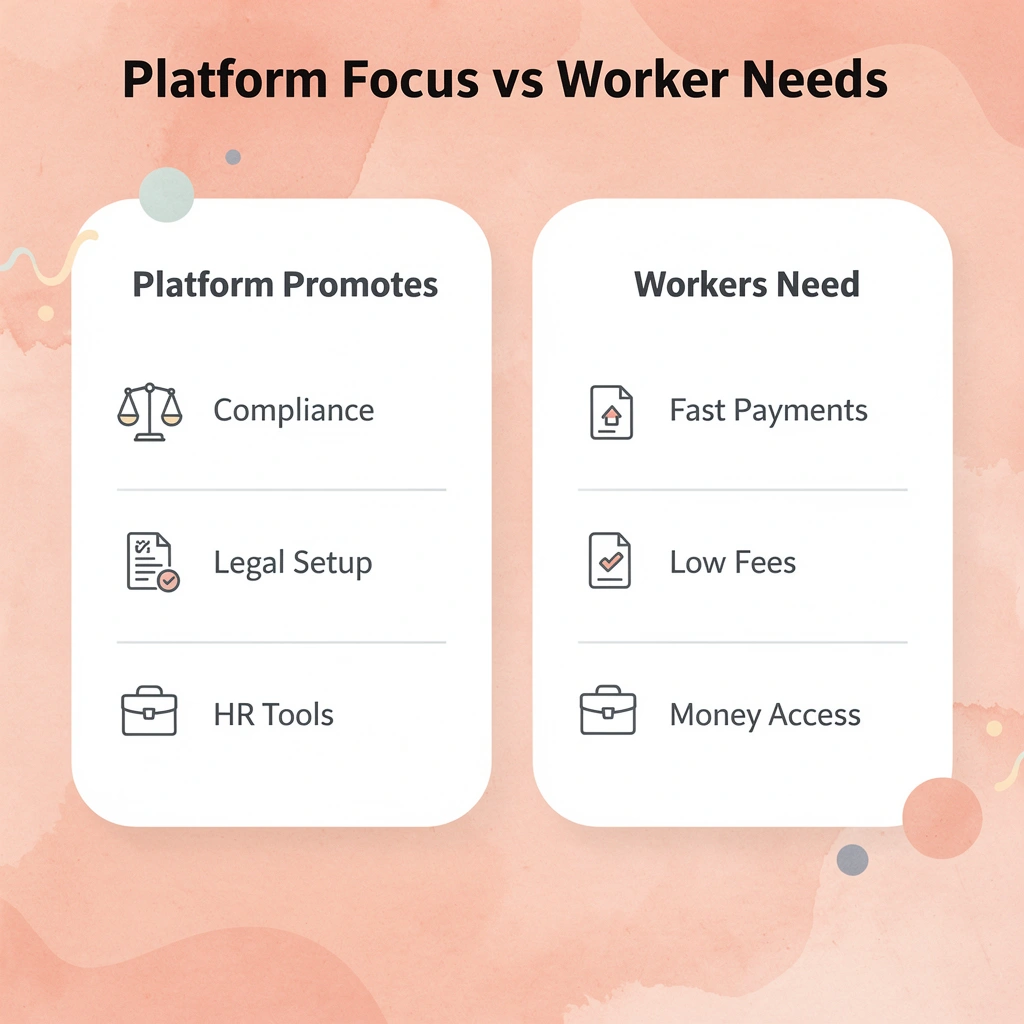
🔑 Takeaway: The best platform isn't the one with the most enterprise features—it's the one that gets money to workers quickly, cheaply, and reliably.
The Gap Between Comparison Content and Real Experience
Typical Deel vs Remote breakdowns compare entity coverage in 150+ countries, EOR legal structures, and HR integrations. Then you sign up, complete a project, and wait five business days for a bank transfer while losing 3% to currency conversion. The comparison omits what you'll experience.
Why do freelancers wait so long for payments?
Jobbers found that 63% of freelancers worldwide wait more than 30 days to get paid. International transfers add one to five business days, depending on intermediary banks and local clearing systems. Your invoice shows "paid" in the client's system, but your account remains empty.
How do currency conversion costs impact regular payments?
Currency conversion costs compound the problem. Most platforms apply conversion spreads between 1% and 4% per transaction. Working with international clients regularly means this becomes a recurring charge on every payment, often overlooked in comparison articles that focus on monthly subscription costs rather than actual money movement.
What Gets Lost in Translation
Comparison content answers questions companies ask when buying products, not what workers experience using them. Can you pay bills straight from the platform, or must you transfer to a local bank first? Does it support multiple currencies without forced conversion? Can you access emergency funds between payment cycles, or are you locked into rigid schedules?
Why does worker experience matter more than compliance features?
These questions matter more than compliance coverage when managing cash flow across time zones. Payroll software treats payment infrastructure as a direct interaction with workers, not merely a backend company function. Platforms offering global accounts, flexible payment timing, and financial tools beyond basic transfers transform the experience from transactional to operational.
What should companies really compare when choosing platforms?
The comparison isn't Deel vs Remote. It's friction vs. flow. That requires examining platforms from the worker's perspective, not the company's.
Related Reading
- Paying Overseas Contractors
- Global Payroll Trends
- Benefits of Automated Payroll System
- International Payroll Compliance
- Global Payroll Best Practices
- How to Pay Overseas Employees
- Global Payroll Strategy
- Cross Border Transaction
- Payroll for Remote Workers
Deel vs Remote: What Workers Actually Get
Payment Timing and Control
Deel offers multiple withdrawal methods, including bank transfers, digital wallets, and cryptocurrency in select regions. Some contractors can withdraw on demand once payment clears, which is valuable when managing expenses across currencies or needing access between billing cycles.
Remote structures payouts around scheduled payroll runs, particularly for workers hired through their Employer of Record service. Contractors submit invoices, but funds move through approval workflows tied to the company's payment calendar rather than being available on demand. One offers control over timing; the other locks you into fixed cycles.
A contractor on Deel might access funds within hours, while Remote prioritizes compliance through set schedules. One suits freelancers with variable income; the other suits employees expecting regular deposits.
Fees, Conversion Spreads, and What You Keep
Deel charges withdrawal fees, foreign exchange spreads, and costs that vary by payout method. A 2% FX spread on a $5,000 payment costs $100. Receiving payments twice monthly across borders adds up to $2,400 annually before withdrawal fees.
Remote work places more costs on employers, but workers still face currency conversion fees when payments cross borders. Payment method limits can force transfers through intermediary banks, adding delays and indirect costs that reduce the amount arriving in your account.
The real cost compounds over time through conversion spreads, transfer delays, and withdrawal restrictions during regular payments. Small differences accumulate quickly when working internationally full-time.
Geographic Reach and Payout Flexibility
Deel enables contractors to get paid in over 150 countries through payment options aligned with local banking systems and regional preferences. This flexibility benefits freelancers working with multiple clients or relocating between countries, particularly where local banking infrastructure is slower or less reliable.
Remote operates globally, focusing on Employer of Record services where workers become formal employees through Remote's local entities. This provides legal protections and benefits but reduces flexibility around fund access. For contractors and digital nomads, rigid employment structures can create friction that compliance benefits don't offset.
For workers managing multiple projects or income sources, payout flexibility often outweighs the formal benefits of employment. Payroll software like Ontop provides global accounts and flexible withdrawal timing, letting workers control when and how they access earnings and reducing the gap between completing work and using their money.
Financial Tools Beyond Basic Transfers
Deel offers the Deel Card in some regions, allowing workers to spend earnings directly without transferring to a local bank first. This proves helpful when managing expenses in multiple currencies or needing immediate access without waiting for international transfers to clear.
How does Remote handle financial tools and benefits?
Remote focuses on employment benefits, such as salary administration, local tax withholding, and statutory protections, rather than on direct financial tools. This suits employees seeking structured benefits and regulatory compliance, but offers less utility to contractors needing flexible access to funds.
Receiving payment solves half the problem. The other half is whether you can use, move, or spend that money without friction, fees, or delays that turn every transaction into a multi-day process.
Even when platforms promise flexibility and speed, most workers hit unexpected obstacles that comparison charts never mention.
Why Most Workers Still Feel Friction Using These Platforms
The Design Problem Nobody Mentions
Even with established platforms like Deel and Remote, many workers encounter friction. These platforms were designed to help companies manage rules, hiring, and payments across borders. Workers are part of that system, but not its center, and this difference manifests in everyday friction.
Where the Experience Breaks Down
Delays are common. Payments tied to payroll cycles or approval workflows create gaps between work completion and the availability of funds. Cross-border payments can take one to five business days to settle, depending on banking systems and intermediaries.
Control is limited. Workers often cannot choose when or how they withdraw funds—options vary by contract type, country, or platform structure, reducing flexibility for freelancers managing cash flow. Foreign exchange fees and payment processing spreads range from 1 percent to 4 percent per transaction, typically embedded in conversion rates rather than listed as transparent fees.
The Fragmentation Tax
According to Asana's Anatomy of Work report, 60% of workers say they spend too much time switching between apps. A worker might receive payment on one platform, move it through another service, handle currency conversions separately, and use a different tool to spend or access funds. Research from TeamViewer shows that 47% of workers say digital friction leaves them frustrated and less satisfied at work.
Most teams handle global payments by layering compliance platforms, banking infrastructure, and worker-facing tools separately. As transaction volume grows and workers span more countries, this stack multiplies the number of touchpoints, slowing approvals, fragmenting visibility, and delaying workers' access to funds.
Payroll software that integrates payment processing with worker financial tools compresses that chain, giving workers global accounts and flexible access without requiring multiple transfers or conversions. Our platform is optimized for companies managing global teams. For workers, especially freelancers and digital nomads, this means navigating systems not designed with their financial needs in mind.
What Workers Should Actually Optimize For
What Gets Measured Gets Missed
The standard checklist approach (supported countries, compliance coverage, integration options) shows what a system can do, not what it feels like to use it. When platforms prioritize buying decisions, workers inherit the resulting problems.
The important shift is moving from "Does this platform support my country?" to "Does this platform support how I actually need to manage money?" This distinction separates platforms built for HR departments from those designed around how workers handle their cash flow.
The Four Pillars That Actually Matter
When you get paid, it matters a great deal. It can help your life run smoothly or cause problems. Some platforms make you wait for paychecks on their schedule, not on yours. If you finish work on the 5th but can't access your earnings until the 30th, that creates hardship. You might struggle to pay rent, meet bill deadlines, or plan your finances.
How do hidden fees impact your actual earnings?
Fee transparency matters more than advertised rates. A platform might charge no monthly fees but embed a 3% spread into every currency conversion. If you're paid $4,000 monthly across borders, that's $1,440 annually lost to conversion costs that never appear as line items. The real cost is what arrives in your account.
Access flexibility changes your entire relationship with earnings. Can you withdraw on demand? Spend directly in multiple currencies? Move money between accounts without conversion fees? These are basic requirements for managing income across borders.
Why does financial infrastructure matter beyond payments?
Financial infrastructure beyond transfers defines whether a platform treats you as a payment recipient or financial participant. According to Worklytics, high-performing teams have 40% more focus time. Workers need the same principle: less time navigating transfers, conversions, and withdrawal restrictions enables more productive work.
Most platforms separate the payment layer from the financial access layer, forcing workers to bridge that gap themselves. Our payroll software at Ontop integrates global accounts directly into the payment flow, eliminating that separation and letting workers receive, hold, and spend across currencies without constant transfers eroding their time and take-home pay.
The platforms that solve this restructure the entire experience around worker control, not company convenience.
Related Reading
- Global Payroll Analytics
- Global Payroll Challenges
- Global Payroll Complexity
- ERP Payroll Software
- Multi Company Payroll Software
- International Payroll Companies
- Employer of Record Service Companies
A Better Way to Evaluate Global Work Platforms
Most comparisons focus on features, but features don't reveal how a platform affects your life. What matters is the outcome: what happens after you finish a job and expect to get paid.
Time to Usable Cash
Start with the time until you have usable cash—not when payment is sent, but when you can access it. In many cross-border setups, payments take one to five business days to clear through banking systems. If you're working consistently but waiting days to access your money, your cash flow becomes unpredictable. The real question: How long from invoice approval to spendable funds?
What You Actually Keep
Look at how much you keep. Fees are rarely shown in one place. Between foreign exchange spreads, withdrawal costs, and intermediaries, workers can lose 1 percent to 4 percent per transaction without realizing it. Over time, these compounds: even a small percentage difference adds up to meaningful annual income loss. Ask not "What are the fees?" but "How much reaches me after everything is deducted?"
What You Can Do With Your Money
Think about what you can do with your money once you receive it. Can you spend it immediately, or move it again? Can you hold multiple currencies, or must you convert right away? Can you transfer funds across countries without restrictions?
Many platforms solve sending money, but not using it. According to ADP Research, which surveyed nearly 35,000 people across 18 countries, workers expect financial tools that integrate with their lives, not rigid systems that dictate how they access earnings.
The Overall Flow
Think about how everything flows together: are you managing one system, or piecing together multiple tools to get paid, convert, and spend? Every extra step increases complexity, consumes more time, and costs more money.
When you look at results instead of brand names or feature lists, the choice becomes easier. You pick based on how fast you get paid, how much you keep, and how easily you can access your money.
But knowing what to measure matters only if platforms are built around those results.
How Ontop Helps Workers Get Paid Faster and Keep More
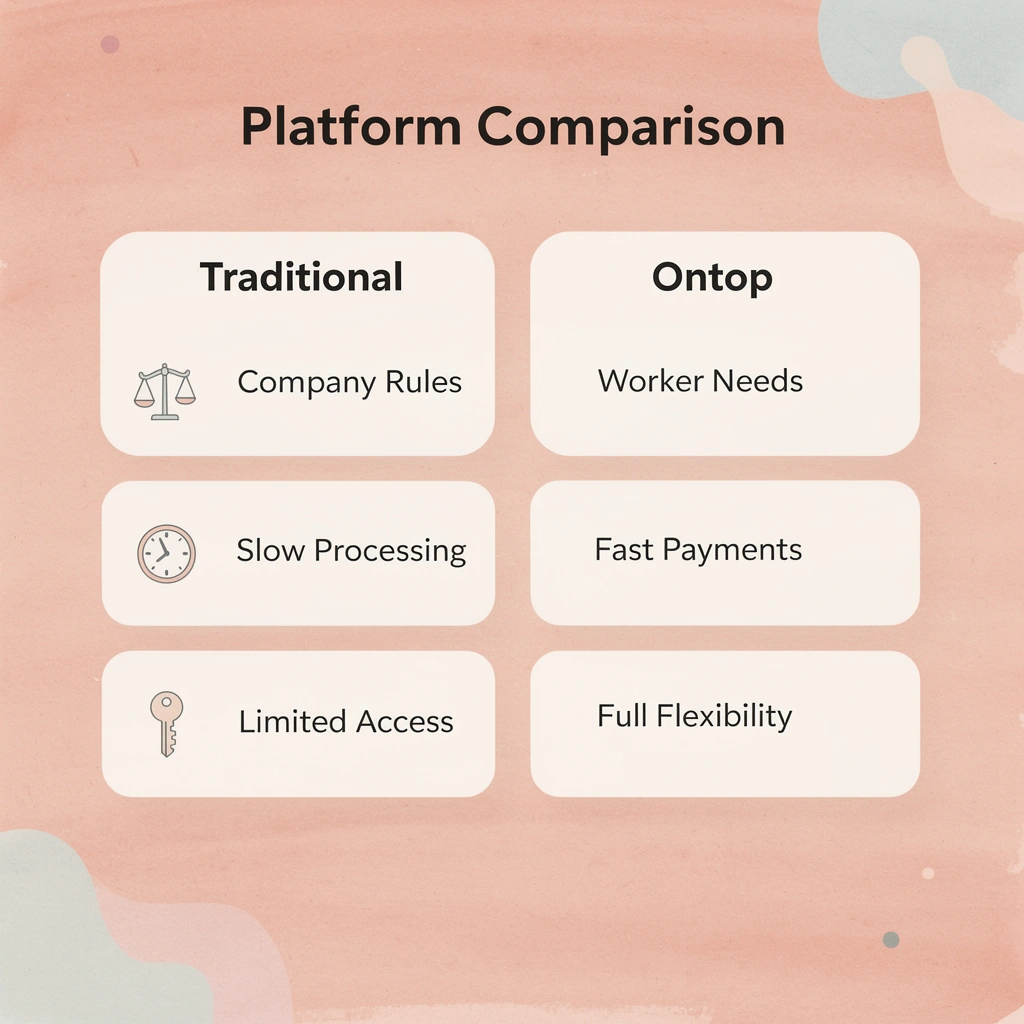
Most global work platforms prioritize company rules over worker needs, deprioritizing speed, flexibility, and access. Ontop takes a different approach by focusing on what happens after you finish your work.

🎯 Key Point: While traditional platforms prioritize corporate compliance over worker experience, Ontop puts payment speed and worker satisfaction at the center of their platform design.
"Payment delays and high fees are the biggest pain points for global workers, with traditional platforms often taking 3-5 business days for transfers." — Global Workforce Payment Study, 2024

- Traditional Platforms — Company-first policies; Slow payment processing; Limited flexibility; Focus on compliance
- Ontop Approach — Worker-first experience; Fast payment delivery; Maximum accessibility; Focus on user needs
💡 Tip: The difference becomes clear when you need your earnings quickly - Ontop's post-work focus means faster access to your hard-earned money without the typical platform delays and excessive fees.
Faster Access to Your Earnings
Ontop processes payments in 24-48 hours, allowing you to access funds quickly after finishing work. This speed improves cash flow and reduces financial stress for freelancers with variable income or digital nomads managing bills across multiple time zones.
Traditional payroll makes you wait for set payment dates regardless of when you finish your work. Ontop removes the waiting period where invoices show "paid" in your client's system, but your account remains empty.
Holding and Managing in USD
With USD accounts, you can receive, hold, and use money in a stable currency without converting it to local currency. This proves especially helpful when working with international clients or relocating between countries. You can convert money on your schedule, reducing the risk of unfavorable exchange rates and unnecessary conversion fees.
This removes a major problem for global workers: the need for multiple tools to manage income. Instead of receiving money, moving it, converting it, and spending it in separate steps, you can access and use it in one simple process.
Spending Without Extra Steps
Ontop gives you a global Visa card, so you can use your earnings for everyday purchases without moving money between different platforms. You get paid faster, have more control, and pay fewer hidden costs.
For freelancers and digital nomads, this matters. When your income comes from work across different countries, quick access to your money is essential. Speed and control only help if the platform works the way you do, not the way companies prefer to pay.
Book a Demo Today - See why 950+ Companies Trust OnTop to Power their Global Teams
Start with Ontop's Quick Start and get access to your USD account and global card within 24 to 48 hours: no traditional payroll delays. When you can use your earnings instead of waiting through approval cycles and bank clearing delays, you stop planning around payment friction and start working on your own terms.

💡 Tip: The 24-48 hour setup time means you can start earning and spending internationally almost immediately, giving you a competitive edge in the global marketplace.
"Over 950 companies use Ontop to power their global teams because speed matters when competing for top talent across borders." — Ontop Client Data, 2024
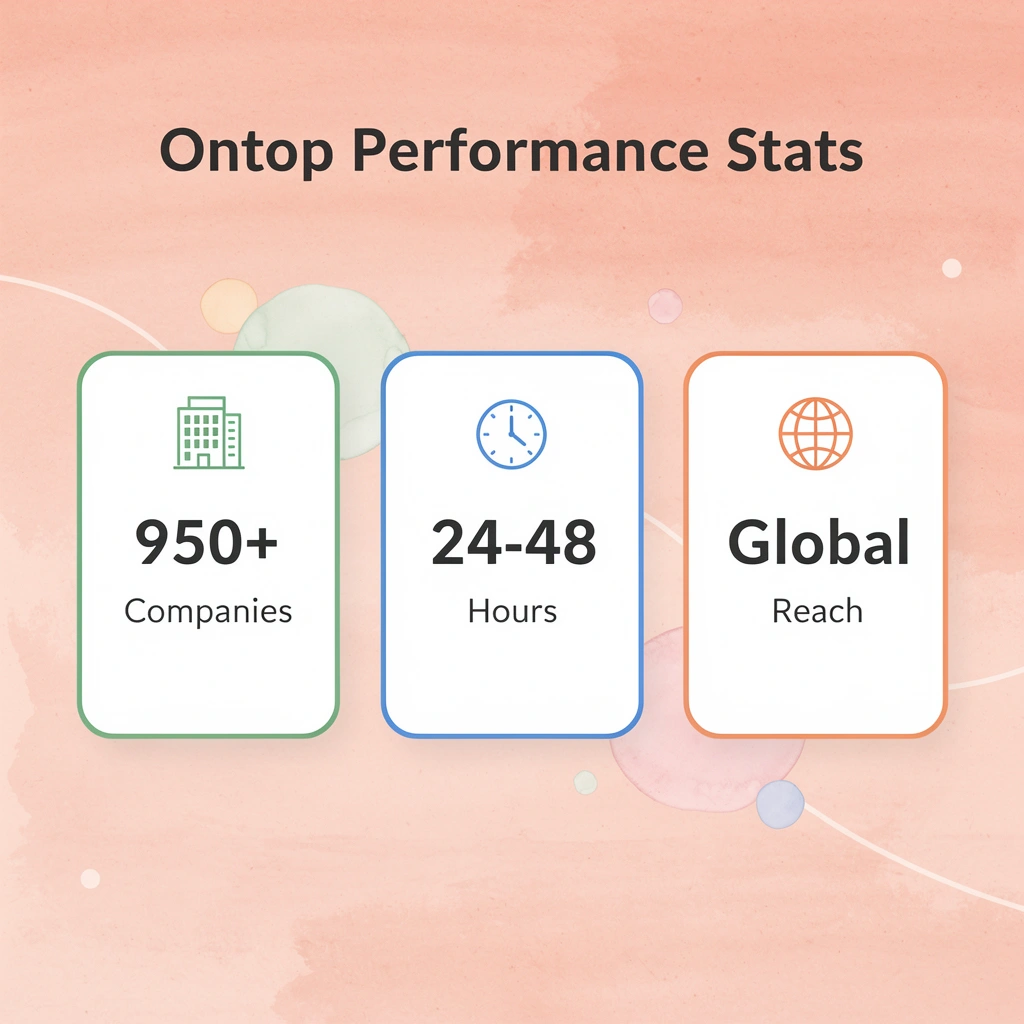
Over 950 companies use Ontop to power their global teams because speed matters when competing for top talent across borders. Book a demo today and see how a platform built around worker experience transforms what's possible when working internationally.
🔑 Takeaway: Don't let payment delays limit your global opportunities—see why nearly 1,000 companies trust Ontop to eliminate the friction between great work and getting paid.

Related Reading
- Papaya Global Alternatives
- Rippling vs. ADP
- Global HR Systems
- Adp Alternatives
- Deel Vs Remote
- Best Multi-Company Payroll Software
- International Payroll Companies
- Oyster Hr Alternatives
- Employer Of Record Service Companies
- Best Multi-country Payroll Softwares
- Deel Alternatives