






US companies can legally hire foreign independent contractors, but the process requires navigating complex international tax laws, contractor classification rules, and varying employment regulations across different countries. Understanding these compliance requirements becomes crucial for avoiding legal pitfalls while accessing global talent. Proper contractor classification, tax documentation, and payment logistics form the foundation of successful international hiring relationships.
Managing cross-border payments and contractor compliance involves juggling multiple currencies, tax forms, and local labor laws that can quickly become overwhelming. Companies need streamlined solutions for handling contractor payments, generating the necessary tax documentation, such as W-8BEN forms, and maintaining proper records to avoid misclassification penalties. Organizations seeking to simplify this process can benefit from comprehensive payroll software that manages international contractor management on a single platform.
Summary
- US companies can legally hire foreign independent contractors, but most failures happen not because the arrangement violates the law, but because both parties misunderstand what compliance actually requires across two jurisdictions. The challenge isn't legality. Its execution across conflicting legal systems, payment infrastructures, and tax obligations that don't align neatly across borders.
- Misclassification creates severe financial exposure that escalates fast. According to research on Germany's enforcement approach, penalties reach up to €60,000 per misclassified worker. State-level penalties in the US can add $5,000 to $25,000 per worker on top of federal obligations. Courts and tax authorities look beyond the contract language to examine the substance of the relationship, and behavioral control, financial independence, and day-to-day work structure determine classification, regardless of what the agreement says.
- Cross-border payment costs average 6.25% of transaction value, according to Forbes analysis from February 2026. That percentage isn't a single fee. It's the combined weight of wire transfer charges, intermediary bank deductions, currency conversion margins, and receiving bank fees. Some costs are visible, but others are buried in exchange rates or deducted silently as payments move through banking chains, creating income loss that contractors never agreed to.
- Form W-8BEN prevents 30% backup withholding on payments, yet many contractors skip this step and lose significant portions of their rate to avoidable tax deductions. The Oncore State of Contracting 2025 survey found that 83% of contractors rated pay rate as very important when evaluating new work, but the form isn't optional paperwork. It's the mechanism that protects actual take-home income from automatic deductions neither party planned for.
- Cross-border payments take an average of 3-5 business days to settle, according to J.P. Morgan's 2025 research. That timeline exists because payments rarely travel directly between accounts but instead route through correspondent banks, each one verifying compliance, checking sanctions lists, and taking a cut before passing the transaction forward. For contractors managing monthly expenses or planning around specific payment dates, that unpredictability creates cash flow problems that compound over time.
- Payroll software addresses this by consolidating transfers, using direct payment rails that bypass multiple intermediaries, and providing transparent currency conversion at rates closer to market benchmarks, while automatically generating jurisdiction-specific tax documentation.
Why This Question Confuses Most Contractors
The confusion starts with a false sense of simplicity. You sign a contract, deliver work, and receive payment—until you discover this sits at the intersection of conflicting legal systems, payment infrastructures, and tax obligations that don't align across borders.

⚠️ Warning: What seems like a straightforward transaction becomes a complex web of compliance requirements that can expose you to legal risks and financial penalties if handled incorrectly.
"Cross-border contractor payments involve navigating multiple jurisdictions with different tax codes, labor laws, and reporting requirements that can create significant compliance challenges." — International Tax Advisory, 2024
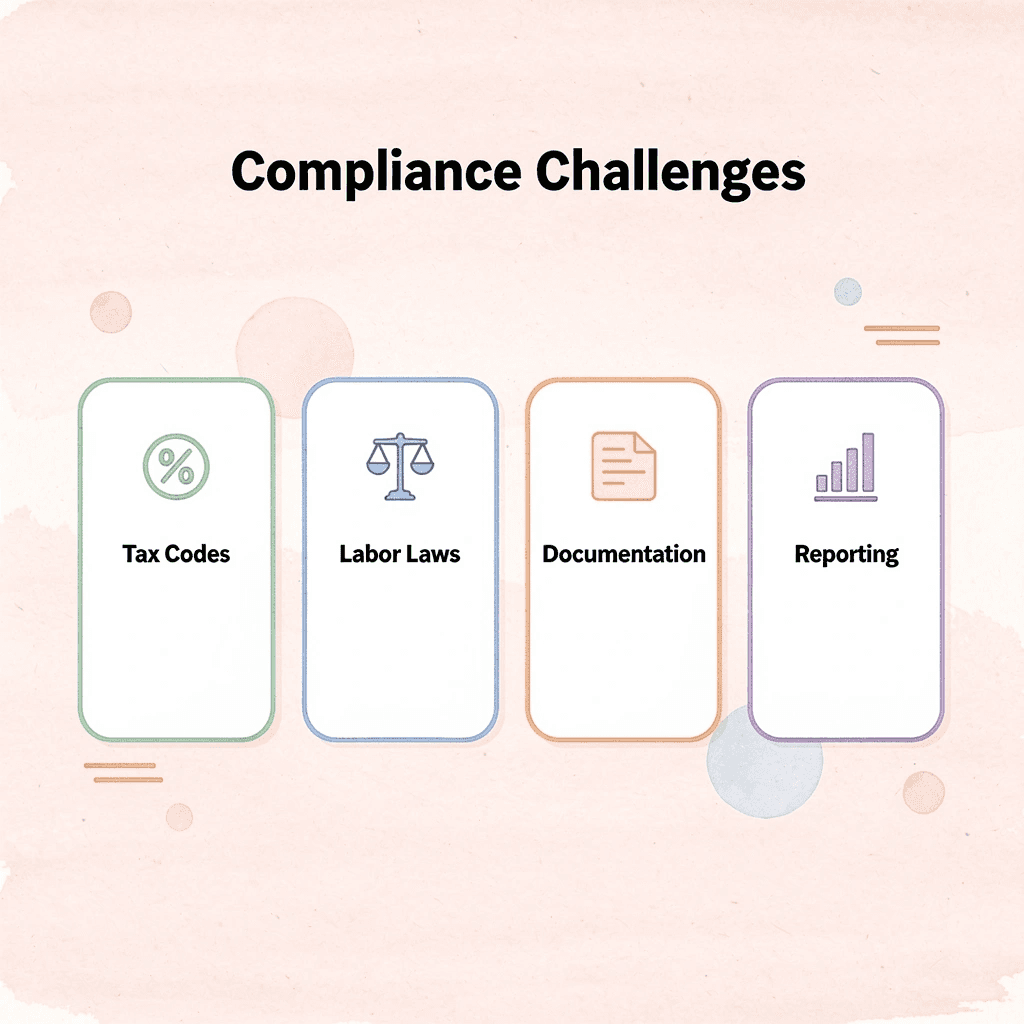
🔑 Takeaway: The real challenge isn't the work itself—it's understanding how different countries classify contractors, handle tax withholding, and require documentation for international payments.
What payment challenges do international contractors actually face?
Cross-border payments present unexpected challenges for most contractors. According to World Bank data from 2024, fees for sending money in certain regions reach 8% to 10% per transaction, significantly exceeding global targets for cost reduction. This extra cost on income adds up when combined with losses from currency conversion and delays lasting several days as payments pass through correspondent banks and compliance checkpoints.
How can visa misunderstandings derail contractor relationships?
A contractor in South Korea faced detention and possible deportation after discovering their work visa didn't cover the specific activities their US employer required. Despite believing everything was properly documented, trust evaporated immediately. This pattern repeats because contractors assume visa approval grants work authorization, when visa types have narrow activity limits that are rarely explained clearly.
What happens when legal systems conflict?
Contracts tie agreements to jurisdiction, creating unresolved ambiguity. A US company operates under American employment law, worker classification rules, and tax reporting requirements. You operate under your country's labor protections, tax obligations, and legal definitions of employment versus independent contracting. When those definitions conflict, which system prevails? Most contracts don't clarify it.
How can payroll software bridge compliance gaps?
Many contractors assume the hiring company handles compliance, tax documentation, and legal protections. Companies often don't—either lacking expertise in your jurisdiction or shifting responsibility to you without making it explicit. Platforms like payroll software address this gap by managing contractor payments, generating required tax forms like W-8BEN, and maintaining documentation that protects both parties from misclassification penalties across different legal systems.
Why do contractors consistently face the same financial challenges
Contractors lose money to unexpected fees and unfavorable exchange rates. Payment delays stem from fragmented cross-border systems with multiple compliance checkpoints, not carelessness. Agreements often lack clarity on jurisdiction, dispute resolution, or conflicts between local and foreign laws. Tax obligations or compliance issues emerge months later, after work is complete and the relationship has ended.
What does the complexity of international work really look like
One contractor described a visa compliance issue: "I start trembling and get short of breath. My trust in the US has been deeply shaken." This reveals a deeper truth: the apparent simplicity of international contractor work masks systemic complexity that most people discover only when something breaks. But knowing why the question confuses people doesn't answer whether it's legal to hire across borders.
Related Reading
- Best International Payroll Software
- Pay International Employees
- How Much Does It Cost To Outsource Payroll
- Global Payroll Implementation
- Benefits Of Hiring Remote Workers
- International Payroll Management
- Multi-Country Payroll Outsourcing
Can a US Company Hire a Foreign Independent Contractor Legally?
Yes. No federal law stops US companies from hiring foreign independent contractors. The relationship is legal when structured properly, with correct classification, compliant paperwork, and clear payment processes that respect both US requirements and the contractor's local rules.

The challenge is actually doing it. Most failures happen because companies and contractors don't understand what following the rules requires across two jurisdictions. Proper compliance demands attention to tax obligations, classification standards, and documentation requirements in both countries.
🎯 Key Point: While hiring foreign contractors is 100% legal, success depends on meticulous compliance with dual-jurisdiction requirements.

"Cross-border contractor relationships fail not because they're illegal, but because compliance complexity across two legal systems creates costly mistakes." — International Employment Law Review, 2023
⚠️ Warning: Misclassification of foreign workers can trigger tax penalties, legal disputes, and compliance audits in both the US and the contractor's home country.

Classification Determines Everything
The contractor must work independently. The IRS evaluates this by examining behavioral control, financial independence, and relationship structure. If the company dictates when the contractor works, provides equipment, or controls work methods rather than focusing on results, the relationship appears to be employment. This creates misclassification risk, regardless of what the contract states. A signed agreement labeling someone an "independent contractor" does not make them independent. What happens in the relationship matters more than the label. A contract describing employee-level control creates risk for both sides.
Documentation Creates Legal Protection
Cross-border arrangements require specific forms that domestic contracts do not. Form W-8BEN confirms the contractor is not subject to US tax withholding. Without it, companies face 30% backup withholding on payments. The form prevents automatic tax deductions that neither party anticipated.
Payment methods have different compliance requirements. Wire transfers, third-party platforms, and direct deposits each carry distinct reporting obligations. According to Deel's October 2023 research, over 35% of the US workforce consists of independent contractors, yet most companies use payment systems designed for domestic employees. This mismatch creates reporting gaps and currency conversion losses that reduce contractor income.
Where Local Law Overrides Agreement
Your country's labor regulations apply even when you work for a US company. Some jurisdictions automatically classify certain work arrangements as employment regardless of what the contract states. Others require mandatory benefits, minimum rates, or protections upon termination that US companies may not anticipate. When local law conflicts with your contract, local law prevails in your jurisdiction.
How can payroll software help manage compliance?
Platforms like payroll software manage contractor payments by creating required tax documents, maintaining compliant records across jurisdictions, and handling currency conversion. Our payroll software reduces administrative burden while creating records that protect against misclassification penalties during regulatory review.
What happens when documentation isn't enough?
But even perfect documentation won't protect you if the underlying structure becomes something more dangerous.
The Biggest Risk: Misclassification
Misclassification occurs when a working relationship functions like a job but is misclassified as independent contracting. The difference depends on what happens day-to-day, not what the contract says. If a US company controls when you work, provides tools, dictates how to do the work, or makes you depend solely on their money to live, you're working as an employee regardless of what the paperwork says.

🚨 Warning: Many companies deliberately misclassify workers to avoid paying employment taxes, benefits, and overtime compensation - shifting these costs directly onto you.
"Worker misclassification costs the U.S. economy billions annually, with independent contractors often losing access to unemployment insurance, workers' compensation, and employer-provided healthcare." — Department of Labor Economic Analysis

💡 Key Point: The IRS and Department of Labor use behavioral control, financial control, and relationship type as the three primary tests to determine your true employment status, regardless of contractual language.
What are the three key control factors the IRS examines?
The IRS examines three main areas: behavioral control, financial control, and relationship type. Behavioral control means the company decides what you must deliver and how you do it—setting your hours, requiring specific software, and monitoring your productivity. Financial control determines whether you can profit or lose money based on your choices, or if you trade time for a fixed rate with no ability to negotiate, hire help, or work with other clients.
How does misclassification affect real contractors?
Teams often report frustration when companies treat them like employees while avoiding employee obligations. One tutor on a platform described it clearly: classified as a 1099 independent contractor, yet the company controlled rates, client access, platform processes, and communication methods. The contractor absorbed unpaid prep time, unpaid messaging, and platform failures while meeting employee-level metrics. This is misclassification dressed in contractor language.
What are the financial penalties for companies?
The financial exposure grows quickly. According to research on Germany's enforcement approach, penalties reach up to €60,000 per misclassified worker. Companies face back taxes, unpaid benefits, overtime calculations, and interest spanning years. State-level penalties in the US can add $5,000 to $25,000 per worker on top of federal obligations.
How does misclassification impact contractors?
For contractors, the damage differs but runs equally deep. You lose access to minimum wage protections, overtime pay, unemployment benefits, and workers' compensation. Tax obligations shift entirely to you, often without the deductions employees receive. When the relationship ends, you have no severance, notice period, or legal recourse for wrongful termination.
Why doesn't contract language protect against misclassification?
A signed agreement stating "independent contractor" creates no protection if the actual relationship contradicts it. Courts and tax authorities examine substance over contract language. Did you set your own schedule? Could you hire subcontractors? Did you market services to other clients? Could you negotiate rates or refuse projects without penalty? If the answers reveal employee-level control, the label fails.
How do payment platforms help with contractor compliance?
Platforms that manage contractor payments can reduce risk by creating compliant tax documents, maintaining state and regional records, and generating audit trails that demonstrate correct worker classification. However, no system can remedy a fundamentally misclassified relationship. The structure must support genuine independence before documentation becomes an issue.
What Contractors Need to Get Right
A clear contract specifies deliverables, timelines, payment terms, and relationship boundaries. Ambiguity creates exposure: undefined scope invites misclassification as employees, and vague payment terms breed disputes. The contract isn't a formality—it's the structure that keeps both parties honest about what independence means.

🎯 Key Point: Your contract is your first line of defense against misclassification—every undefined element becomes a potential liability that could cost you your independent status.
"A well-drafted independent contractor agreement is the most critical document in establishing the legal foundation for true contractor status." — Employment Law Institute, 2024

⚠️ Warning: Contractors who operate without detailed contracts are 3x more likely to face misclassification challenges and payment disputes that can destroy their business relationships.
Tax Documentation Comes First
Submit Form W-8BEN before the first payment clears. This confirms you're not subject to US tax withholding and prevents the 30% backup withholding that catches contractors months into a project. According to Oncore's State of Contracting 2025 survey, 83% of contractors rated pay rate as important when evaluating new work, yet many lose significant portions to avoidable tax withholding because they skipped this step. The form protects your take-home income from automatic deductions neither party planned for.
Payment Structure Determines Real Income
Payments that cross borders come with hidden costs that reduce what you receive. Wire transfers pass through multiple banks, each of which charges fees. Currency conversions happen at rates worse than the market price. Payments can take days or weeks to complete due to multiple compliance checkpoints. These built-in costs lower your effective rate by undisclosed percentages. When choosing a payment method, understand which costs you're accepting and which you can avoid.
What happens when local laws override your contract terms?
Your country's tax obligations, labor protections, and legal definitions apply when working for a US company. Some jurisdictions automatically classify certain arrangements as employment regardless of contract terms, while others mandate benefits or minimum rates that override the agreement. When local law conflicts with your US contract, local enforcement prevails in your jurisdiction, leaving you managing obligations the contract never mentioned.
How can payroll software simplify compliance complexity?
Platforms like payroll software reduce complexity by creating jurisdiction-specific tax documentation, maintaining compliant records across different legal systems, and handling currency conversion transparently. Our payroll solution creates audit trails that protect against misclassification while ensuring predictable payment timing and low fees. The right tools make a proper structure sustainable rather than exhausting.
Independence Requires Proof, Not Just Agreement
You need evidence that you control your work methods, set your own schedule, and maintain multiple client relationships. Document how you make business decisions, negotiate rates, and refuse projects without penalty. If the company dictates your hours, provides all your tools, or makes you economically dependent on their income alone, no contract language will protect you when regulators examine the relationship. The proof must match what the agreement claims, or the classification fails regardless of what both parties intended. But even perfect documentation won't save you from the friction that occurs every time money crosses borders.
Related Reading
- How To Pay a Foreign Contractor
- How to Hire Overseas Contractors
- Benefits Of Hiring Remote Workers
- International Payroll Management
- Best Way To Pay International Contractors
- Benefits Of Hiring International Employees
- Best International Payroll Providers
- B2b Cross-border Payments
Why Payments and Currency Still Create Friction
Even when classification and contracts are set up correctly, getting paid introduces a separate problem. Cross-border payments move through old infrastructure built for bank-to-bank transfers, not the speed and transparency contractors expect. The delays and costs are structural, embedded in systems that prioritize compliance over efficiency.
🎯 Key Point: Traditional banking infrastructure creates unavoidable friction in international contractor payments, regardless of how well your legal setup is structured.

"Cross-border payments move through old infrastructure built for bank-to-bank transfers, not the speed and transparency contractors expect."
⚠️ Warning: Even with perfect contracts and classification, payment delays can still damage contractor relationships and create cash flow issues for your business.
Why do cross-border payments take so long to process?
Cross-border payments take an average of 3-5 business days to settle, according to J.P. Morgan's 2025 research. Your payment passes through correspondent banks, each of which verifies compliance, checks sanctions lists, and deducts a fee before forwarding it onward. Every bank in the middle adds time and creates uncertainty about when money will arrive. For contractors managing monthly costs or planning around specific payment dates, this unpredictability creates cash flow problems.
What makes payment tracking so frustrating for contractors?
The frustration goes beyond waiting: you can't see what's happening. You receive a message confirming your payment was sent, but you cannot track its progress or arrival time. Days go by. The money finally arrives, but it's less than you sent due to undisclosed fees and unexpected exchange rates. You end up with less than expected and no clear explanation of what happened in transit.
How do bank conversion rates impact your actual earnings?
If you get paid in USD but receive money in your local currency, your bank's conversion rate includes an extra charge: sometimes several percentage points above the published market rate. Over a year of monthly payments, these charges accumulate into real income loss. A contractor earning $5,000 per month might lose $200 to $400 annually due to unfavorable exchange rates, a cost that is not included in the contract but reduces effective income.
Why does exchange rate volatility make budgeting difficult?
Exchange rate changes exacerbate this problem in countries with unstable currencies. By the time payment clears and converts, the value has shifted, sometimes in your favor, often not. This uncertainty makes it hard to budget, plan expenses, or understand your actual earning power when the contract amount doesn't match what arrives in your account after uncontrollable deductions and conversions.
What hidden costs affect cross-border contractor payments?
Cross-border payment costs average 6.25% of transaction value, combining wire transfer charges, intermediary bank deductions, currency conversion margins, and receiving bank fees. Some costs are transparent, while others are hidden in exchange rates or deducted quietly as payments move through the banking chain. You agree to $1,000 and receive $937.50: the difference absorbed by infrastructure costs that remain opaque.
How can payroll software reduce payment friction?
Companies managing contractor payments through payroll software reduce friction by combining transfers, using direct payment methods that skip intermediaries, and offering currency conversion at market-competitive rates. Our payroll software makes costs clear and predictable rather than revealing them after payment. But understanding why payments create friction doesn't solve the problem if you're already stuck in a broken system.
How Ontop Helps You Work with US Companies Without the Friction
Most challenges in working with US companies emerge after you start: contract structure, payment movement, and compliance across two legal systems that don't communicate. This gap creates delayed payments, unexpected tax obligations, and legal uncertainty months into a relationship.

💡 Tip: The biggest friction points happen post-contract, not during negotiations. Plan for compliance and payment logistics before you start work.
"Cross-border contractor relationships fail most often due to payment delays and compliance gaps, not project delivery issues." — Remote Work Research, 2024

Ontop closes that gap by bringing together what was spread across multiple platforms and manual processes. Contracts, payments, and compliance documentation work within a single workflow designed for cross-border contractor relationships.
🔑 Takeaway: Consolidating your contractor workflow eliminates the scattered approach that creates delays and compliance risks.

Traditional Approach
Ontop Solution
Multiple platforms for contracts, payments, and compliance
Single integrated workflow
Manual payment tracking across systems
Automated payment processing
Separate compliance management
Built-in compliance documentation
Compliant Contracts From the Start
You work under agreements that meet both US requirements and your local area's labor rules. The contract specifies the work to be performed, payment terms, and your degree of independence in a way that aligns with how regulators in both countries view the relationship. This reduces the risk of misclassification and protects both parties from the outset.
Faster, Predictable Payments
According to Ontop's FAQ, most companies run their first payroll in minutes after signing up. Our platform bypasses correspondent banking chains through direct rails that reduce middleman touchpoints, cutting settlement time from days to hours and making costs transparent up front. You also get access to USD accounts, giving you control over currency conversion. Instead of automatic conversion at your bank's rate with hidden margins, you hold earnings in USD and convert only when favorable exchange rates or immediate needs arise. A global Visa card makes those funds immediately usable without additional conversion steps.
Jurisdiction-Specific Tax Documentation
The platform automatically generates the required forms, such as W-8BEN, to protect you from 30% backup withholding, which reduces your income. It maintains compliant records across different legal systems and creates audit trails that protect against misclassification penalties during regulatory review. Compliance occurs as part of income receipt rather than as a separate task.
Transparency That Eliminates Surprises
You see exactly what you're paid, what gets deducted, and how currency conversion affects your final amount. No hidden fees from middlemen were discovered weeks later. No unexplained reductions between what the company sent and what you received.
Why does predictable income matter for international contractors
This predictability lets you budget accurately rather than adjusting expectations monthly based on variable deductions. For contractors operating across more than 150 countries, that transparency becomes the difference between sustainable income and constant financial uncertainty. The result is a setup where your income is protected, accessible, and aligned with how global work operates, removing the friction that makes cross-border contracting feel unnecessarily risky.
Related Reading
- Best Payroll Software For Staffing Companies
- Best Payroll Outsourcing Companies
- Deel Vs Oyster
- Best International Payroll Software
- Best Payroll For Contractors
- Remote Competitors
- Velocity Global Competitor
- ADP Alternative
Book a demo today: see how Ontop powers global teams in 150+ countries
The biggest risk in working with US companies isn't the opportunity—it's the structure. Choose a system where compliance, payments, and documentation work together from the start, not patched together after problems arise.

🎯 Key Point: Getting the structure right from day one is essential for sustainable cross-border income and avoiding costly compliance issues down the road.
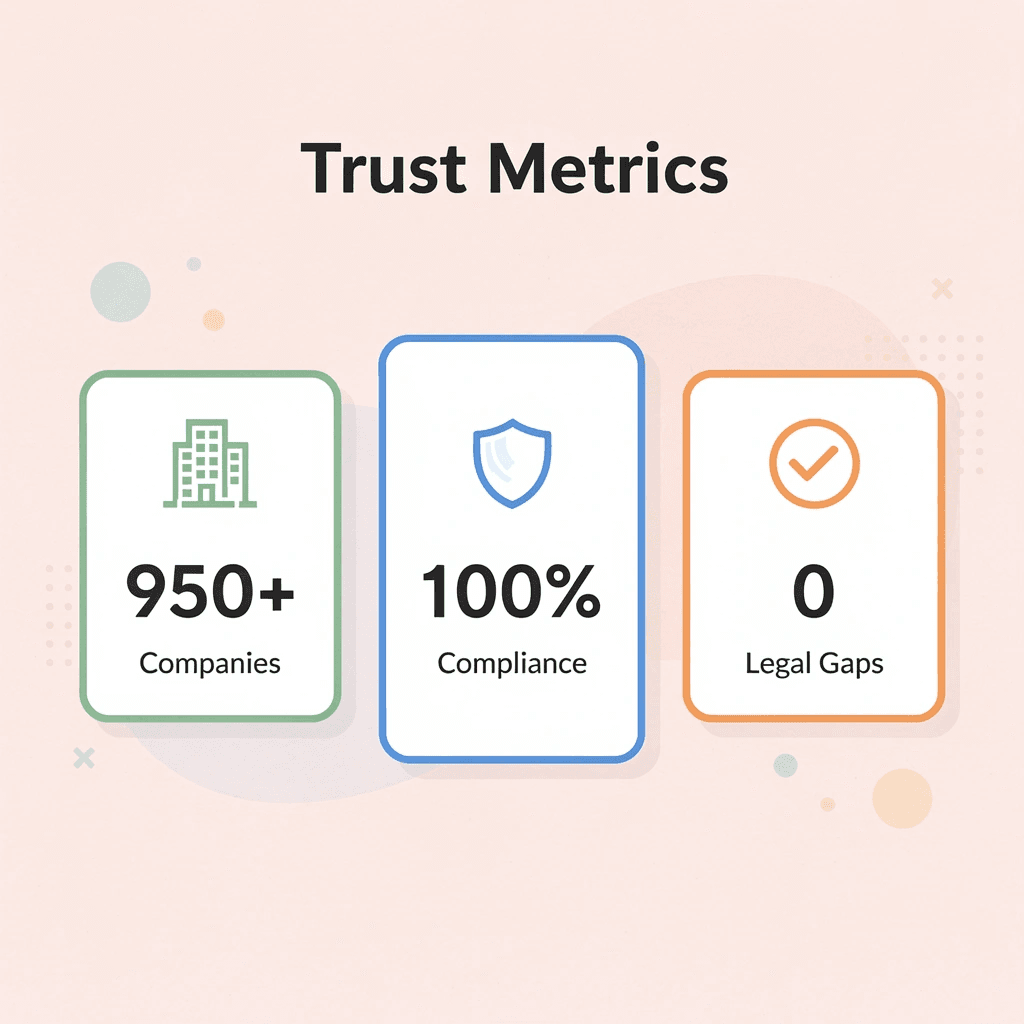
"Teams in 150+ countries trust OnTop to power their global teams, proving that the right structure makes all the difference in cross-border employment success." — OnTop Client Data, 2024

Open your Ontop account and get onboarded in minutes. In your first session, you'll see exactly how your contract, payments, and compliance are handled, enabling you to work with US companies confidently without worrying about delays or legal gaps. Sustainable cross-border income depends on getting the structure right from the start.
What You Get
Timeline
Benefit
Contract Setup
Minutes
Legal protection from day one
Payment Processing
Automated
No delays or currency issues
Compliance Management
Ongoing
Zero legal gaps or risks
💡 Tip: Don't wait until you have compliance issues or payment delays to fix your structure: an Ontop account ensures everything works seamlessly from your first project with US companies.


