





%20(1).jpeg)
Managing payroll across borders presents real challenges for companies with international teams. Multiple currencies, tax regulations, and compliance requirements in different countries create complexity that grows with each new hire. Finding the best international payroll software becomes essential for companies scaling remote workforces or managing contractors across continents. Understanding global payroll outsourcing can save time, reduce errors, and ensure compliance with local labor laws.
Companies need unified platforms that handle contractor payments, employee salaries, tax withholdings, and benefits administration across multiple jurisdictions. Manual calculations and separate systems for each country create unnecessary complications and increase the risk of costly mistakes. Modern solutions handle currency conversions, local tax compliance, and payment processing automatically. Teams looking to streamline international payments and compliance management should consider comprehensive payroll software that eliminates these operational headaches.
Table of Contents
- Why Global Payroll Becomes a Bottleneck as Companies Expand Internationally
- What Global Payroll Outsourcing Actually Includes
- The Hidden Costs of Managing Global Payroll Internally
- What to Look for in a Global Payroll Outsourcing Partner
- Why Centralized Global Payroll Creates Operational Leverage
- How Ontop Helps Companies Simplify Global Payroll Outsourcing
- Book a Demo Today - See why 950+ Companies Trust OnTop to Power their Global Teams
Summary
- Companies managing payroll across 160 countries face operational chaos that grows exponentially, not linearly, with each new market. What works for one contractor in Argentina collapses when scaling to ten workers across seven countries, as fragmented payment systems create unpredictable delays and hidden fees that can reduce a contractor's effective income by 8% without warning.
- Businesses spend up to 30% more on payroll management than necessary due to hidden costs that never appear on invoices. Research shows 25% of payroll teams' time gets consumed by manual data reconciliation alone, which translates to more than one full day each week spent fixing problems that automated systems could prevent entirely.
- Payment errors plague nearly half of all organizations, with 49% reporting payroll mistakes, primarily due to currency conversion issues and fragmented payment systems. Workers in Colombia shouldn't need three separate accounts to receive USD payments, convert to local currency for rent, and hold EUR for a European client, yet disconnected infrastructure forces exactly this kind of coordination tax.
- Centralized payroll systems deliver up to 80% reduction in vendor management time after companies consolidate global operations. The real efficiency comes not from faster transactions but from eliminating decision fatigue entirely, because adding the 51st contractor takes roughly the same effort as adding the 11th when onboarding workflows and payment rails are already standardized.
- Over 70% of organizations now prioritize compliance automation in their global payroll systems, signaling a fundamental shift toward infrastructure that removes regulatory burden from individual workers. Tax documentation, contract generation, and adherence to local labor laws should be embedded in the platform rather than researched separately for each new hire.
- Remote work models will be maintained or expanded by 74% of organizations in 2025, making reliable payment infrastructure the default, not the exception. Payroll software addresses this by centralizing contractor payments, compliance workflows, and multi-currency financial tools across 150+ countries through a single interface.
Why Global Payroll Becomes a Bottleneck as Companies Expand Internationally
Companies hiring their first contractor in Argentina or a designer in Poland rarely expect what happens next. The first payment goes through, usually by wire transfer or PayPal, and everything feels manageable. But when that same company grows to ten contractors across seven countries, the payment system that worked for one person breaks down because of multiple currencies, tax systems, and compliance requirements. This becomes a weekly job, consuming finance team hours and creating friction on both sides of the employment relationship.

🎯 Key Point: What starts as a simple one-off payment quickly transforms into a complex multi-country payroll operation that can consume hours of finance team time every week.
"The payment system that worked for one person breaks down when companies scale to multiple contractors across different countries due to varying currencies, tax systems, and compliance requirements."

⚠️ Warning: Companies often underestimate how quickly payroll complexity scales from manageable to overwhelming as they add international contractors across different jurisdictions.
When payment infrastructure fragments across borders
A contractor in Brazil waits five business days for a wire transfer while someone in the Philippines receives payment through a different system. Currency conversion happens at unpredictable rates, and intermediary banking fees appear without warning. According to HRMorning, companies manage payroll across 160 countries, each with distinct regulatory requirements and payment norms. Disconnected systems and manual processes create operational chaos when coordinating these payments.
How do payment delays and poor exchange rates affect worker loyalty?
The real cost extends beyond money to the loss of trust when workers cannot predict payment timing or amounts after fees and conversions are applied. A talented developer in Ukraine might accept a contract at a competitive rate, only to discover that payment delays and poor exchange rates reduce their effective income by 8%. Such experiences undermine loyalty and long-term commitment.
Compliance complexity multiplies faster than headcount
Tax withholding requirements vary significantly by location. Contractor classification rules differ between Canada and Germany, and misclassification can trigger legal consequences beyond fines. Companies must process invoices in multiple formats, track different fiscal year calendars, and maintain records for regulators in countries where they lack physical offices. Compliance complexity increases substantially with each new market entered.
Why do traditional finance teams struggle with international payroll?
Most finance teams weren't built for this. They're equipped for domestic payroll with familiar rules. Adding international complexity without changing processes means someone manually tracks exchange rates, calculates withholdings across unfamiliar tax codes, and troubleshoots payment failures across time zones—a system that breaks when companies scale rapidly.
How do specialized platforms solve global payroll challenges?
Platforms like payroll software consolidate contractor payments across multiple countries. Our payroll software handles currency conversion, local regulations, and payment processing in one place. Companies gain visibility into all global workforce payments while contractors receive payment through locally available methods. This streamlines international hiring.
What Global Payroll Outsourcing Actually Includes
Global payroll outsourcing means delegating payment of international workers to a specialized provider or platform. Rather than managing contracts, compliance, payments, and tax documentation across dozens of countries through disconnected systems, companies use a centralized solution that handles these workflows end-to-end. For workers, this affects how fast they get onboarded, how reliably they get paid, and how much administrative friction they encounter.

🎯 Key Point: A global payroll outsourcing provider acts as your single point of contact for managing international workforce payments, eliminating the need to navigate multiple country-specific systems and compliance requirements independently.
"Global payroll outsourcing transforms complex multi-country payment processes into a streamlined operation, reducing administrative burden by up to 70% for companies with international teams." — Global Workforce Management Report, 2024
Timeline
- 2-3 weeks
- 4-8 weeks
- 10+ weeks
Outcome
- Rushed preparation, shallow responses
- Optimal balance, thorough practice
- Diminishing returns, lost momentum
Best For
- Emergency situations only
- Most applicants
- Not recommended
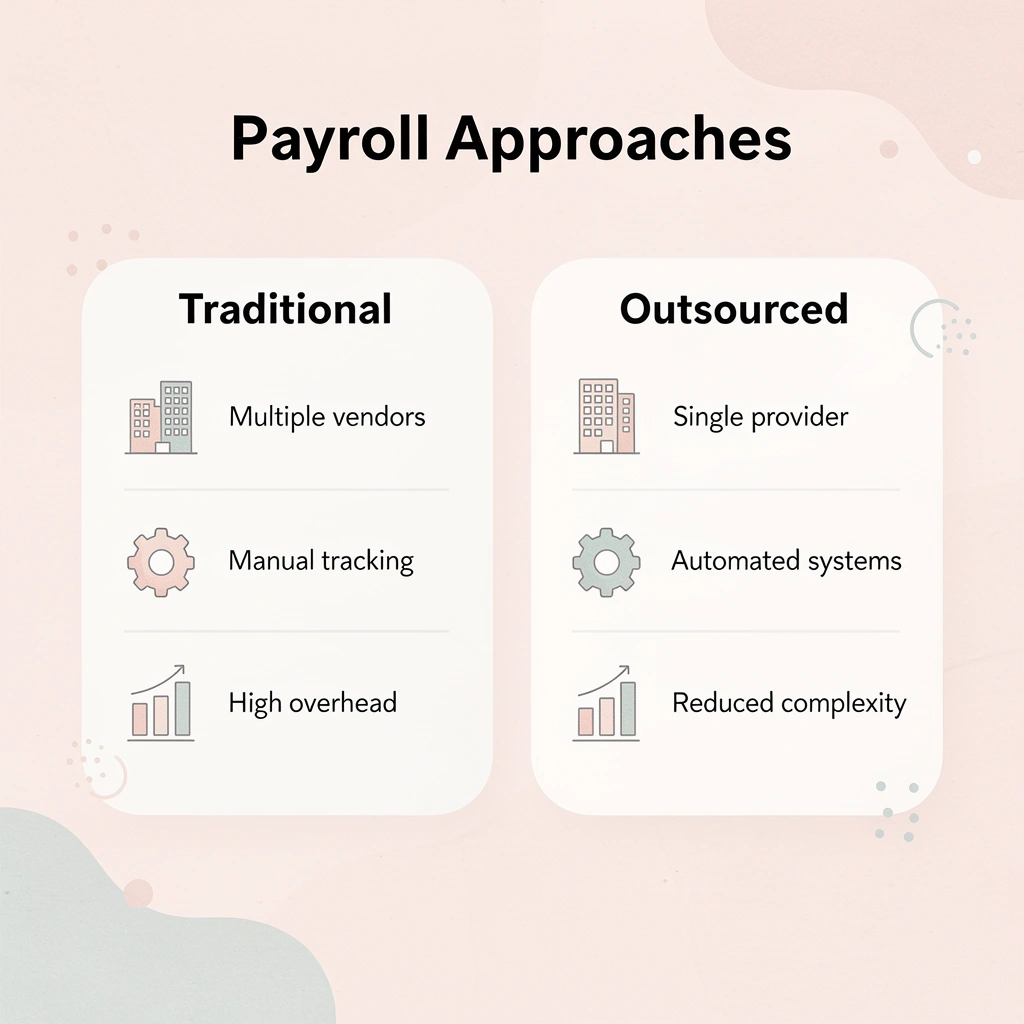
💡 Tip: When evaluating global payroll providers, focus on their coverage of your target markets and their ability to handle local tax requirements without requiring you to become an expert in international employment law.
What the infrastructure actually manages
The system handles contractor onboarding (identity verification, contract generation, payment method setup), processes cross-border payments with currency conversion and tax documentation, and provides workers with earnings tracking, faster access to funds, and multi-currency expense management.
Classification matters significantly. Companies can hire people internationally as direct employees, independent contractors, or through an Employer of Record model, each of which determines tax responsibility, benefits, and onboarding speed. A contractor in Mexico using a fragmented system might wait two weeks for payment and lose 5% to conversion fees, while a structured platform like Ontop delivers payment within 48 hours at transparent rates.
How does payment reliability affect remote work sustainability?
Payment reliability directly affects whether remote work feels sustainable or chaotic. Workers managing income across multiple clients and currencies often face inconsistent payout timing, unexpected fees, and scattered documentation that complicates tax season. According to Emapta Global, the global payroll outsourcing market is expected to reach $9.4 billion by 2026, reflecting how many companies now recognise that payment infrastructure is critical.
Why does onboarding speed depend on payroll systems?
How fast you can bring someone onto your team depends on your payroll systems. A company without an organized global payroll system might need three weeks to prepare contracts, verify banking details, and organize compliance documentation for a new hire in Argentina. Platforms like Ontop that consolidate these workflows can reduce that time to a few days: workers start earning sooner, and companies fill open positions before competitors.
How are contractor-first models changing international hiring?
Traditional EOR solutions promised to solve these problems but often created new ones: high fees, slow approval processes, and rigid employment structures. The shift toward contractor-first models reflects a simpler truth: most international work doesn't require full employment infrastructure. Platforms like payroll software now let companies hire contractors directly across 150+ countries, while global accounts help workers receive, spend, and manage their earnings, eliminating EOR costs without sacrificing compliance or payment reliability.
But what companies save by outsourcing payroll often gets spent elsewhere in unexpected ways.
Related Reading
- Best International Payroll Software
- Pay International Employees
- How Much Does It Cost To Outsource Payroll
- Global Payroll Implementation
- Benefits Of Hiring Remote Workers
- International Payroll Management
- Multi-Country Payroll Outsourcing
The Hidden Costs of Managing Global Payroll Internally
Companies that manage international payroll manually often spend more than they realize. Research from Lano shows that businesses can spend up to 30% more on payroll management because of hidden costs that don't appear on bills. These include the hours finance teams spend fixing mistakes, delays from missed compliance deadlines, and worker trust issues from inconsistent payments.
"Businesses can spend up to 30% more on payroll management than they need to because of hidden costs that don't show up on bills." — Lano Research
🔑 Key Takeaway: The true cost of manual payroll management extends beyond software fees to include staff time, compliance risks, and employee satisfaction issues that drain resources.
⚠️ Warning: These hidden expenses often go untracked by finance teams, making it difficult to calculate the real ROI of payroll automation solutions.

What causes coordination overhead in global payroll?
When payroll operates across multiple countries using separate banks, local vendors, and disconnected spreadsheets, someone must manually coordinate every step. A finance manager in San Francisco might spend Tuesday morning verifying contractor details with a German vendor, Wednesday afternoon reconciling currency conversions for Brazilian payments, and Thursday chasing down tax documentation from a Vietnamese freelancer.
According to Applic8's analysis, 25% of payroll teams' time is consumed by manual data reconciliation alone: more than one full day each week spent fixing what automated systems could prevent.
How does complexity increase with each new country?
The coordination burden grows exponentially with each new country. Every added jurisdiction introduces new banking relationships, compliance requirements, currency considerations, and vendor communications.
Teams find themselves building internal expertise in payment infrastructure rather than focusing on strategic finance work.
What are the hidden costs of misclassification penalties?
Misclassification penalties create hidden expenses. When companies hire international contractors but structure relationships that resemble employment, local tax authorities may reclassify those workers retroactively. Financial consequences include back taxes, penalties, and mandatory benefits payments spanning multiple years. A contractor in France working exclusively for one company under detailed direction might trigger employer obligations the hiring company never anticipated.
Why do compliance risks intensify without local expertise?
These risks worsen when internal teams lack location-specific expertise. Employment law varies significantly between countries: what qualifies as independent contractor status in the United States differs from requirements in Spain, Australia, or Singapore. Companies managing this internally often discover legal problems only during audits.
How does payment unpredictability affect worker wellbeing?
Money problems that are hard to predict create stress that affects whether contractors stay and how well they work. When contractors cannot reliably predict when they will get paid or how much they will receive after fees and conversions, they question whether the relationship provides real stability. A developer in Argentina might receive $4,800 one month and $4,510 the next for identical work, purely due to fluctuating exchange rates and inconsistent fee structures. That $290 variance represents nearly a week's groceries for the person receiving it.
Contractors spend time chasing payment confirmations, clarifying invoice discrepancies, or trying to understand why transfers took eleven days instead of the promised five. This administrative burden, though absent from company cost analyses, degrades the working relationship incrementally. Over months, it accumulates into disengagement or attrition.
What solutions address payment consistency issues?
Platforms like payroll software solve this problem by providing workers with global accounts that receive regular payments, convert currency transparently, and eliminate the coordination required to create unpredictability. Our payroll solution reduces internal workload for companies while giving contractors financial tools that work across borders.
But even when payment systems improve, choosing the wrong partner can reintroduce the problems you're trying to fix.
Related Reading
- How To Pay a Foreign Contractor
- How to Hire Overseas Contractors
- Benefits Of Hiring Remote Workers
- International Payroll Management
- Best Way To Pay International Contractors
- Benefits Of Hiring International Employees
- Best International Payroll Providers
- B2b Cross-border Payments
What to Look for in a Global Payroll Outsourcing Partner
Workers think about opportunities differently when they know that payment systems will either help or hurt their financial lives. A contractor in Buenos Aires wants assurance that her payment will arrive on Thursday, convert at a clear rate, and go into an account she can access without losing 6% to withdrawal fees. The platform matters as much as the project.

🎯 Key Point: Payment reliability and transparency directly impact global talent acquisition and retention rates.
"Workers prioritize payment platforms as much as project opportunities, with 6% withdrawal fees significantly affecting contractor decision-making." — Mordor Intelligence, 2024

🔑 Takeaway: Your global payroll partner must offer transparent fee structures and reliable payment schedules to attract and retain top international talent.
Payment Speed and Transparency
Fast payouts matter when managing expenses across multiple currencies and countries. Digital nomads working from Bali while invoicing clients in London need to know exactly when funds will arrive and what exchange rate applies. Platforms that batch payments weekly or hide conversion fees behind "market rates" create cash flow gaps that force workers into expensive bridge loans or credit card debt. Choose systems that commit to specific payout windows (24–48 hours is standard for modern infrastructure) and display exchange rates before transaction confirmation.
Multi-Currency Support and Financial Flexibility
According to BIPO's 2025 global payroll research, 49% of organizations report payroll errors, many stemming from currency conversion mistakes and fragmented payment systems. A developer in Colombia shouldn't need three separate accounts to receive USD payments, convert to local currency for rent, and hold EUR for a European client. Platforms with global accounts and built-in multi-currency wallets eliminate this coordination overhead. You need infrastructure that lets you hold, convert, and spend in the currencies you use, not systems that force unnecessary conversions each time money moves.
Contract Clarity and Compliance Documentation
Reliable contracts protect both parties, but only when they're enforceable across borders. Unclear terms regarding payment schedules, scope changes, or termination clauses lead to disputes that workers rarely win. The best platforms create contracts that comply with local labor laws while clearly defining deliverables, payment terms, and dispute-resolution processes. Tax documentation should be automatic (W-8BEN for US clients, local tax certificates for other regions) rather than chased down each quarter. When ISG's 2025 Global Payroll Buyers Guide notes that over 70% of organizations are prioritizing compliance automation in their global payroll systems, it signals that companies serious about international hiring are moving toward infrastructure that removes compliance burden from individual workers.
Worker Experience as a Retention Signal
Companies that invest in smooth contractor experiences demonstrate their commitment to their distributed workforce. Platforms like payroll software offer global accounts with financial tools—savings features, spending cards, and transparent currency conversion—that help contractors manage income across borders. When a company chooses infrastructure that treats contractors as partners rather than vendors, it shows in retention rates and talent quality.
Fast payments and good contracts matter only if the entire system creates leverage rather than solving individual transactions.
Why Centralized Global Payroll Creates Operational Leverage
A centralized global payroll system creates leverage by converting fragmented workflows into repeatable systems that scale without adding proportional overhead. Consolidating contractor payments, compliance documentation, and financial tools into a single infrastructure eliminates the complexity of managing multiple vendors, currencies, and regulatory frameworks.
🎯 Key Point: The power of centralization lies in transforming linear scaling problems into logarithmic efficiency gains - where adding 100 contractors requires the same operational effort as adding 10 contractors.

"Companies with centralized payroll systems report 40% faster payment processing and 60% fewer compliance errors compared to fragmented approaches." — Global Workforce Management Study, 2024
⚠️ Warning: Without centralized systems, each new market or contractor type creates multiplicative complexity - what starts as a simple payment process quickly becomes an unmanageable web of vendor relationships, compliance requirements, and manual workflows.
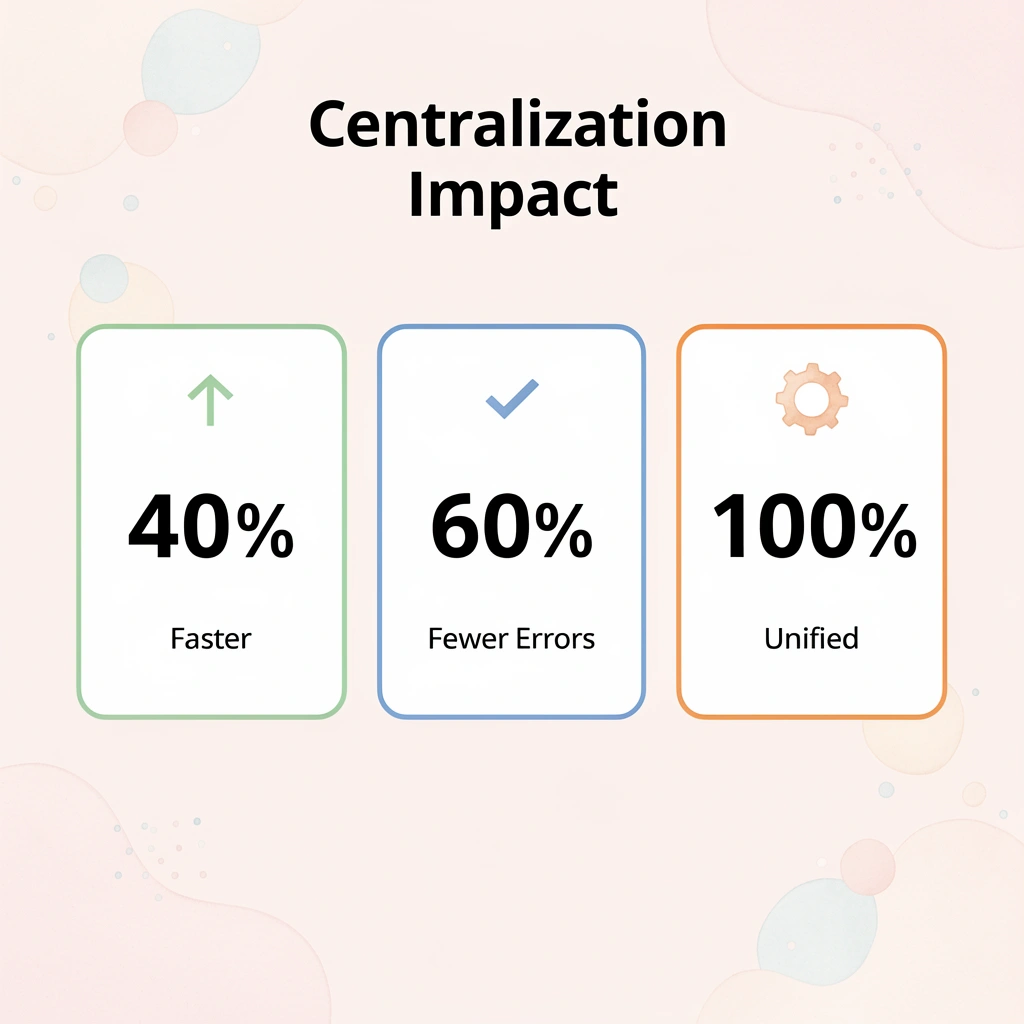
How much time does centralized payroll save companies?
Deel's 2024 research on centralized payroll systems found that companies can reduce vendor management time by up to 80% after consolidation. This matters because vendor coordination is pure overhead: every hour spent reconciling payment differences between a Polish contractor's bank, a Brazilian currency exchange provider, and internal accounting is an hour not spent improving product, supporting customers, or growing revenue.
Operational capacity compounds differently
Centralized systems save time and expand what becomes possible as teams grow. A company managing 10 contractors across three countries can handle fragmented systems through effort. At 50 contractors across 15 countries, manual coordination fails: finance teams miss payment deadlines, compliance gaps emerge, and contractors face unpredictable delays that erode trust.
Centralized infrastructure flips that dynamic. Adding the 51st contractor takes roughly the same effort as adding the 11th because onboarding workflows, payment systems, and compliance documentation are already standardized. The system absorbs complexity instead of multiplying it: that's operational leverage, where output grows faster than input.
Where efficiency actually comes from
Most teams equate efficiency with faster transactions. Real efficiency comes from eliminating decision fatigue and coordination overhead entirely. When a Mexico City contractor joins, finance teams shouldn't need to research local tax documentation, negotiate currency conversion rates, or coordinate with multiple vendors to set up payment methods. Those decisions should be built into the infrastructure.
Platforms like payroll software streamline contractor onboarding, cross-border payments, and compliance workflows across 150+ countries, eliminating manual vendor coordination and regulatory research for each hire. Our payroll solution lets teams set up payment parameters once and reuse them across regions without rebuilding processes.
How does centralized payroll reveal hidden costs?
A centralized payroll system reveals data that fragmented systems hide. When contractor payments flow through multiple banks, currency exchanges, and regional vendors, companies lose sight of true labor costs. Our payroll software consolidates these payments into one platform, providing complete visibility into your actual spending.
A developer in Vietnam might seem cheaper than one in Portugal until you factor in transfer fees, currency conversion spreads, delayed payment penalties, and administrative overhead.
What strategic advantages does unified cost visibility create?
Unified systems make the total cost of employment clear and transparent. Finance teams can accurately compare contractor costs across regions, identify where fees drain budgets, and make informed hiring decisions based on complete financial data rather than partial snapshots.
But infrastructure only creates leverage if it changes how companies think about building distributed teams.
How Ontop Helps Companies Simplify Global Payroll Outsourcing
Infrastructure that works changes how companies think about hiring internationally. When payment systems, compliance workflows, and contractor management no longer require manual coordination across fragmented tools, the strategic question shifts from "Can we afford to expand globally?" to "Where should we grow next?" This removes infrastructure anxiety from hiring decisions.

🎯 Key Point: Ontop's unified platform eliminates the traditional barriers that make global payroll outsourcing complex and expensive for growing companies.
"When payment systems and compliance workflows stop requiring manual coordination, companies can focus on strategic growth rather than operational complexity." — Global Workforce Management Study, 2024
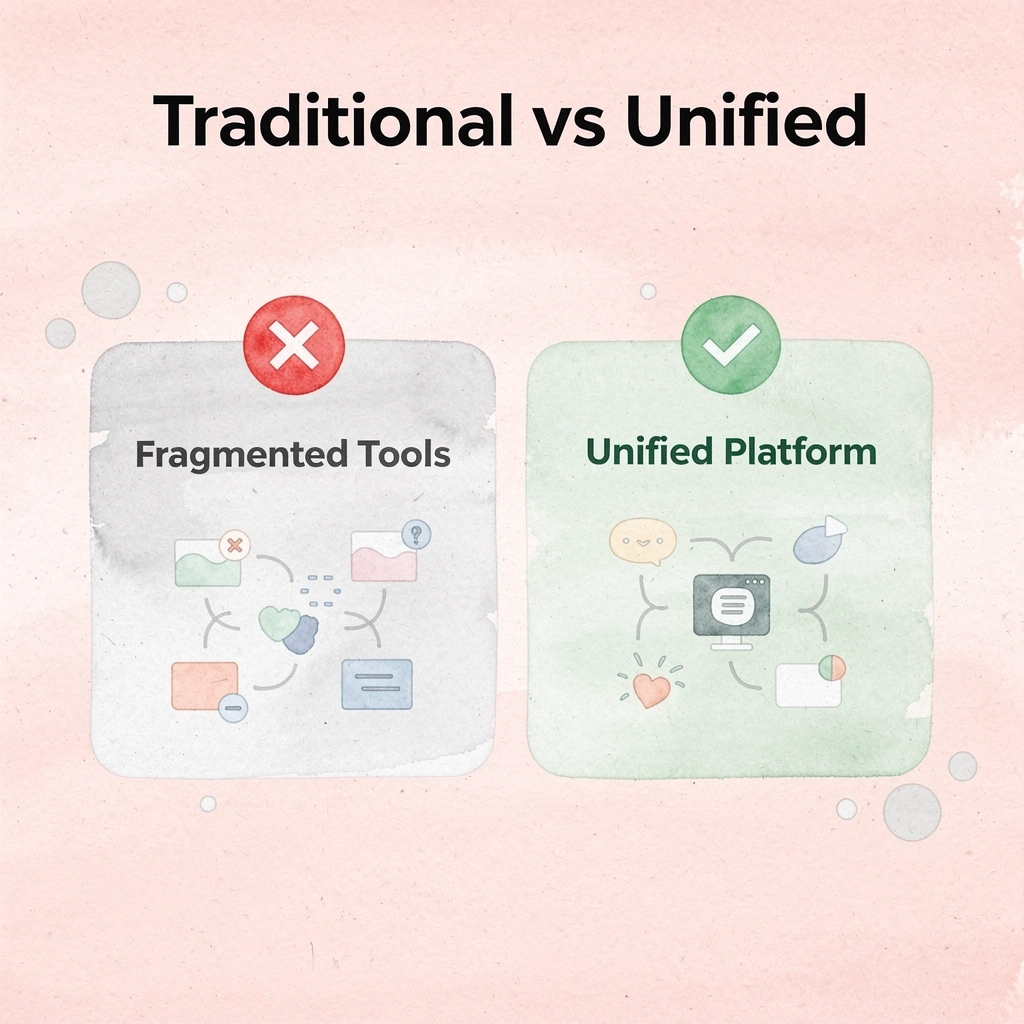
💡 Best Practice: Choose a global payroll partner that provides integrated solutions rather than requiring you to coordinate between multiple vendors and compliance systems.
Why do contractors need instant payment processing?
Contractors expect payment reliability, not excuses about banking delays or currency conversion windows. According to businessmodelcanvastemplate.com, 74% of organizations plan to maintain or expand remote work models in 2025, meaning payment infrastructure must support distributed teams as standard.
When a designer in Buenos Aires finishes a project on Thursday afternoon, they shouldn't wonder if payment will arrive before rent is due. Instant international payments eliminate that uncertainty.
How does centralized payment infrastructure simplify global operations?
A developer in Poland shouldn't need three different accounts to receive USD payments, convert to local currency, and manage expenses across clients. Ontop processes payments in 150+ countries, enabling contractors to access USD accounts, global Visa card features, and instant transfers without multiple banking relationships.
Remote professionals increasingly work across borders, currencies, and tax jurisdictions simultaneously. Centralized infrastructure makes this operationally feasible.
Why do most global hiring delays happen during onboarding?
Most global hiring delays occur during onboarding, not recruitment. Companies find strong candidates quickly, then lose weeks to contract negotiations, compliance documentation, and payment setup across unfamiliar banking systems.
Fast, self-serve onboarding removes lengthy sales processes, letting teams move from offer acceptance to first payment in days rather than weeks. This speed advantage compounds when building teams across multiple countries, as each new market requires no workflow reinvention.
How does faster onboarding reduce income uncertainty for workers?
For workers, faster onboarding means less income uncertainty between contracts. A content strategist moving from a London client to a Toronto startup shouldn't experience a three-week payment gap while new banking details are processed.
Platforms like payroll software integrate contract management, identity verification, and payment coordination into repeatable systems that reduce friction and stabilize international work arrangements. Our payroll solutions streamline these processes, ensuring workers experience seamless transitions between contracts.
Financial tools that match how contractors actually work
Remote professionals invoice across time zones, handle multiple currencies, balance irregular income, and plan taxes without employer withholding. Centralized platforms that combine payment processing with global account functionality address these realities directly, providing visibility into earnings, simplified expense management, and tools designed for cross-border work. Fragmented systems force workers to manually reconcile payments, track conversions, and manage banking relationships across countries, eroding the freedom remote work promises.
But infrastructure creates leverage only if companies use it to rethink how they build distributed teams.
Related Reading
- Best Payroll Software For Staffing Companies
- Best Payroll Outsourcing Companies
- Deel Vs Oyster
- Best International Payroll Software
- Best Payroll For Contractors
- Remote Competitors
- Velocity Global Competitor
- ADP Alternative
Book a Demo Today - See why 950+ Companies Trust OnTop to Power their Global Teams
The right infrastructure creates space for distributed teams where hiring decisions are driven by talent rather than banking logistics. When payment systems, compliance frameworks, and financial tools work together, teams focus on meaningful work instead of reconciliation overhead.
🎯 Key Point: Centralized infrastructure eliminates the administrative burden that typically slows down global team expansion and productivity.

Payroll software eliminates fragmented vendor relationships and EOR overhead. Over 950 companies use Ontop to onboard contractors faster, process payments across 150+ countries, and provide workers with financial tools to manage income across borders. Book a demo to see how centralized systems enable global teams without added complexity.
"Over 950 companies trust Ontop to streamline their global workforce management across 150+ countries." — Ontop Platform Data, 2024

💡 Tip: The best time to implement global payroll infrastructure is before you need it—proactive setup prevents compliance issues and payment delays that can derail international hiring.
Traditional Approach
- Multiple vendor relationships
- Manual compliance tracking
- Complex payment reconciliation
- Limited worker financial tools
Ontop Solution
- Single platform integration
- Automated compliance frameworks
- Streamlined payment processing
- Comprehensive financial services